
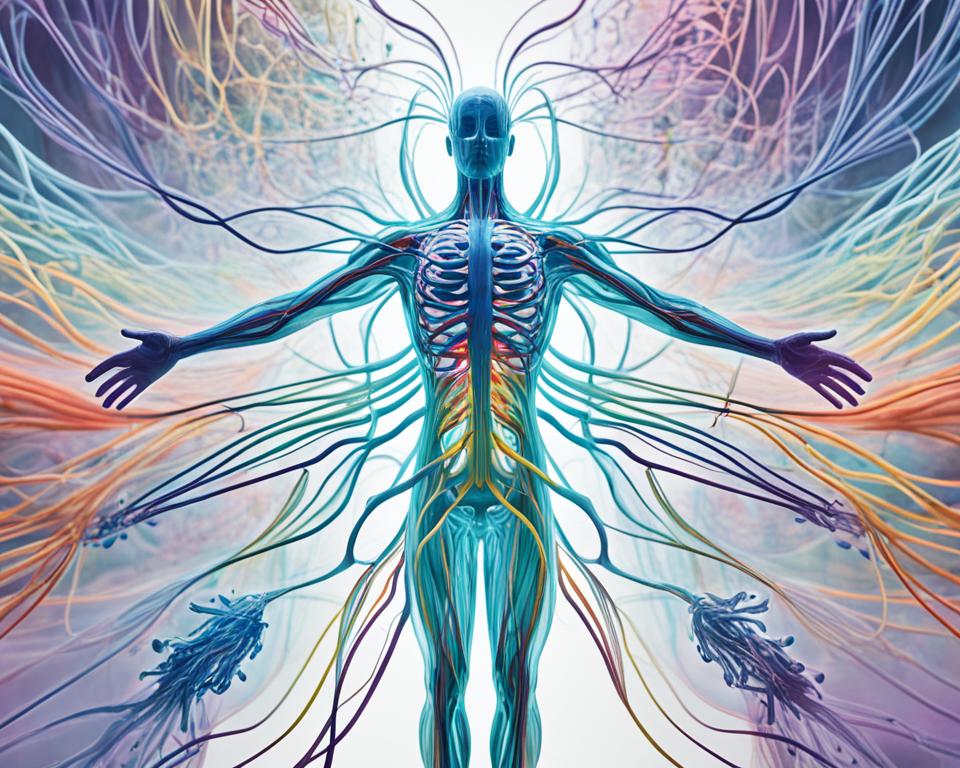
Lucid dreaming is not just an interesting experience; it’s deeply connected to the autonomic nervous system (ANS). This connection shows how lucid dreaming can help with anxiety and emotional issues. By looking into how lucid dreaming affects the ANS, we see its potential benefits. It can change how our autonomic arousal and heart rate work.
This relationship is important for research. It shows us how lucid dreaming can interact with our body’s systems. Let’s explore this fascinating topic together.
Understanding Lucid Dreaming
Lucid dreaming is a fascinating journey where you become aware you’re dreaming and can control your dreams. It’s a blend of consciousness and the dream state. To fully grasp it, you need to understand its definition and its history.
Definition and Historical Context
The definition of lucid dreaming means being awake during sleep and knowing you’re dreaming. It’s a state where you can change the dream’s story. Aristotle talked about recognizing dreams in the fourth century BCE. He saw their value.
In 1913, Frederik Van Eeden made the term “lucid dream” popular. He explained it as a state of being aware within a dream, different from regular dreams.
Neuroscience Behind Lucid Dreaming
The neuroscience of lucid dreaming shows how the brain works with awareness. Research points to more brain activity in the prefrontal cortex during lucid dreaming. This area is key for self-awareness and making decisions.
This knowledge deepens our understanding of lucid dreaming. It shows how the brain enables this special experience. The dream world becomes a place where consciousness and cognitive processes come together.
Physiological Aspects of Lucid Dreaming
Lucid dreaming is a fascinating topic that shows us how our bodies work during these special mental states. By looking at brain activity during REM sleep and how our heart rate changes, we can learn more about the connection between our mind and body.
Brain Activity During REM Sleep
REM sleep makes our brain work like it does when we’re awake. It has low-amplitude, high-frequency EEG rhythms. Studies show that lucid dreaming makes our body more active than regular dreams. This shows how important brain activity is for lucid dreaming.
Heart Rate Variability and Cardiac Modulation
Heart rate variability tells us how well our autonomic nervous system is working. In lucid dreaming, our heart rate changes show how our body reacts to our emotions and thoughts. These changes help us understand how our body works during lucid dreaming.
| Parameter | Description | Impact During Lucid Dreaming |
|---|---|---|
| Brain Activity | High-frequency EEG rhythms | Increased cortical activation |
| Heart Rate Variability | Indicator of autonomic nervous system health | Fluctuates based on emotional engagement |
| Cardiac Modulation | Adjustments in heart rate and rhythm | Potential links to emotional states during REM |
How does lucid dreaming affect the autonomic nervous system?
Lucid dreaming is a special state where you can control your dreams. This control affects your autonomic nervous system in big ways. It changes how your body reacts, which is interesting to study.
Relation Between Lucid Dreams and ANS
Lucid dreaming changes your body’s physiological responses. For example, your heart rate can go up or down. This shows how your dreams and your body are connected.
Autonomic Arousal During Lucid Dreams
Lucid dreams make your body react in different ways. Your skin and heart rate can show how exciting your dream is. This shows how powerful your mind is in controlling your body’s actions.
| Physiological Response | During Regular Dreams | During Lucid Dreams |
|---|---|---|
| Heart Rate | Stable, lower variability | Fluctuating, higher variability |
| Skin Conductance | Low responsiveness | Heightened responsiveness |
| Emotional Intensity | Moderate | High |
Dream-Induced Changes in the Autonomic Nervous System
Lucid dreaming shows us how these vivid experiences can change the autonomic nervous system (ANS). When you dream lucidly, your feelings can affect your heart rate. This link is key for those curious about dream effects on the body.
Emotional Responses and Cardiovascular Activity
In lucid dreams, your feelings can change how your heart works. You might feel thrilled or scared, depending on your dream emotions. This shows how lucid dreaming can help you deal with feelings in a special way.
Research Findings on Heart Rate and Stress Indicators
Recent studies show that lucid dreaming affects stress levels in the body. They found a link between heart rate and dream emotions. This means being aware in your dreams lets you explore your feelings and stress in a new way, helping you grow.


