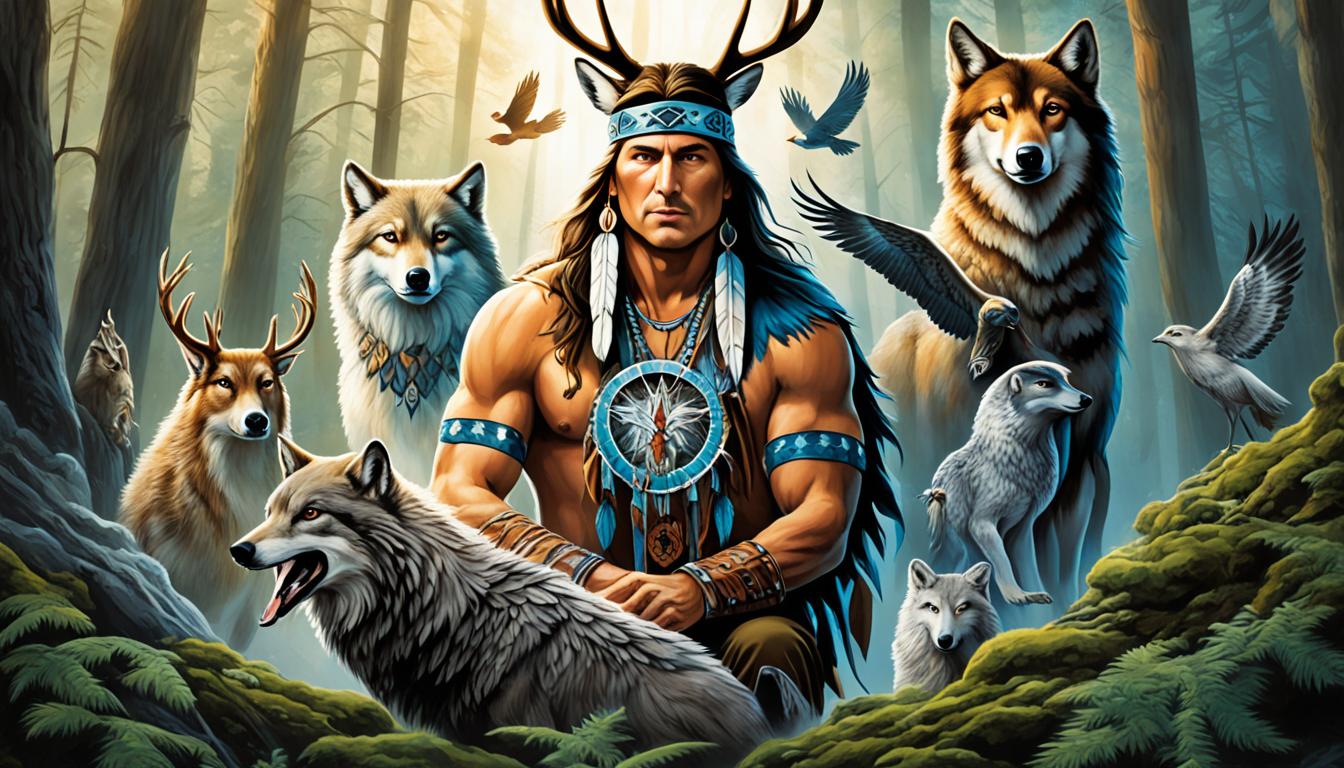
In many cultures, spirit animals, or animal totems, are very important. They are seen as protectors and messengers between humans and the spiritual world. For example, Native American Indians see the eagle as a symbol of the Great Spirit.
Egyptians used animals like the falcon and the ibis to represent their gods. This shows how deep the cultural significance of spirit animals goes.
It’s not just gods and religious leaders who have spirit guides. Shamans from different traditions find their animal guides through visions and dreams. In Hinduism, figures like Hanuman show animal traits, and the cow is seen as very sacred.
In Europe, Druids and Scandinavians looked to animals for omens and spiritual messages. These examples show how different cultures see the world and its creatures.
Learning about these cultural spirit animals helps us understand how various civilizations view the world. It also deepens our respect for these ancient beliefs.
What are some famous historical or cultural figures with spirit animals?
Exploring the bond between historical and cultural figures and their spirit animals shows us a unique view of indigenous life. This bond is filled with beliefs, rituals, and practices that are key to their culture. It’s all about respect, reverence, and seeking guidance and wisdom.
Native American Chiefs and Their Spirit Animals
Native American chiefs often turned to their spirit animals for guidance and protection. Animals like the bear, buffalo, wolf, stag, and eagle were crucial to their leadership. The eagle is especially important, seen as choosing its person and offering visions and insights.
Rituals, stories, drumming, and dance, led by elders, highlight this spiritual bond. The bear stands for strength and courage, while the buffalo symbolizes abundance and survival. These animals reflect the tribe’s values and keep the community balanced and well.
Shamans and Animal Guides
Shamans from different cultures use animal guides to help them on their spiritual paths. These guides aid in personal growth and healing, showing qualities that aid in shamanic practices. Spirit guides are vital, seen as embodying traits that protect and guide practitioners through life’s challenges.
Working with these power animals means taking on their traits in your life for growth and spiritual betterment. Animals like the guardian wolf or the wise owl offer insights and qualities that help in personal and spiritual growth.
Egyptian Deities and Their Animal Forms
In ancient Egyptian mythology, Egyptian gods were often shown with animal heads. This showed their special traits and meanings. Animals like lions, cats, ibises, and scarab beetles were very important. Lions stood for strength and power, while cats meant grace and protection.
Lions were seen as symbols of strength, helping hunters and warriors in battle. They showed vigilance and courage. Cats were seen as protectors and spiritual friends in homes.
The ibis was a symbol of wisdom and intelligence. It was linked to Thoth, the god of knowledge. This bird helped guide scribes and scholars, linking the world of thought with the divine. Through these spiritual animal guides in Egypt, people sought protection and guidance from evil forces.
| Animal | Symbolism | Deity |
|---|---|---|
| Lion | Strength, Power | Sekhmet |
| Cat | Grace, Protection | Bastet |
| Ibis | Wisdom, Knowledge | Thoth |
| Scarab Beetle | Transformation, Renewal | Khepri |
Ancient Egyptians used these animal symbols in art and architecture. This showed their world and connected them to the spiritual realm. The use of ancient Egypt animal symbolism highlighted the bond between the human and divine worlds.
Influences of Spirit Animals in Chinese Culture
In Chinese culture, animals play a big role in many areas like mythology, astrology, and healing. The Chinese zodiac is a key part of this, featuring twelve animals. Each animal is linked to certain years and traits, guiding people in love, work, and personal growth.
- Rat: Known for its smarts and quick thinking.
- Ox: Known for its hard work and dependability.
- Tiger: Known for its bravery and competitive spirit.
- Rabbit: Known for its gentle and refined nature.
- Dragon: Known for its strength and luck.
- Snake: Known for its wisdom and mystery.
- Horse: Known for its lively and free spirit.
- Goat: Known for its soft and creative side.
- Monkey: Known for its curiosity and sharp mind.
- Rooster: Known for its keen eye and resourcefulness.
- Dog: Known for its loyalty and honesty.
- Pig: Known for its kindness and hard work.
Traditional Chinese medicine also uses animal symbols for health and wellness. For example, the tiger is seen as strong and protective against sickness. The snake is linked to healing and living a long life. These animals are more than just symbols; they’re used in herbal remedies too.
Animals also play a big part in Chinese stories and art. Dragons are seen as symbols of power and wealth. They show up in art to represent strength and balance. Tigers are seen as protectors against evil, showing their important role in stories.
| Animal | Symbolism |
|---|---|
| Dragon | Power and Good Fortune |
| Tiger | Strength and Protection |
| Snake | Healing and Longevity |
| Rabbit | Gentleness and Elegance |
| Ox | Hard Work and Reliability |
The blend of Chinese animal symbolism through the Chinese zodiac and traditional Chinese medicine shows how animals deeply influence Chinese culture. They guide and inspire people, reflecting important values and traditions.
Celtic Warriors and Animal Totems
In ancient times, Celtic warriors saw animal totems as deep symbols of guidance and power. These totems were key to their spiritual journey. They were seen as messengers from the spiritual world, each with wisdom and traits vital for survival and enlightenment.
The stag was a highly respected creature in Celtic symbolism. It stood for strength and bravery. Warriors looked up to it for its courage and leadership. If you’re on a spiritual journey, thinking of the stag can help you stay strong and lead with courage.
The salmon was also highly valued for its deep wisdom and knowledge. It could overcome life’s obstacles, showing the power of intuition and insight. Warriors would meditate on the salmon to improve their strategic thinking and adaptability.
The horse symbolized transformation and freedom. It was a powerful symbol for Celtic warriors. It showed the unstoppable power of change and the spirit of freedom. The horse helped warriors face new beginnings with courage and grace. Adding the horse’s qualities to your spiritual journey can inspire you to grow and explore.
These animal guides were a big part of Celtic life, showing the deep connection between nature and human spirituality. By understanding these totems, you can move through life with more insight and purpose. This is similar to how the Celtic warriors lived.
| Animal Totem | Symbolism | Attributes |
|---|---|---|
| Stag | Strength, Leadership | Endurance, Nobility |
| Salmon | Wisdom, Knowledge | Intuition, Insight |
| Horse | Transformation, Freedom | Change, Exploration |
Modern Leaders and Their Spirit Animals
In today’s world, spirit animals are still very important for many leaders. They help these leaders deal with the complex issues they face. These animals symbolize qualities and strengths that leaders value.
For example, the wolf stands for strength, freedom, and loyalty. Leaders like this animal might be strong but careful. They guide their followers with both authority and care.
The lion, known for its bravery and royal power, could be a symbol for confident leaders. They lead with courage and determination. This shows the kind of leadership they have.
Spirit animals can also be personal symbols of inspiration and strength. They connect leaders to history and help them see their roles in society. This shows how important spirit animals are for modern leaders.


