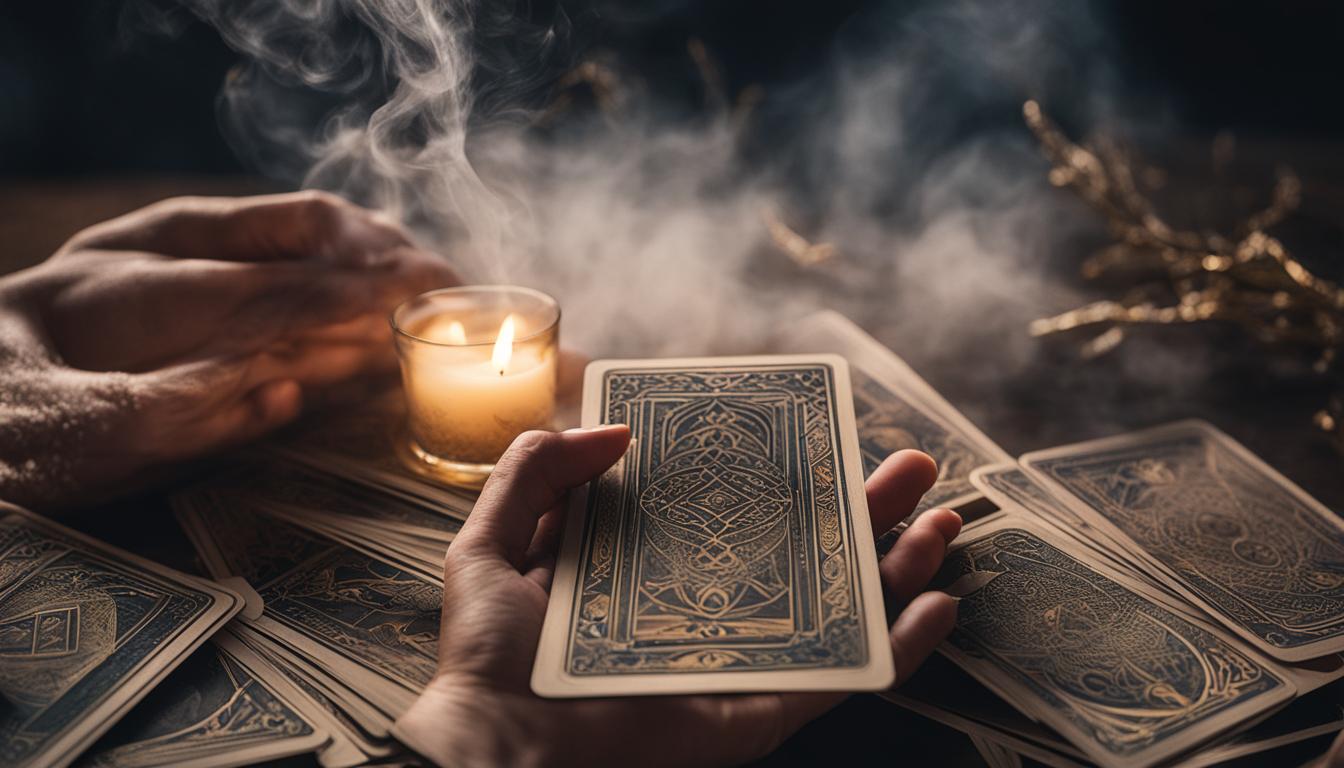
Tarot cards have been used for centuries as a tool for divination and gaining insight into the past, present, and future. Whether you’re seeking clarity in your relationships, career, or personal growth, tarot cards can provide guidance and wisdom to help you navigate life’s uncertainties.
Each tarot card holds symbolic meanings that can be interpreted in various ways, depending on the question, the reader, and the context of the reading. Tarot readings are not about predicting the future with certainty; instead, they offer a way to reflect on your own inner journey, empowering you to make informed decisions and embrace your true potential.
Whether you’re curious about tarot card meanings, looking for a tarot reading, or interested in getting your own tarot deck, exploring the world of tarot can be a transformative experience.
Key Takeaways:
- Tarot cards are used for divination and gaining insight into the past, present, and future.
- Each tarot card holds symbolic meanings that can be interpreted in various ways.
- Tarot readings are not about predicting the future with certainty but about self-reflection and making informed decisions.
- Exploring tarot can be a transformative experience in personal growth and self-discovery.
- Whether you’re looking for tarot card meanings, a tarot reading, or a tarot deck, the world of tarot offers endless possibilities.
The History of Tarot Cards
The origins of tarot cards can be traced back to the 15th century in northern Italy. The first written references to tarot decks date between 1440 and 1450. These decks were initially created as a playing card game, but later additional cards with allegorical illustrations were added, which formed the basis of the tarot we know today.
In the 18th century, tarot cards started being used for divination and fortune-telling. However, there is no evidence of significant use of tarot cards for divination until the late 18th century. The belief in the divinatory meaning of the cards became associated with their occult properties, propagated by prominent figures such as Court de Gébelin. The tarot has since been used in various psychological, mystical, and spiritual practices.
The History of Tarot Cards
“Tarot cards have a rich and fascinating history dating back centuries. Originally created as playing cards, they gradually transformed into tools for divination and self-discovery. The addition of symbolic illustrations paved the way for their spiritual significance, leading to their use in various esoteric practices. Today, tarot cards continue to captivate and inspire individuals seeking insight into their lives and the world around them.”
Table: Key Milestones in the History of Tarot Cards
| Century | Development |
|---|---|
| 15th | Originated as playing cards in northern Italy |
| 18th | First documented use of tarot cards for divination |
| Late 18th | Association of tarot cards with occult and divinatory meanings |
| Present | Continued use in psychological, mystical, and spiritual practices |
By understanding the history of tarot cards, we can appreciate the depth and significance they hold. The evolution of tarot decks from mere playing cards to powerful tools of divination and self-exploration reflects the enduring interest in uncovering hidden truths and seeking guidance from the mystical realm.
How to Read Tarot Cards
Reading tarot cards is a fascinating and personal practice that allows you to tap into your intuition and gain valuable insights. While there is no one “right” way to read tarot cards, there are some common techniques and approaches that can help you make the most of your tarot readings.
Understanding Tarot Spreads
One essential aspect of tarot reading is choosing the right tarot spread. Tarot spreads are specific patterns in which the cards are laid out. Each position in the spread represents a different aspect of the querent’s life or question. Some popular tarot spreads include the Celtic Cross, the Three-Card Spread, and the Past-Present-Future spread. It’s important to choose a spread that aligns with your intention and provides a clear framework for interpretation.
Interpreting Tarot Cards
Interpreting tarot cards involves understanding the symbolism of each card and how it relates to the querent’s question or situation. Each tarot card has its own unique meaning, but interpretation can also be influenced by the surrounding cards and the querent’s energy. It’s helpful to study the traditional meanings of the cards but also trust your intuition and personal connection to the images and symbols. As you gain experience, you’ll develop your own interpretations that resonate with you.
Embracing Self-Reflection
It’s essential to approach tarot reading as a tool for self-reflection and personal growth rather than a means of predicting the future. Tarot cards can help you gain insights into your thoughts, emotions, and tendencies, allowing you to better understand yourself and uncover hidden potentials. The goal of tarot reading is to empower you to make informed decisions and navigate life’s challenges with clarity and confidence.
| Key Tips for Reading Tarot Cards |
|---|
| 1. Clear your mind: Before a reading, take a few moments to clear your mind, set your intention, and connect with your intuition. |
| 2. Trust your intuition: Don’t be afraid to trust your intuition when interpreting the cards. Your inner voice knows best. |
| 3. Keep a tarot journal: Keeping a tarot journal can help you track your progress, reflect on past readings, and deepen your understanding of the cards. |
| 4. Practice regularly: Like any skill, tarot reading improves with practice. Regular practice will enhance your connection with the cards and strengthen your interpretation abilities. |
“Tarot reading is an art that combines wisdom, intuition, and self-reflection. Embrace the journey of discovering the messages the cards hold and trust in your ability to find clarity and guidance.” – Unknown
In conclusion, learning how to read tarot cards is a personal and empowering journey. By understanding tarot spreads, interpreting the cards’ symbolism, and embracing self-reflection, you can unlock the wisdom and guidance that the tarot has to offer. Remember to approach tarot reading with an open mind and heart, allowing the cards to speak to you in their unique way. With practice and trust in your intuition, you’ll develop your own personal connection with the tarot cards and harness their transformative power.
Choosing and Understanding Tarot Decks
When it comes to choosing a tarot deck, there are countless options available to suit your personal preferences and spiritual journey. The most important aspect is finding a deck that resonates with you and connects with your soul’s essence. While there is no definitive “best” deck, it is recommended to start with a traditional deck that follows the structure of 78 fully illustrated cards. One popular choice is the Rider-Waite deck, renowned for its original artwork dating back to the early 1900s.
However, don’t limit yourself to just one deck. Tarot decks come in various themes, featuring different interpretations and styles. From fictional themes to decks created by BIPOC and queer artists, the choices are vast. Exploring diverse decks can offer fresh perspectives and unique insights during your tarot readings.
Understanding the symbolism and core meanings of the cards is crucial for performing accurate and insightful readings. Each card carries its own significance, and the more familiar you become with their interpretations, the deeper your understanding of the messages they convey. Delving into the imagery, symbolism, and traditional interpretations of the cards can enhance your connection with the tarot and strengthen your intuitive abilities.
| Deck | Theme | Artist |
|---|---|---|
| Rider-Waite Tarot | Traditional | Pamela Colman Smith |
| Wild Unknown Tarot | Nature and Animals | Kim Krans |
| Afro Tarot | African Diaspora | Jessica Dore |
| Modern Witch Tarot | Contemporary | Lisa Sterle |
Remember, the journey with tarot is deeply personal, and what matters most is the connection you establish with your chosen deck. Allow your intuition to guide you in finding the deck that speaks to your heart and soul. Embrace the opportunity to explore the vast world of tarot decks and discover the wisdom and insights they hold.
Conclusion
Tarot cards are a powerful tool for self-reflection, self-discovery, and gaining insight into different aspects of life. Whether you’re seeking guidance, looking to explore possibilities, or simply curious about the mysteries of the universe, tarot card readings can offer valuable insights and wisdom.
Remember, tarot readings are not about predicting the future with certainty, but rather about empowering you to make informed decisions and gain self-awareness. Through the symbolism and interpretations of the cards, you can uncover hidden aspects of your life, discover your strengths and challenges, and explore the opportunities that lie ahead.
There are countless online resources and communities that offer free tarot card readings, allowing you to dive deeper into the world of tarot at your own pace. Whether you’re a beginner or a seasoned reader, these platforms provide a wealth of knowledge and support, allowing you to expand your understanding of the cards and further develop your intuition.
So, embrace the journey of tarot, choose a deck that resonates with you, and embark on a path of self-discovery and personal growth. The tarot holds the keys to unlocking the wisdom within, and by connecting with these powerful cards, you can gain valuable insights and guidance on your life’s journey.
– What Are Some Common Uses for Tarot Cards?
Many people turn to understanding tarot card purpose for gaining insight into their past, present, and future. Common uses for tarot cards include seeking guidance in difficult decisions, gaining spiritual or personal growth, and exploring the subconscious mind. Tarot cards can also be used for meditation and self-reflection.
FAQ
What are tarot cards used for?
Tarot cards are used for divination and gaining insight into the past, present, and future. They provide guidance and wisdom, allowing individuals to explore and understand the deeper truths of their higher selves.
What is the history of tarot cards?
The origins of tarot cards can be traced back to the 15th century in northern Italy. Initially created as a playing card game, additional cards with allegorical illustrations were added, forming the basis of the tarot we know today. In the 18th century, tarot cards started being used for divination and fortune-telling.
How do I read tarot cards?
Tarot reading involves shuffling and laying out the cards in a specific spread or pattern, with each position in the spread providing insight into different aspects of the querent’s life or question. The reader interprets the cards based on their symbolism and the context of the spread. It’s important to note that tarot readings are not about predicting the future, but about gaining self-awareness and making informed decisions.
How do I choose and understand tarot decks?
When choosing a tarot deck, it’s essential to find one that resonates with your personal preferences and connects with your soul’s journey. While there are countless decks available, starting with a traditional deck like the Rider-Waite can help familiarize yourself with the core meanings of the cards. Understanding the symbolism and interpretations of the cards is key to performing accurate and insightful readings.
Can anyone learn to read tarot cards?
Absolutely! Tarot reading is a personal practice, and there’s no need for any specific psychic abilities or occult pedigree. Anyone can learn to read tarot cards and embark on a journey of self-discovery and unlocking the wisdom held within the tarot.