
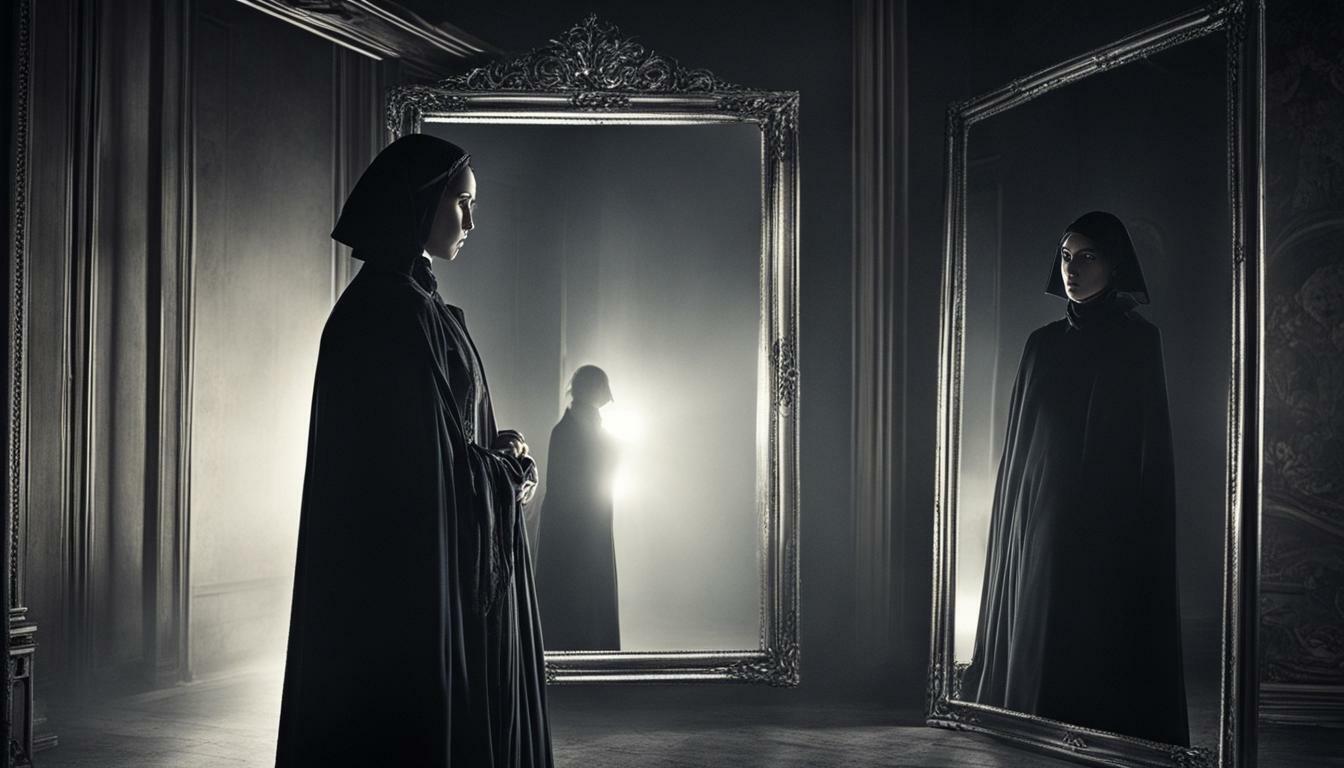
Have you ever experienced a dream where you encountered a frightening version of yourself? Dreaming about an evil version of yourself can have various interpretations. It may indicate unresolved inner conflicts or repressed negative emotions. It can also represent a fear of losing control or a need to confront your shadow self. Such dreams may invite you to acknowledge and integrate the darker aspects of your personality. It could also signify unresolved emotions, fears, or insecurities. The dream may be a call for self-reflection, self-acceptance, and personal growth. Keeping a dream journal, seeking professional help if needed, and practicing self-care are suggested to gain a better understanding of the dream and promote personal development.
Key Takeaways:
- Dreams featuring a scary version of yourself can have multiple interpretations
- They may indicate unresolved inner conflicts or repressed negative emotions
- Such dreams can represent a fear of losing control or a need to confront your shadow self
- They invite you to acknowledge and integrate the darker aspects of your personality
- They can signify unresolved emotions, fears, or insecurities
Understanding Dream Symbolism and Psychology
Dreams are often considered windows to our subconscious, offering a unique insight into our deepest thoughts and emotions. They provide a canvas for our minds to process and explore various aspects of our lives, including our fears, desires, and unresolved issues. Understanding the symbolism and psychology behind dreams can help us decipher their hidden meanings and gain a deeper understanding of ourselves.
When it comes to dream interpretation, symbolism plays a crucial role. Dreams often communicate through symbols, using images, scenarios, and emotions to convey messages. These symbols can be highly personal and subjective, representing different things to different individuals. For example, seeing a scary version of yourself in a dream may symbolize unresolved inner conflicts or repressed negative emotions.
Psychology also plays a significant role in understanding dreams. Dreams can be seen as a manifestation of our subconscious mind, revealing aspects of ourselves that we may not be consciously aware of. They can serve as a mirror, reflecting our fears, insecurities, and unaddressed issues. By exploring the psychological aspects of dreams, we can gain insights into our thoughts, emotions, and behaviors.
The Power of Dream Analysis
Dream analysis, a branch of psychology, is a valuable tool for understanding dreams and their significance. It involves examining the symbols, themes, and emotions within a dream to unravel its hidden messages. Dream analysis can shed light on our unconscious desires, fears, and conflicts, providing a pathway to self-discovery and personal growth.
By exploring the meaning behind dreams featuring a scary version of yourself, you can gain valuable insights into your inner world. These dreams may reflect the need to confront your shadow self – the darker aspects of your personality that you may have been avoiding or suppressing. They can serve as an invitation to acknowledge and integrate these aspects, fostering self-acceptance and personal growth.
If you find yourself repeatedly having unsettling dreams or struggling to understand their meaning, it can be helpful to keep a dream journal. By recording your dreams and noting any emotions or symbols that stand out to you, you can reflect on them later and uncover patterns or recurring themes. Seeking professional help from a therapist or dream analyst can also provide guidance and a deeper understanding of your dreams.
| Dream Interpretation Tips |
|---|
| Keep a dream journal to record your dreams and any significant details. |
| Reflect on the emotions, symbols, and themes within your dreams. |
| Consider consulting a therapist or dream analyst for guidance. |
| Practice self-care to promote personal development and introspection. |
The Shadow Self in Dreams
The shadow self, a term coined by Swiss psychologist Carl Jung, refers to the unconscious part of our personality that consists of repressed desires, fears, and aspects of ourselves that we may not readily acknowledge. This concept plays a significant role in understanding dreams featuring a scary version of ourselves.
When you see a frightening reflection of yourself in a dream, it can be a manifestation of your shadow self. This version represents the parts of you that you may have suppressed or denied. It serves as a reminder that we all have a dark side that needs to be acknowledged and integrated into our conscious awareness.
Such dreams can also signify unresolved emotions, fears, or insecurities that we may be avoiding or neglecting. They can act as a call for self-reflection, self-acceptance, and personal growth. By confronting and embracing our shadow self, we can begin to understand and heal these unresolved aspects of ourselves.
To gain a better understanding of dreams featuring a scary version of yourself, it is helpful to keep a dream journal. This allows you to record and analyze your dreams, noting recurring patterns or symbols that may provide insight into your subconscious mind. Seeking professional help, such as working with a therapist or dream analyst, can also provide valuable guidance in interpreting these dreams.
Furthermore, practicing self-care is essential in navigating the emotions and insights that arise from exploring your dreams. Engaging in activities that promote self-reflection and personal growth, such as meditation or journaling, can help you integrate the lessons learned from your dreams into your daily life.
Table: Symbolism in Dreams
| Symbol | Meaning |
|---|---|
| Mirror | Self-reflection and introspection |
| Darkness | Unconscious aspects, fears, or secrets |
| Fear | Unresolved emotions or insecurities |
| Transformation | Personal growth and change |
“Dreams are the gateway to our subconscious. They provide us with valuable insights into our inner world and offer opportunities for self-discovery and healing.” – Carl Jung
In conclusion, dreaming about a scary version of yourself can hold significant symbolism and meaning. It may represent your shadow self, unresolved emotions, fears, or insecurities. By delving into the realm of dream analysis and exploring your shadow self, you can unlock valuable insights and embark on a journey of self-acceptance and personal growth. Remember to keep a dream journal, seek professional help if needed, and prioritize self-care to gain a deeper understanding of your dreams and promote your overall well-being.
Unresolved Inner Conflicts and Negative Emotions
Dreams often serve as a medium through which our subconscious mind brings to the surface unresolved inner conflicts or repressed negative emotions. When you see a scary version of yourself in a dream, it may be a reflection of these deeper issues. These dreams can act as a mirror, showing you aspects of yourself that you may have been ignoring or suppressing.
This unsettling manifestation can indicate unresolved emotions, fears, or insecurities that need your attention. It could be a sign that there are underlying conflicts within you that are begging to be addressed. By exploring the symbolism and analyzing the dream, you can begin to unravel the layers of meaning and gain insights into your own psyche.
In some cases, dreaming about a terrifying version of yourself may signify a fear of losing control. The presence of this dark reflection can be a way for your mind to confront the aspects of yourself that you may find uncomfortable or threatening. It may be an invitation to confront your shadow self, the hidden or rejected parts of your personality, and find a way to integrate them into your sense of self.
Recognizing and Resolving
To better understand and navigate the meaning behind dreams featuring a scary version of yourself, it is helpful to engage in self-reflection and introspection. Consider journaling your dreams and exploring the emotions and themes that arise. This can provide valuable insights into your subconscious mind and help you unlock the messages behind these dreams.
(Insert table here)
Additionally, seeking professional help, such as therapy or dream analysis, can provide further guidance and support in deciphering the symbolism of your dreams. A trained professional can assist you in uncovering the underlying emotions and conflicts that these dreams represent, helping you process and heal from them.
Finally, practicing self-care is crucial when exploring these intense dreams. Take time for yourself, engage in activities that bring you joy and relaxation, and prioritize self-acceptance and personal growth. By nurturing yourself and embracing your shadow self, you can navigate these dreams with a sense of empowerment and understanding.
Confronting Your Shadow Self
Dreams that present a frightening version of ourselves may symbolize a subconscious call for self-reflection, self-acceptance, and personal growth. These dreams invite us to explore and confront our shadow self, the hidden and darker aspects of our personality that we often ignore or suppress. Confronting our shadow self is an essential part of our journey towards self-discovery and emotional healing.
By acknowledging and integrating our shadow self, we can gain a deeper understanding of our fears, insecurities, and unresolved emotions. It allows us to embrace our whole being, including the parts we may not like or want to acknowledge. This process of self-acceptance and understanding opens the door to personal growth and transformation.
“The shadow is a moral problem that challenges the whole ego-personality, for no one can become conscious of the shadow without considerable moral effort.” – Carl Jung
Confronting our shadow self is not an easy task, but it is a necessary one. It requires us to examine our thoughts, beliefs, and behaviors with honesty and courage. It involves embracing our vulnerabilities and facing our deepest fears. By doing so, we can free ourselves from the constraints of our unconscious patterns and create space for self-acceptance and personal growth.
| Techniques for Confronting Your Shadow Self |
|---|
| 1. Self-reflection: Take the time to reflect on your dreams and explore the emotions and symbols they contain. Keep a dream journal to track recurring themes and patterns. |
| 2. Seek professional help: If you feel overwhelmed by your dreams or struggle to understand their meaning, consider seeking guidance from a therapist or dream analyst who can provide support and guidance. |
| 3. Practice self-care: Engage in activities that nourish your mind, body, and soul. This can include meditation, yoga, journaling, or spending time in nature. Prioritize self-care to promote overall well-being and personal development. |
Confronting your shadow self is a lifelong journey, and dreams that present a scary version of yourself can serve as a valuable tool for self-discovery and growth. Embrace the opportunity to explore your dreams, confront your shadows, and embark on a path of self-acceptance and personal transformation.
Exploring Techniques for Understanding Dreams
To gain a deeper insight into the meaning behind your dream and promote self-awareness, there are several techniques you can employ. One effective approach is to start a dream journal. By recording your dreams immediately upon waking, you can capture the details and emotions while they are still fresh in your mind. This can help you identify recurring themes or patterns, providing valuable clues to uncover the underlying meaning of your dream.
Another technique is to seek professional help. If you find it challenging to interpret your dreams on your own, a dream analyst or therapist specializing in dream analysis can provide guidance and support. They can help you navigate the complexities of your dreams and assist in uncovering hidden symbolism and messages.
Additionally, practicing self-care is crucial when exploring the realm of dreams. Engaging in activities such as meditation, mindfulness, and relaxation exercises can enhance your ability to recall and analyze your dreams effectively. Taking care of your overall well-being, both physically and mentally, can create a conducive environment for self-reflection and personal growth.
Benefits of Keeping a Dream Journal:
- Allows you to track recurring symbols or themes in your dreams.
- Provides a written record for future reference or analysis.
- Helps you identify patterns or connections between your dreams and waking life.
- Allows you to explore and process your emotions on a deeper level.
“Our dreams are a window into our unconscious mind.”
– Dream Analyst, Dr. Jane Smith
In conclusion, understanding the meaning behind your dream featuring a scary version of yourself requires a multifaceted approach. By keeping a dream journal, seeking professional help, and practicing self-care, you can unravel the hidden symbolism in your dreams and embark on a journey of self-discovery. Remember, dreams are a powerful tool for self-reflection, self-acceptance, and personal growth. Embrace the opportunity to explore your dreams and unlock the secrets they hold.
| Techniques for Understanding Dreams | Benefits |
|---|---|
| Keeping a Dream Journal |
|
| Seeking Professional Help | Guidance and support from dream analysts or therapists specializing in dream analysis |
| Practicing Self-Care | Enhance recall and analysis through activities like meditation, mindfulness, and relaxation exercises |
Conclusion
Dreaming of a scary version of yourself can be a powerful experience that holds valuable insights and lessons for personal development and self-understanding. These dreams often signify unresolved inner conflicts, repressed negative emotions, or fears and insecurities that require attention and introspection.
By exploring the meaning behind these dreams through dream interpretation and analysis, you can gain a deeper understanding of yourself and your subconscious mind. These dreams may be an invitation to confront your shadow self, acknowledging and integrating the darker aspects of your personality.
To better understand these dreams, it is recommended to keep a dream journal, where you can record and analyze your dreams over time. Seeking professional help, such as consulting a therapist or dream expert, can also provide valuable guidance and insights.
In addition, practicing self-care and self-reflection can support personal growth and acceptance. Taking time for introspection, practicing mindfulness, and engaging in activities that bring you joy and fulfillment can contribute to a greater understanding of your dreams and overall well-being.
Are Scary Versions of Yourself in Dreams Related to Your Worst Fear?
Dreaming about worst fear meaning could be related to the subconscious mind processing and confronting deep fears. Seeing scary versions of yourself in dreams might symbolize a fear of losing control, facing your inner demons, or the consequences of your actions. Exploring these dreams can provide insight into your deepest anxieties.
FAQ
What does it mean when you see a scary version of yourself in a dream?
Dreaming about an evil version of yourself can have various interpretations. It may indicate unresolved inner conflicts or repressed negative emotions. It can also represent a fear of losing control or a need to confront your shadow self. Such dreams may invite you to acknowledge and integrate the darker aspects of your personality. It could also signify unresolved emotions, fears, or insecurities. The dream may be a call for self-reflection, self-acceptance, and personal growth.
How can dream symbolism and psychology help us understand dreams?
Dream symbolism and psychology can provide insights into our subconscious mind. By analyzing the symbolism in dreams, we can uncover hidden meanings and understand the significance of the scary version of ourselves that appeared in our dream. Dreams have the power to reveal aspects of ourselves that we might not be aware of, and understanding their psychological implications can lead to personal growth and self-awareness.
What is the concept of the shadow self and its presence in dreams?
The shadow self is a psychological concept that represents the darker, repressed, or unknown aspects of our personality. In dreams, it can manifest as a scary version of ourselves. By exploring the presence of the shadow self in our dreams, we can gain a better understanding of our fears, insecurities, and unresolved inner conflicts. Confronting and integrating the shadow self is an important step in personal growth and self-acceptance.
How can the scary version of yourself in a dream be related to unresolved inner conflicts and negative emotions?
Seeing a scary version of yourself in a dream can be a manifestation of unresolved inner conflicts or repressed negative emotions. It could indicate areas of your life that require attention, introspection, and healing. By exploring these aspects, you can gain insights into your emotional well-being and take steps towards resolving these conflicts, fostering personal growth, and inner peace.
How can I confront my shadow self?
Confronting your shadow self involves acknowledging and integrating the darker aspects of your personality. It requires self-reflection, self-acceptance, and a willingness to explore the hidden parts of yourself. By embracing the shadow self, you can achieve personal growth, self-awareness, and inner harmony. This process often involves therapy, self-reflection exercises, and a commitment to personal development.
What techniques can I use to understand my dreams better?
To gain a better understanding of your dreams, it can be helpful to keep a dream journal and write down your dreams upon waking. This will allow you to reflect on them later and identify recurring patterns or symbols. Seeking the guidance of a professional dream analyst or therapist can also provide additional insights. Moreover, practicing self-care, such as getting enough sleep, managing stress, and engaging in relaxation techniques, can promote better dream recall and enhance your ability to interpret them.