

If you have ever heard the phrase “To sleep, perchance to dream,” you may be wondering about its meaning and significance. This famous line from Shakespeare’s play Hamlet has captured the imagination of audiences for centuries, exploring the themes of sleep, dreams, and the uncertainties of life and death.
In Hamlet’s soliloquy, he contemplates the idea of death and the possibility of what comes after. He expresses his desire for a peaceful and dreamless sleep, hoping to escape the troubles and uncertainties of life. The line highlights the uncertainty and fear associated with the unknown aspects of death. It raises questions about the afterlife, punishment, and the concept of hell.
Key Takeaways:
- The phrase “To sleep, perchance to dream” is from Shakespeare’s play Hamlet.
- It reflects the character’s contemplation of death, dreams, and the uncertainties of the afterlife.
- The phrase has been interpreted in various ways, reflecting both Christian themes and personal struggles.
- It is often used metaphorically to convey the desire for relief from suffering or the longing for peaceful rest.
- Exploring the meaning of this phrase invites discussions about the mysteries of sleep and dreams.
The Significance of To Sleep Perchance To Dream
The phrase “To sleep, perchance to dream” holds great significance when exploring the realm of sleep and dreams. It delves into the deep-rooted human fascination with the unknown and the mysteries of the mind. Through its poetic and thought-provoking nature, the phrase invites us to contemplate the profound connections between sleep, dreams, and the human psyche.
At its core, the line reflects the universal longing for restful sleep and the profound desire for an escape from the challenges and uncertainties of life. It touches on the existential questions surrounding death and the afterlife, highlighting the fear and curiosity that accompany these concepts. By invoking the idea of dreaming, the phrase opens up a world of possibilities where consciousness, imagination, and reality intertwine.
The Paradox of Sleep and Dreams
When examining the significance of “To sleep, perchance to dream,” it is essential to explore the paradoxical nature of sleep and dreams. Sleep, a fundamental biological process, is a time of rejuvenation and restoration for the body. However, it is also a gateway to the ethereal realm of dreams, where the mind is free to wander and explore alternative realities.
Dreams themselves hold diverse meanings and interpretations, ranging from symbolic representations of our deepest desires to glimpses into our fears and anxieties. They provide a canvas for the subconscious mind to manifest itself, often resulting in vivid and sometimes baffling experiences. Dreams have been studied and analyzed throughout history, leading to a multitude of theories and belief systems surrounding their purpose and significance.
The Power of Interpretation
The phrase “To sleep, perchance to dream” invites us to engage in interpretation and introspection. It challenges us to explore the symbolism and meanings behind our own dreams, as well as the dreams of others. By analyzing our dreams, we gain insights into our emotional well-being, unprocessed thoughts, and unresolved conflicts.
While dreams may seem fleeting and intangible, they can offer valuable insights into our innermost selves. By paying attention to the recurring themes, symbols, and emotions within our dreams, we can unlock hidden meanings and gain a deeper understanding of our own psyche. The power of dream interpretation lies in our ability to bridge the gap between the conscious and subconscious mind, unraveling the messages that lie beneath the surface.

| Key Themes | Explanation |
|---|---|
| Escape and Relief | The phrase reflects the human desire for a break from the challenges of life and a longing for peaceful rest. |
| Uncertainty and Fear | The unknown aspects of death and the afterlife are highlighted, raising questions about what lies beyond. |
| Punishment and Redemption | The line touches on the fear of punishment and the hope for redemption in the context of the afterlife. |
| Metaphorical Interpretations | The phrase is often used figuratively to express the desire for relief from suffering or struggles in life. |
In conclusion, the phrase “To sleep, perchance to dream” holds deep significance when exploring the complexities of sleep and dreams. It captivates us with its poetic beauty while encouraging introspection and interpretation. As we unravel the mystery behind our dreams, we gain a greater understanding of ourselves, our fears, and our desires. This timeless phrase continues to provoke contemplation and ignite conversations about the profound connections between sleep, dreams, and the human experience.
Literary Interpretation of To Sleep Perchance To Dream
The line “To sleep, perchance to dream” holds profound literary significance within the context of Shakespeare’s play Hamlet. This line, spoken by the troubled protagonist in Act 3, Scene 1, encapsulates Hamlet’s introspective contemplation on life, death, and the mysteries that lie beyond. Through the use of metaphoric language, Shakespeare delves into the depths of Hamlet’s psychological journey, showcasing his internal struggle and moral dilemma.
Hamlet’s soliloquy highlights his existential ponderings, as he wrestles with the idea of continuing to endure the hardships of life or seeking solace through death. The phrase “To sleep, perchance to dream” operates as a euphemism for death, with “dream” representing both the unknown and consciousness. It emphasizes Hamlet’s desire to escape the troubles of the world and find peace in a dreamless sleep.
Exploring Metaphor and Symbolism
The metaphorical nature of this line extends beyond its literal interpretation. “To sleep” not only refers to physical rest but also symbolizes a release from the burdens of life and the complexities of existence. Through this metaphor, Shakespeare invites readers and audiences to reflect on the transience of life and the uncertainty of what lies beyond death.
| Symbol | Meaning |
|---|---|
| Sleep | Peace, rest, escape |
| Dream | Unknown, consciousness, afterlife |
By utilizing sleep and dream as symbolic devices, Shakespeare delves into the deeper psychological and philosophical aspects of Hamlet’s character, adding layers of complexity to his narrative.
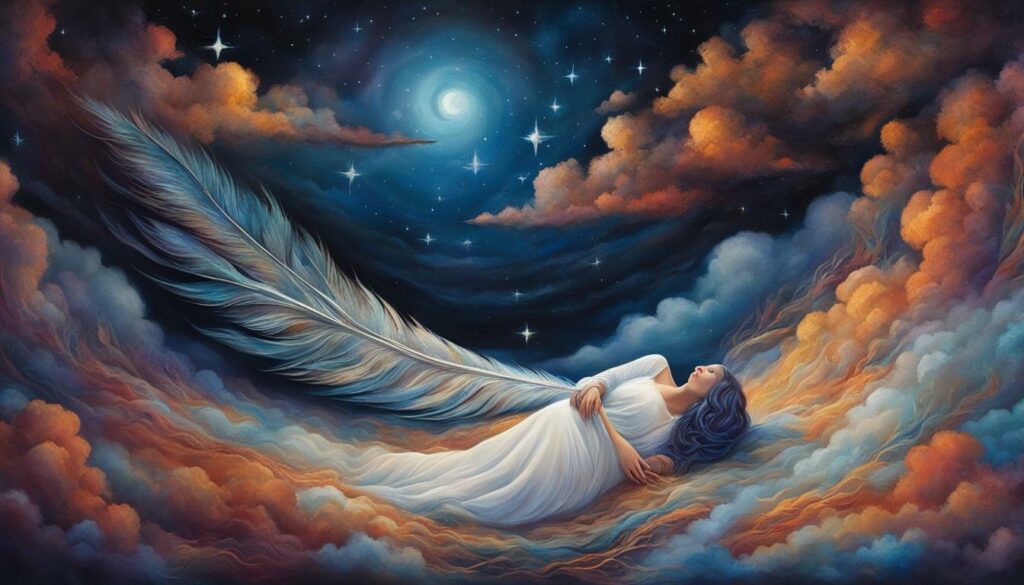
As readers and audience members engage with this line, they are prompted to question their own mortality, the nature of existence, and the significance of dreams. The literary analysis of “To sleep, perchance to dream” provides a rich exploration of Hamlet’s internal struggles, the uncertainty of death, and the profound metaphoric language employed by Shakespeare.
The Contemporary Usage of To Sleep Perchance To Dream
The phrase “To sleep, perchance to dream” has transcended its origins in Shakespeare’s play Hamlet and has become widely used in various contexts. It has found its way into literature, film, and everyday conversations, capturing the imagination of people across different generations. In literature, the phrase has been used as a title for novels and poems, exploring the themes of dreams, reality, and death. Its poetic and enigmatic quality continues to resonate with readers, sparking their curiosity about the meaning behind the words.
The phrase has also made its mark in popular culture, particularly in television shows and movies. One notable example is its reference in The Twilight Zone, where it is connected to the exploration of dreams, reality, and the afterlife. This usage not only showcases the enduring relevance of Shakespeare’s work but also reflects society’s fascination with the mysteries of sleep and dreams.
Outside of the literary and entertainment world, people often quote the line to express their longing for restful sleep or to contemplate the unknown aspects of dreams. It has become a way to ponder the mysteries of life and death, inviting individuals to reflect on their own mortality and the meaning of existence. The phrase’s widespread usage reflects its universal appeal and ability to resonate with people’s deep-seated desires for rest, respite, and answers to life’s profound questions.
Table: Examples of Contemporary Usage of “To Sleep Perchance To Dream”
| Medium | Example |
|---|---|
| Literature | The novel “To Sleep Perchance To Dream” by John Smith explores the interconnectedness of dreams and reality. |
| Film | The character quotes “To sleep, perchance to dream” in the movie’s climactic scene, symbolizing his longing for peace. |
| Everyday Conversations | “I just want a good night’s sleep, to sleep, perchance to dream,” she sighed wearily. |
The table above provides examples of how the phrase has been used in different mediums. It demonstrates the versatility of “To sleep, perchance to dream” and its ability to evoke deep emotions and thoughts.

In conclusion, the phrase “To sleep, perchance to dream” has transcended its original context and continues to captivate audiences today. Its rich symbolism and profound meaning have made it a popular literary and cultural reference. Whether in literature, film, or everyday conversations, the phrase invites contemplation on the mysteries of sleep, dreams, and the human experience.
Conclusion
The phrase “To sleep, perchance to dream” carries profound meaning and has left a lasting impact on literature, culture, and everyday discourse. Originating from Shakespeare’s Hamlet, it delves into the contemplation of death, dreams, and the uncertainties of the afterlife. Over time, it has taken on a metaphorical significance, representing the longing for relief from suffering and the desire for peaceful rest.
The phrase’s allure lies in its ability to spark discussions about the meaning of life, death, and the mysteries of sleep and dreams. It has been analyzed and interpreted in various ways, exploring themes such as the fear of the unknown, the existence of an afterlife, and the concept of punishment. Contemporary usage of the phrase extends beyond literature and entertainment, permeating everyday conversations and inspiring titles for works exploring dreams, reality, and mortality.
Ultimately, “To sleep, perchance to dream” remains a timeless phrase that continues to captivate audiences. It invites us to reflect on the complexities of human existence, our yearning for restful sleep, and the enigmatic realms of dreams and the unknown. Its enduring relevance speaks to the universal fascination with the meaning of life and the profound impact of Shakespeare’s timeless words.
Is “Pipe Dream” Related to the Phrase “To Sleep, Perchance to Dream”?
The meaning of pipe dream is a highly imaginative but unrealistic idea or hope. It is not directly related to the phrase “To sleep, perchance to dream,” which comes from Shakespeare’s Hamlet and refers to the possibility of dreaming while sleeping. A pipe dream is more about unrealistic aspirations.
FAQ
What does the phrase "To sleep, perchance to dream" mean?
The phrase is from Shakespeare’s play Hamlet and reflects the contemplation of death, dreams, and the uncertainties of the afterlife.
Why is the phrase significant?
The phrase delves into the themes of death, the unknown, and the desire for relief from suffering. It highlights complex emotions and thoughts surrounding death.
What is the literary interpretation of "To sleep, perchance to dream"?
The phrase showcases Hamlet’s internal struggle and moral dilemma, adding depth to his psychological journey throughout the play.
How is the phrase used in contemporary contexts?
The phrase has been embraced in literature, film, and everyday conversations, often used metaphorically or to contemplate the mysteries of sleep and dreams.
What is the overall meaning of "To sleep, perchance to dream"?
The phrase represents the desire for peace, escape from hardships, and contemplation of the unknown aspects of death and the afterlife.