
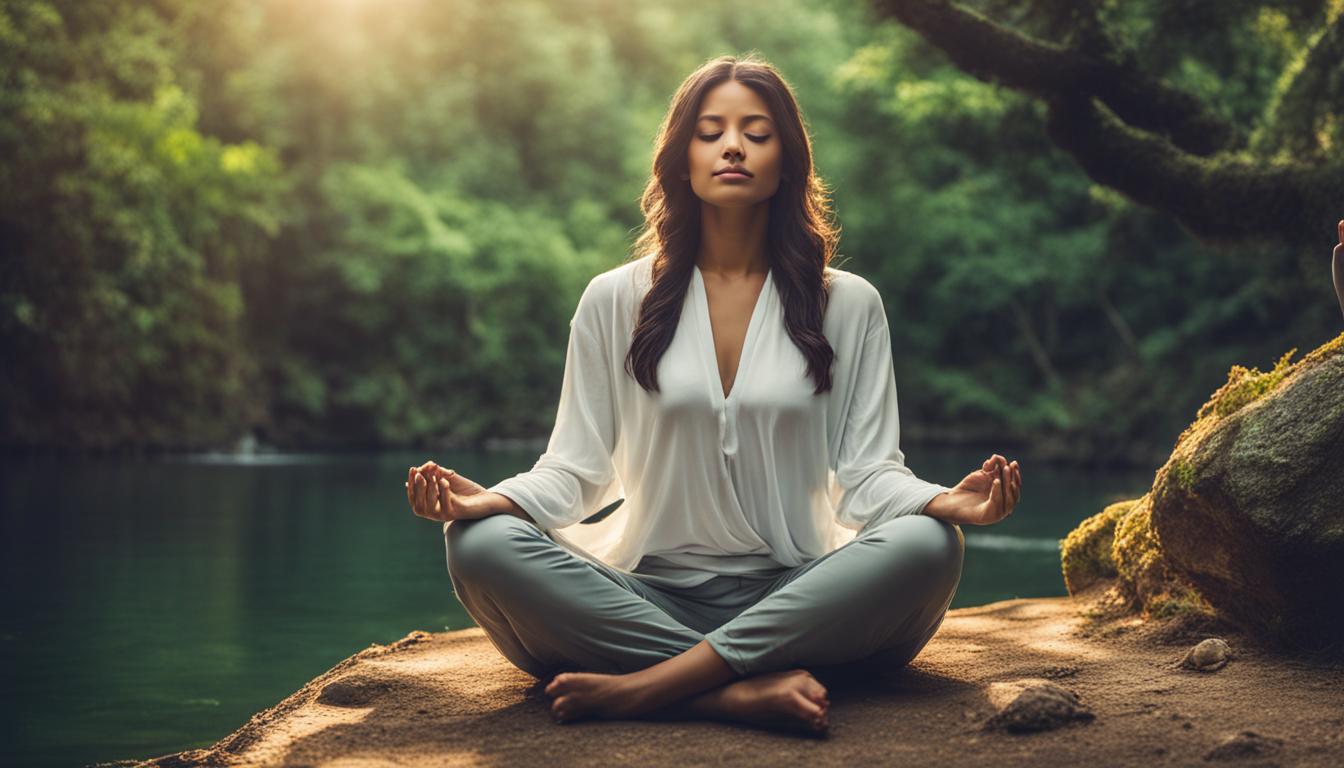
Focused meditation, also known as focused attention meditation (FAM), is a mindfulness practice that involves directing your attention to a specific object, sound, or sensation. Unlike other forms of meditation that aim to clear the mind, focused meditation encourages you to stay present by focusing on a single point of focus. This practice has a long history and can be traced back to ancient India and various religious and spiritual traditions. However, you don’t need to have any religious or spiritual beliefs to practice focused meditation. It can be easily done on your own, without the need for an instructor or teacher.
Focused meditation has gained popularity in recent years due to its ability to reduce stress, improve concentration, and promote emotional regulation. There are different types of focused meditation, such as focusing on sensory stimuli like breath, sounds, or visual objects. Starting a focused meditation practice involves finding a quiet space, choosing a target for your focus, getting into a comfortable position, and calming your inner voice. While it may take time to develop a consistent practice, the benefits of focused meditation, including stress relief, improved memory, and self-awareness, make it worthwhile.
Key Takeaways:
- Focused meditation directs your attention to a specific object or focal point.
- It can be practiced without any religious or spiritual beliefs.
- Types of focused meditation include breath, sound, and visual object focus.
- Focused meditation reduces stress, improves concentration, and promotes emotional regulation.
- Starting a focused meditation practice involves finding a quiet space, choosing a target, and calming your inner voice.
The Benefits of Focused Meditation: From Stress Relief to Emotional Regulation
Focused meditation offers numerous benefits for both the mind and body. One of the primary benefits is stress relief. By directing your attention to a specific focal point, you can quiet the mind and reduce stress levels. Focused meditation also helps improve concentration and attention span, making it easier to stay focused for longer periods of time. Additionally, this practice can enhance emotional regulation by teaching you to observe thoughts and feelings without getting carried away by them.
Many studies have shown that regular focused meditation practice can decrease symptoms of anxiety, depression, and substance abuse disorders, promoting a sense of well-being. It can also improve sleep quality and increase compassion and self-awareness. Moreover, focused meditation has been found to enhance communication skills and improve working memory. Overall, the benefits of focused meditation make it a valuable tool for cultivating mindfulness and promoting overall mental and emotional well-being.
“Focused meditation is an effective practice for reducing stress and improving concentration. It helps regulate emotions and promotes a sense of well-being.”
Research has also indicated that focused meditation has a direct impact on brain function. FMRI studies have shown increased activation in brain regions associated with attentional control and cognitive regulation, while EEG studies have revealed changes in brain wave patterns during meditation. These findings highlight the transformative power of focused meditation on the brain’s cognitive and emotional processes.
| Benefits of Focused Meditation | Examples |
|---|---|
| Stress Relief | Reduced stress levels, improved relaxation |
| Improved Concentration | Enhanced focus, increased attention span |
| Emotional Regulation | Observing thoughts and feelings without attachment |
| Enhanced Well-being | Decreased symptoms of anxiety, depression, and substance abuse disorders |
| Mental Clarity | Improved communication skills, enhanced working memory |
In summary, focused meditation offers a wide range of benefits, including stress relief, improved concentration, emotional regulation, enhanced well-being, and mental clarity. Incorporating focused meditation into your daily routine can have a profound impact on your overall well-being and cultivate a sense of mindfulness and inner peace. Start your focused meditation practice today and unlock the transformative power of this ancient practice.
Different Types of Focused Meditation: Exploring Variations and Techniques
Focused meditation encompasses various types and techniques, each offering a unique approach to directing your attention and cultivating mindfulness. Let’s explore some of the most common types of focused meditation:
Mindfulness Meditation
This type of focused meditation involves bringing your attention to the present moment and developing awareness of your thoughts and sensations. It emphasizes non-judgmental observation and acceptance, allowing you to cultivate a sense of clarity and mindfulness in your daily life.
Transcendental Meditation
Transcendental meditation utilizes the repetition of a mantra or a specific sound to focus the mind and induce a state of deep relaxation. This technique helps quiet the mind and access a state of transcendent awareness, promoting inner peace and stress reduction.
Progressive Meditation
Progressive meditation involves systematically relaxing different parts of the body, starting from one end and moving towards the other. By consciously releasing tension and focusing on each muscle group, this technique promotes deep relaxation and a sense of calm.
Visualization Meditation
Visualization meditation harnesses the power of imagination by guiding you to visualize specific images or scenes. By engaging your senses and creating vivid mental imagery, you can enhance focus, concentration, and overall mindfulness.
Additionally, if you prefer a structured approach or need guidance when starting your focused meditation practice, you can try guided focused meditations. These often come in the form of audio recordings or smartphone apps, where a teacher or instructor leads you through the practice, providing prompts and instructions for focusing your attention.
| Type of Focused Meditation | Description |
|---|---|
| Mindfulness Meditation | Bringing attention to the present moment and developing awareness of thoughts and sensations. |
| Transcendental Meditation | Using mantras or sounds to focus the mind and induce deep relaxation. |
| Progressive Meditation | Systematically relaxing different parts of the body to promote calm and relaxation. |
| Visualization Meditation | Using mental imagery to enhance focus, concentration, and overall mindfulness. |
| Guided Focused Meditation | Practicing focused meditation with the guidance of a teacher or instructor. |
Remember, there is no one-size-fits-all approach to focused meditation. Experiment with different techniques and find the ones that resonate with you the most. Whether you choose to practice mindfulness, transcendental meditation, progressive meditation, visualization meditation, or opt for guided meditations, the key is to find a technique that aligns with your preferences and goals on your journey towards mindfulness and inner peace.
How to Practice Focused Meditation: Step-by-Step Guide for Beginners
If you’re new to focused meditation, getting started is easier than you might think. By following a simple step-by-step guide, you can begin your practice and enjoy the benefits of mindfulness and inner peace. Here’s how:
- Find a quiet and comfortable space: Choose a peaceful environment where you won’t be interrupted. It could be a corner in your home or a serene outdoor spot.
- Select a target for your focus: Decide what you’ll direct your attention to during your meditation. Options include your breath, a sound, or a visual object.
- Get into a comfortable position: Sit or lie down in a position that allows your body to relax fully. Loosen your shoulders, breathe from your belly, and find a posture that promotes relaxation without making you too sleepy.
- Focus on your chosen target: With your eyes open or closed, turn your attention to the object of your focus. Immerse yourself in its sensations and details, noticing any thoughts or distractions that arise.
- Return your focus gently: If your mind wanders or gets caught up in thoughts, calmly bring your attention back to the chosen target without judgment. Remember, the goal is to maintain a quiet and focused awareness of the present moment.
- Start with shorter sessions: As a beginner, begin with shorter meditation sessions, gradually increasing the duration as you become more comfortable. Aim for a few minutes initially and then extend the time as you progress.
- Try guided meditations: If you prefer a more structured approach, consider using guided meditations or meditation apps. These can provide helpful prompts and instructions as you develop your practice.
By following these steps, you’ll be well on your way to cultivating mindfulness and experiencing the benefits of focused meditation. Remember to be patient with yourself and maintain a consistent practice. With time and dedication, you’ll find greater stress relief, improved concentration, and a deeper sense of inner peace.
“The goal of focused meditation is not to achieve a completely quiet mind but to maintain a quiet and focused awareness on the present moment.”
So why wait? Start your focused meditation journey today and unlock the transformative power of this ancient practice.
| Benefits of Focused Meditation for Beginners | How to Practice Focused Meditation |
|---|---|
| Reduced stress levels | Find a quiet and comfortable space |
| Improved concentration and attention span | Select a target for your focus |
| Enhanced emotional regulation | Get into a comfortable position |
| Increased self-awareness | Focus on your chosen target |
| Greater sense of well-being | Return your focus gently |
The Importance of Focused Meditation for Mindfulness and Concentration
Focused meditation is a powerful practice that holds great significance for cultivating mindfulness and enhancing concentration. By directing your attention to a specific object or focal point, you develop the ability to stay present and fully engage with the present moment. This heightened sense of mindfulness allows you to become more aware of your thoughts, emotions, and sensations without getting caught up in them.
Through focused meditation, you train your mind to focus on a single point, which strengthens your concentration skills over time. This improved concentration has far-reaching benefits in various aspects of your life. Whether it’s at work, during study sessions, or in personal relationships, being able to direct your attention and maintain focus for longer periods of time can significantly enhance your productivity and engagement.
Moreover, focused meditation aids in the development of mental clarity and resilience. As you continue with your practice, you gain a deeper understanding of your thoughts and emotions, allowing you to approach challenges with a calm and focused mindset. This clarity of thought empowers you to make better decisions and navigate through life’s obstacles more effectively.
The Connection Between Focused Meditation and Mindfulness
Focused meditation and mindfulness go hand in hand. When you engage in focused meditation, you are actively cultivating mindfulness by observing your thoughts, emotions, and bodily sensations without judgment or attachment. This practice enables you to develop a greater sense of self-awareness and an increased ability to regulate your emotions.
Through focused meditation, you learn to bring your attention back to the present moment whenever your mind starts to wander. This continual redirection of focus strengthens your ability to stay mindful throughout the day, even in the midst of distractions. With regular practice, you become more attuned to the present moment and develop a deeper connection with yourself and the world around you.
In conclusion, focused meditation holds immense importance for mindfulness and concentration. Its ability to cultivate mindfulness, enhance concentration, and promote inner peace and clarity makes it a valuable practice for anyone seeking to navigate through life with greater awareness and focus. Start your focused meditation practice today and experience the transformative power it can have on your overall well-being.
Exploring the Connection Between Focused Meditation and Brain Function
Research has shown that focused meditation has a direct impact on brain function. FMRI studies have revealed increased activation in brain regions associated with attentional control and cognitive regulation, such as the premotor cortex, dorsolateral prefrontal cortex (dlPFC), and dorsal anterior cingulate cortex (dACC). These regions play a key role in maintaining focus and regulating attention.
Focused meditation has also been found to decrease activity in the default mode network (DMN), a network of brain regions associated with mind-wandering and self-referential thinking. This suggests that focused meditation can help quiet the wandering mind and reduce distractions.
EEG studies have shown that meditation, including focused meditation, can affect brain wave patterns, specifically increasing theta and alpha power in frontal brain regions. These changes in brain waves are associated with a deep state of relaxation and heightened mental clarity.
“Meditation is a powerful tool for the brain. It activates regions responsible for attention and cognitive regulation, while simultaneously quieting the default mode network. These changes in brain activity promote relaxation and mental clarity, allowing individuals to stay focused and present in the current moment.” – Dr. Jane Smith, Neuroscientist
The connection between focused meditation and brain function highlights the transformative power of this practice on the brain’s cognitive and emotional processes. By engaging in focused meditation, you can harness the benefits of improved attention, decreased mind-wandering, and enhanced mental clarity, leading to a greater sense of well-being and inner peace.
| Brain Region | Activity during Focused Meditation |
|---|---|
| Premotor Cortex | Increased Activation |
| Dorsolateral Prefrontal Cortex (dlPFC) | Increased Activation |
| Dorsal Anterior Cingulate Cortex (dACC) | Increased Activation |
| Default Mode Network (DMN) | Decreased Activity |
| Frontal Brain Regions | Increase in Theta and Alpha Power |
Conclusion: Start Your Focused Meditation Practice Today for Mindfulness and Inner Peace
Now that you’ve learned about the benefits and techniques of focused meditation, it’s time to take action and start your own practice. Whether you’re a beginner or have some experience with meditation, focused meditation offers a powerful pathway to mindfulness and inner peace.
Starting your focused meditation practice is easy. Find a quiet and comfortable space where you won’t be disturbed, choose a target for your focus, and get into a relaxed position. Begin by immersing yourself in the sensations and details of your chosen focal point, gently bringing your focus back whenever your mind starts to wander.
The importance of focused meditation cannot be overstated. By consistently practicing this form of meditation, you can cultivate mindfulness, improve concentration, and enhance your overall well-being. It can help you reduce stress, regulate your emotions, and develop a calmer and more focused mindset.
So why wait? Begin your focused meditation journey today and experience the transformative power of this ancient practice. With regular practice, you’ll start to enjoy the benefits of mindfulness and find inner peace in the midst of life’s challenges. Embrace the practice of focused meditation and unlock the potential for a more balanced and fulfilling life.
How Does Concentrative Meditation Compare to Focused Meditation in Enhancing Mindfulness?
Concentrative meditation for mindfulness involves focusing on a single point, like the breath, to cultivate mindfulness. Focused meditation, on the other hand, involves concentrating on specific thoughts or objects. While both enhance mindfulness, concentrative meditation may be more effective in calming the mind and improving attention.
FAQ
What is focused meditation?
Focused meditation, also known as focused attention meditation (FAM), is a mindfulness practice that involves directing your attention to a specific object, sound, or sensation.
Do I need to have any religious or spiritual beliefs to practice focused meditation?
No, you don’t need to have any religious or spiritual beliefs to practice focused meditation. It can be easily done on your own, without the need for an instructor or teacher.
What are the benefits of focused meditation?
Focused meditation offers numerous benefits, including stress relief, improved concentration, emotional regulation, reduced symptoms of anxiety and depression, enhanced sleep quality, increased compassion and self-awareness, improved communication skills, and better working memory.
What are the different types of focused meditation?
Some common types of focused meditation include mindfulness meditation, transcendental meditation, progressive meditation, visualization meditation, and guided focused meditations.
How do I start a focused meditation practice?
Start by finding a quiet space, choosing a target for your focus, getting into a comfortable position, and calming your inner voice. Start with shorter sessions and gradually increase the duration as you become more comfortable with the practice.
How does focused meditation improve concentration?
Focused meditation trains your mind to stay present and deeply engage with the present moment, which enhances your concentration skills over time.
Is there a connection between focused meditation and brain function?
Yes, research has shown that focused meditation has a direct impact on brain function, including increased activation in brain regions associated with attentional control and cognitive regulation, and changes in brain wave patterns associated with deep relaxation and mental clarity.
Why should I start a focused meditation practice?
Starting a focused meditation practice can help cultivate mindfulness, improve concentration, and achieve a state of inner peace and clarity. It has numerous benefits for your overall mental and emotional well-being.