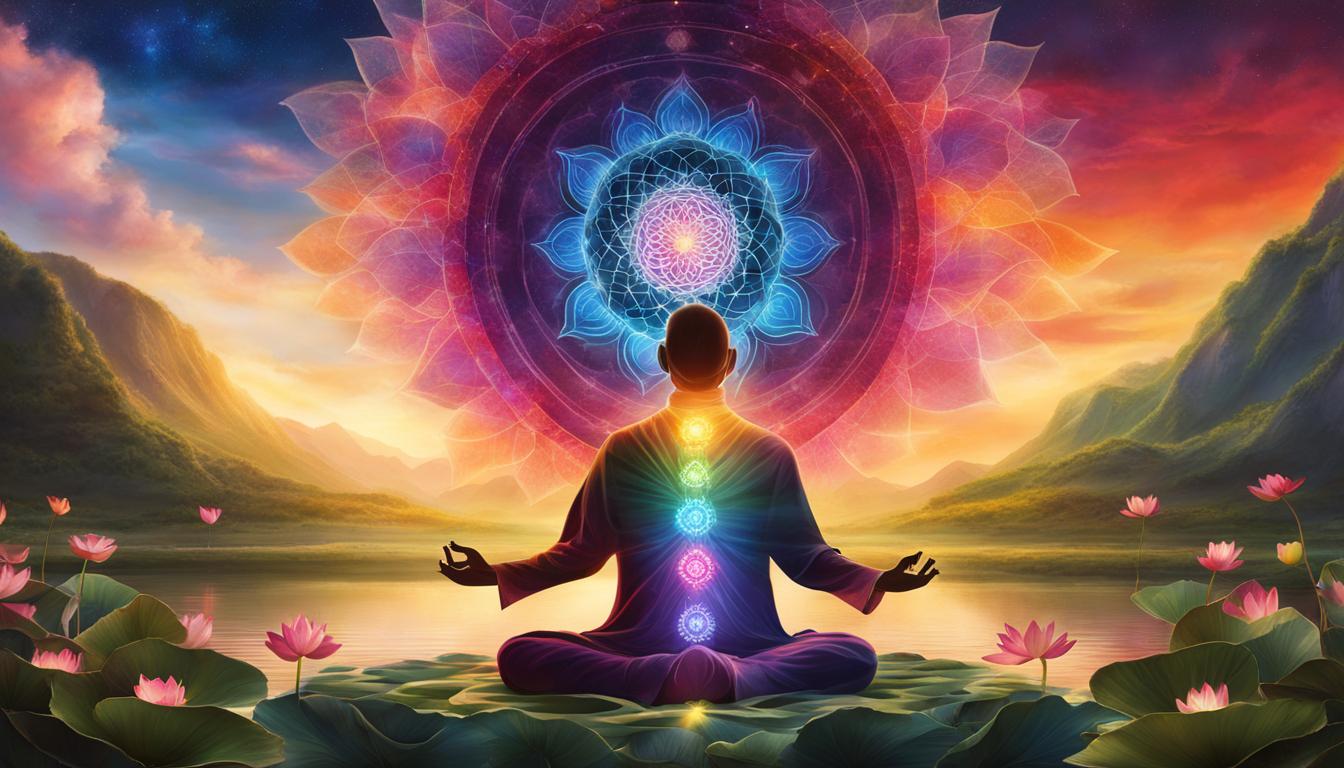
Welcome to our article on chakras! Today, we will explore the meaning and significance of chakras, which are energy centers in the body that have been an integral part of meditation practices in Hinduism and Buddhism for centuries. The word “chakra” originates from Sanskrit and translates to “disk” or “wheel,” representing the spinning wheels of energy that are believed to exist along the spine.
Chakras are associated with specific organs and nerve bundles and are thought to play a vital role in achieving balance and promoting overall well-being. Depending on the tradition, there may be different beliefs about the number of chakras, with some recognizing seven main chakras and others acknowledging more.
In this article, we will discuss the seven main chakras, the effects of blocked or unbalanced chakras, methods for unblocking and balancing them, and the importance of chakra balancing for physical and emotional health. We will also explore the chakra system in different traditions, the symbolism and significance of chakras, and how understanding and working with them can deepen your spiritual connection.
Key Takeaways:
- A chakra is an energy center in the body associated with certain organs and nerve bundles.
- The word “chakra” means “disk” or “wheel” in Sanskrit.
- There are varying beliefs about the number of chakras, with some traditions recognizing seven main chakras.
- Blocked or unbalanced chakras can lead to physical and emotional symptoms.
- Practices such as yoga, breathing exercises, and meditation can help unblock and balance chakras.
The Seven Main Chakras
The chakra system commonly refers to the seven main chakras that run along the spine. Each chakra is associated with different aspects of physical, emotional, and spiritual well-being. Understanding these seven chakras can provide insights into how to achieve balance and harmony in your life.
Root Chakra
The root chakra, also known as the base chakra, is located at the base of the spine. It represents feelings of security, stability, and being grounded. When this chakra is balanced, you feel a sense of safety and connection to the physical world.
Sacral Chakra
The sacral chakra is located in the lower abdomen and is associated with creativity, passion, and pleasure. It governs your ability to experience and enjoy the sensory and emotional aspects of life. When this chakra is balanced, you are open to new experiences and able to express your emotions freely.
Solar Plexus Chakra
The solar plexus chakra is located in the upper abdomen, near the stomach. It is associated with personal power, confidence, and self-esteem. When this chakra is balanced, you have a strong sense of self-worth and are able to assert yourself in a healthy and balanced way.
Heart Chakra
The heart chakra is located in the center of the chest, near the heart. It represents love, compassion, and emotional well-being. When this chakra is balanced, you are able to give and receive love freely, and you feel a deep sense of connection to others.
Throat Chakra
The throat chakra is located in the throat and is associated with communication, self-expression, and authenticity. When this chakra is balanced, you are able to speak your truth with clarity and confidence, and you have the ability to express yourself creatively.
Third Eye Chakra
The third eye chakra is located in the middle of the forehead, between the eyebrows. It is associated with intuition, inner wisdom, and spiritual awareness. When this chakra is balanced, you have a strong sense of intuition and are able to trust your inner guidance.
Crown Chakra
The crown chakra is located at the top of the head and represents spiritual connection, higher consciousness, and enlightenment. When this chakra is balanced, you have a deep sense of spiritual connection and are able to experience a higher state of consciousness.
By understanding and working with these seven main chakras, you can unlock their potential to promote balance and well-being in your life.
| Chakra | Location | Associated Qualities |
|---|---|---|
| Root Chakra | Base of the spine | Security, stability, grounding |
| Sacral Chakra | Lower abdomen | Creativity, passion, pleasure |
| Solar Plexus Chakra | Upper abdomen | Personal power, confidence, self-esteem |
| Heart Chakra | Center of the chest | Love, compassion, emotional well-being |
| Throat Chakra | Throat | Communication, self-expression, authenticity |
| Third Eye Chakra | Middle of the forehead | Intuition, inner wisdom, spiritual awareness |
| Crown Chakra | Top of the head | Spiritual connection, higher consciousness, enlightenment |
Effects of Blocked or Unbalanced Chakras
When your chakras are blocked or unbalanced, it can have various effects on your physical and emotional well-being. Each chakra is connected to specific organs and nerve bundles, so any disruptions in their energy flow can manifest as physical symptoms. For example, a blocked root chakra may lead to feelings of insecurity and a lack of stability, while an unbalanced heart chakra can result in difficulties in showing love and compassion.
Emotionally, blocked or unbalanced chakras can cause a range of symptoms. You may experience mood swings, anxiety, depression, or difficulty in expressing your emotions. These imbalances can also affect your overall health, as the chakras are believed to influence specific bodily functions. It’s important to pay attention to these signs and take steps to unblock and balance your chakras for optimal well-being.
Here’s a table summarizing the effects of blocked or unbalanced chakras and the associated physical and emotional symptoms:
| Chakra | Physical Symptoms | Emotional Symptoms |
|---|---|---|
| Root Chakra | Lower back pain, constipation, immune system issues | Insecurity, lack of stability, fear |
| Sacral Chakra | Reproductive system disorders, urinary issues, lower back pain | Emotional instability, low libido, guilt |
| Solar Plexus Chakra | Digestive issues, ulcers, adrenal imbalances | Low self-esteem, lack of confidence, anger |
| Heart Chakra | Heart and lung conditions, high blood pressure, immune system imbalances | Difficulty giving and receiving love, jealousy, resentment |
| Throat Chakra | Throat and thyroid problems, mouth ulcers, jaw tension | Difficulty expressing oneself, fear of judgment, feeling unheard |
| Third Eye Chakra | Headaches, vision problems, hormonal imbalances | Lack of clarity, difficulty making decisions, trouble accessing intuition |
| Crown Chakra | Headaches, insomnia, neurological disorders | Feeling disconnected from spirituality, lack of purpose, confusion |
By understanding the effects of blocked or unbalanced chakras, you can recognize the signs and take steps to restore harmony and balance to your energy centers. In the next section, we will explore various methods to unblock and balance the chakras, including yoga poses, breathing exercises, and meditation.
Unblocking and Balancing Chakras
Unblocking and balancing your chakras is essential for maintaining optimal well-being and promoting a harmonious flow of energy throughout your body. There are various methods you can incorporate into your daily routine to achieve this, including practicing yoga poses, engaging in breathing exercises, and dedicating time to meditation.
Yoga poses are specifically designed to activate and harmonize the energy flow within each chakra. For example, if you want to balance your root chakra, you can try grounding poses such as Tree Pose or Mountain Pose. These poses help strengthen your connection to the earth and promote feelings of stability and security.
In addition to yoga, breathing exercises play a crucial role in unblocking and balancing your chakras. By focusing on your breath and engaging in deep, intentional inhalations and exhalations, you can release stagnant energy and promote a steady flow of prana, or life force energy, throughout your body. Try practicing alternate nostril breathing or the 4-7-8 breath technique to experience the benefits of balanced chakras.
Lastly, dedicating time to meditation allows you to cultivate awareness and promote the flow of energy through your chakras. During meditation, you can visualize each chakra as a spinning wheel of vibrant energy, envisioning it becoming clear and unobstructed. By immersing yourself in a meditative state, you can gain a deeper understanding of your inner self and work towards achieving optimal chakra balance.
| Methods to Unblock and Balance Chakras | Description |
|---|---|
| Yoga Poses | Specific poses associated with each chakra can help activate and harmonize the energy flow. |
| Breathing Exercises | Engaging in deep, intentional breathwork can release stagnant energy and promote a steady flow of life force energy. |
| Meditation | Cultivating awareness and visualizing the chakras during meditation can unblock and balance the energy centers. |
The Importance of Chakra Balancing
Chakra balancing plays a crucial role in maintaining overall well-being by promoting a harmonious flow of energy throughout your body. When your chakras are balanced, it enhances the mind-body connection, fostering emotional well-being and improving physical health. By regularly engaging in practices that promote chakra balancing, you can experience a greater sense of harmony, love, and compassion in your life.
The mind-body connection is significant when it comes to chakra balancing. The chakras not only affect your physical health but also impact your emotions and thoughts. When your chakras are balanced, you are better able to manage stress, regulate your emotions, and foster a positive outlook on life. This balance allows you to experience a deeper sense of inner peace and well-being.
In terms of physical health, imbalances in the chakras can manifest as various symptoms and illnesses. For instance, an unbalanced root chakra may lead to issues like lower back pain, while an imbalanced throat chakra may result in difficulties with communication and expression. By unblocking and balancing your chakras, you can address these physical symptoms and promote overall vitality and wellness.
“Chakra balancing is essential for maintaining emotional well-being and physical health. It allows you to cultivate a deeper understanding of yourself and your spiritual connection to the world around you.”
The Mind-Body Connection and Emotional Well-being
Chakra balancing has a profound impact on your emotional well-being. By aligning and harmonizing your chakras, you can experience greater harmony, love, and compassion in your relationships and interactions with others. Balanced chakras facilitate an open heart, better communication, and a greater capacity for empathy and understanding.
When your chakras are balanced, you are more in tune with your emotions and can navigate them with greater ease. This emotional awareness allows you to respond to challenges in a more constructive and positive manner, leading to improved relationships and overall emotional fulfillment.
The Link Between Chakra Balancing and Physical Health
Chakra balancing is closely tied to physical health. Each chakra is associated with specific organs and bodily functions. When a chakra is blocked or unbalanced, it can lead to physical symptoms and health issues related to that particular area of the body.
| Chakra | Associated Organs/Body Parts | Physical Symptoms |
|---|---|---|
| Root Chakra | Spine, Legs, Feet | Lower back pain, Leg cramps, Foot problems |
| Sacral Chakra | Reproductive organs, Lower abdomen | Menstrual issues, Lower back pain, Sexual dysfunction |
| Solar Plexus Chakra | Stomach, Intestines, Digestive system | Digestive problems, Stomach ulcers, Weight gain/loss |
| Heart Chakra | Heart, Lungs, Chest | Heart and lung issues, Chest pain, High blood pressure |
| Throat Chakra | Thyroid, Throat, Neck | Thyroid disorders, Sore throats, Neck pain/tension |
| Third Eye Chakra | Brain, Eyes, Pituitary gland | Headaches/migraines, Vision problems, Insomnia |
| Crown Chakra | Brain, Nervous system | Neurological disorders, Dizziness, Migraines |
By unblocking and balancing your chakras, you can address these physical symptoms and support the optimal functioning of the associated organs and systems in your body.
Chakra balancing is not only important for your emotional well-being but also for your physical health. By embracing the concept of chakras and incorporating practices that promote chakra balancing, you can enhance your overall well-being, achieve a greater sense of harmony and vitality, and experience a deeper connection to yourself and the world around you.
Understanding the Chakra System in Different Traditions
The concept of the chakra system is present in different religious and spiritual traditions, including Hinduism, Buddhism, and Theosophy. While there are similarities in the understanding of the chakras, there are also differences in terms of the number and specific attributes assigned to each chakra.
In Hinduism, sources often reference six or seven chakras, each associated with certain qualities and energies. The Muladhara (root) chakra, located at the base of the spine, represents stability and grounding, while the Sahasrara (crown) chakra, positioned at the top of the head, signifies spiritual connection and enlightenment.
On the other hand, Buddhist texts primarily mention five chakras, which are referred to as “wheels” rather than energy centers. These chakras are believed to reside along the central axis of the body and correspond to specific meditation practices and spiritual attainments.
The modern Western interpretation of the chakra system has been influenced by Theosophy, a philosophical and spiritual movement. Theosophy introduced additional attributes and correspondences to the chakras, incorporating concepts such as colors, sounds, and elements into the understanding of each energy center.
“The chakra system serves as a framework for understanding and working with the subtle energy centers in the body.”
Regardless of the tradition, the chakra system serves as a framework for understanding and working with the subtle energy centers in the body. It provides a means of exploring and balancing the physical, emotional, and spiritual aspects of our being, ultimately leading to a greater sense of harmony and well-being.
| Chakra | Hinduism | Buddhism | Theosophy |
|---|---|---|---|
| Root Chakra | Muladhara | Five chakras with no specific names | Base chakra |
| Sacral Chakra | Svadhisthana | Five chakras with no specific names | Sacral chakra |
| Solar Plexus Chakra | Manipura | Five chakras with no specific names | Solar plexus chakra |
| Heart Chakra | Anahata | Five chakras with no specific names | Heart chakra |
| Throat Chakra | Vishuddha | Five chakras with no specific names | Throat chakra |
| Third Eye Chakra | Ajna | Five chakras with no specific names | Brow chakra |
| Crown Chakra | Sahasrara | Five chakras with no specific names | Crown chakra |
The Symbolism and Significance of Chakras
Chakras hold deep symbolism and significance in various spiritual and esoteric traditions. They are not just energy centers associated with specific organs and physical functions, but also represent aspects of spiritual growth and consciousness. The chakra energy system is viewed as a means to connect with one’s higher self, others, and the universe. Each chakra is linked to different qualities and attributes, such as love, communication, intuition, and spirituality. By understanding and working with the chakras, individuals can cultivate a deeper understanding of themselves and their spiritual connection to the world around them.
The symbolism of each chakra is rich and meaningful. For example, the root chakra, located at the base of the spine, symbolizes stability, grounding, and a strong foundation. It represents our connection to the Earth and provides a sense of security. The heart chakra, situated in the center of the chest, symbolizes love, compassion, and emotional healing. It is associated with our ability to give and receive love, both to ourselves and others. The crown chakra, located at the top of the head, symbolizes spiritual connection and enlightenment. It represents our higher consciousness, divine wisdom, and the realization of our life’s purpose.
“The chakras are like portals to different aspects of our being, allowing us to explore and integrate the physical, emotional, and spiritual dimensions of our existence.”
The chakra system provides a framework for understanding and working with the subtle energy centers in the body. It allows individuals to explore and balance the various aspects of their being, promoting holistic well-being. By nurturing and aligning the chakras, individuals can experience a greater sense of harmony, vitality, and spiritual connection. The chakras serve as guides on the journey of self-discovery and self-realization, aiding in personal growth and the quest for higher consciousness.
The Chakra Energy System
The chakra energy system is an intricate web that connects the physical body to the subtle realms of energy and consciousness. It is believed that energy flows through the chakras, influencing our physical, emotional, and spiritual well-being. The chakras are like spinning wheels of energy that regulate the flow of energy throughout the body. When the chakras are balanced and harmonious, energy flows freely, promoting optimal health and vitality. However, when the chakras are blocked or unbalanced, it can result in physical and emotional imbalances, leading to various symptoms and health issues.
Understanding the chakra energy system and its symbolism allows individuals to tap into the profound wisdom and healing potential that lies within. By working with the chakras through practices like meditation, yoga, and energy healing, individuals can cultivate a deeper connection to themselves and the world around them. The chakra energy system serves as a powerful tool for self-exploration, spiritual growth, and the journey towards wholeness and enlightenment.
| Chakra | Symbolism |
|---|---|
| Root Chakra | Stability, grounding, security |
| Sacral Chakra | Creativity, sensuality, emotional well-being |
| Solar Plexus Chakra | Confidence, personal power, transformation |
| Heart Chakra | Love, compassion, emotional healing |
| Throat Chakra | Communication, self-expression, truth |
| Third Eye Chakra | Intuition, clarity, inner wisdom |
| Crown Chakra | Spiritual connection, enlightenment, higher consciousness |
Conclusion
In conclusion, chakras are energy centers that play a vital role in promoting balance and overall well-being. These spinning wheels of energy are part of ancient meditation practices in Hinduism and Buddhism. The chakra system consists of seven main chakras that run along the spine, each associated with different physical, emotional, and spiritual aspects.
Blocked or unbalanced chakras can lead to various symptoms and health issues, affecting both your body and emotions. However, you can unblock and balance your chakras through practices like yoga, breathing exercises, and meditation. These techniques activate and harmonize the energy flow, restoring harmony and vitality to your being.
Understanding the symbolism and significance of the chakras can deepen your spiritual connection and provide valuable insights into yourself and the world around you. By embracing the concept of chakras and incorporating chakra balancing techniques into your daily life, you can enhance your overall well-being, achieve a greater sense of harmony, and experience improved physical, mental, and emotional health.
How Does Chakra 174 Hz Relate to the Definition of Chakra?
Chakra 174 hz frequencies and system play an integral role in understanding the definition of chakra. Chakra refers to the seven energy centers within the body, and 174 Hz specifically targets the root chakra. This frequency helps to balance and activate this foundational chakra, promoting feelings of stability, security, and grounding. By working with chakra 174 Hz frequencies, individuals can enhance their knowledge and experience of chakra energy and its profound impact on overall well-being.
FAQ
What is the definition of chakra?
Chakras are energy centers in the body that are part of ancient meditation practices in Hinduism and Buddhism. The word “chakra” means “disk” or “wheel” in Sanskrit and refers to these spinning wheels of energy.
What are the seven main chakras?
The seven main chakras are the root chakra, sacral chakra, solar plexus chakra, heart chakra, throat chakra, third eye chakra, and crown chakra.
What are the effects of blocked or unbalanced chakras?
Blocked or unbalanced chakras can lead to various physical and emotional symptoms and have an impact on overall health.
How can I unblock and balance my chakras?
You can unblock and balance your chakras through practices like yoga poses, breathing exercises, and meditation.
Why is chakra balancing important?
Chakra balancing is important for maintaining overall well-being, promoting a harmonious flow of energy, and enhancing the mind-body connection.
How is the chakra system understood in different traditions?
The chakra system is present in various religious and spiritual traditions, such as Hinduism, Buddhism, and Theosophy, with slight variations in the number and attributes assigned to each chakra.
What is the symbolism and significance of chakras?
Chakras hold deep symbolism and significance, representing not only specific organs and physical functions but also aspects of spiritual growth and consciousness.