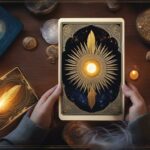

Are you interested in diving into the world of tarot cards? Learning how to get started with tarot cards is easier than you might think. If you want to embark on this exciting journey of self-discovery and intuition, there are a few simple steps you can follow to begin your tarot practice.
Key Takeaways:
- Choose a tarot card deck that resonates with you and feels right.
- Visit local bookstores or metaphysical shops to see and hold the decks before making a purchase.
- Get familiar with the basics of a tarot deck, which consists of 78 cards divided into major arcana and minor arcana.
- Create open-ended questions for introspection and personal growth.
- Set up a reading area with specific tablecloths, candles, or crystals to enhance the tarot experience.
Choosing the Right Deck
The first step in getting started with tarot cards is finding a deck that speaks to you and feels right in your hands. It’s important to choose a deck that resonates with your energy and connects with your intuition. To help you find the perfect deck, consider visiting local bookstores or metaphysical shops where you can see and hold different decks before making a purchase.
Exploring the decks in person allows you to get a sense of their artwork, symbolism, and overall energy. Pay attention to how each deck makes you feel and trust your intuition when making a decision. Some decks might have vibrant and colorful designs, while others might have a more minimalist or traditional aesthetic. Find the deck that captures your attention and sparks your curiosity.
Remember, there is no right or wrong choice when it comes to selecting a tarot card deck. Each deck has its own unique energy and personality, so it’s crucial to choose one that resonates with you on a personal level. Trust your instincts, and once you find the deck that speaks to you, it will become a powerful tool for self-reflection, guidance, and spiritual growth.
| Key Considerations for Choosing a Tarot Card Deck | Examples |
|---|---|
| Artwork and Aesthetic | Rider-Waite Tarot, The Wild Unknown Tarot |
| Thematic Focus | Tarot of the Divine, The Modern Witch Tarot |
| Suitability for Beginners | Universal Waite Tarot, The Fountain Tarot |
| Personal Connection | Shadowscapes Tarot, The Light Seer’s Tarot |
“Choose a deck that resonates with your energy and connects with your intuition.”
Once you have chosen a deck, it’s time to move on to the next step, which is understanding the basics of tarot cards. This will equip you with the foundational knowledge needed to dive deeper into the world of tarot and explore the meanings and symbolism behind each card.
Understanding the Basics of Tarot Cards
Before you dive into reading tarot cards, it’s essential to familiarize yourself with the basics of a tarot deck. A tarot deck consists of 78 cards divided into major arcana and minor arcana. The major arcana cards represent significant life events and spiritual lessons, while the minor arcana cards represent the day-to-day aspects of life. Each card holds its own unique meaning and symbolism, which can vary depending on the deck you choose.
When interpreting tarot card meanings, it’s important to consider the suits and court cards. The minor arcana cards are divided into four suits: cups, wands, swords, and pentacles. Each suit represents different elements of life, such as emotions, creativity, intellect, and material abundance, respectively. The court cards within each suit represent different personalities or roles.
Exploring the symbolism in the images of tarot cards can also provide deeper insights. The artwork on each card is designed to evoke emotions and convey messages. Take time to observe the details, colors, and symbols on each card, as they can enhance your understanding and interpretation. The more you study and connect with the cards, the more intuitive your readings will become.
Benefits of Keeping a Tarot Journal
One valuable tool for learning to read the tarot deck is keeping a tarot journal. A tarot journal is a personal record where you can document your interpretations, insights, and experiences with each card. It serves as an encyclopedia of your own card meanings, tailored to your unique understanding and intuition. By recording your thoughts and observations, you can track your progress, discover patterns, and deepen your connection with the cards.
In your tarot journal, you can also explore different tarot spreads and their interpretations. Experiment with various spreads, such as the Celtic cross spread for a more in-depth reading or a simple one-card spread for daily guidance. Each spread offers a different perspective and allows you to explore different aspects of your question or situation.
| Key Points to Remember: |
|---|
| 1. Familiarize yourself with the basics of a tarot deck, including the major and minor arcana cards. |
| 2. Consider the suits and court cards when interpreting tarot card meanings. |
| 3. Explore the symbolism in the card images for deeper insights. |
| 4. Keep a tarot journal to record your interpretations and track your progress. |
| 5. Experiment with different tarot spreads to gain different perspectives. |
Performing a Tarot Card Reading
Now that you have your tarot deck ready, it’s time to perform your first tarot card reading. Follow these step-by-step instructions to gain insights and guidance from the cards.- Shuffle and cut the deck: Begin by shuffling the cards while focusing on your question or intention. This helps infuse your energy into the cards. Once shuffled, cut the deck into smaller decks and restack them randomly. This step ensures that the cards you draw are truly intuitive and offer the guidance you seek.
- Pull the cards: Next, pull the cards from the shuffled and cut deck. You can choose to pull the cards intuitively, letting your intuition guide you in selecting the cards that feel right, or you can use tarot card spreads. For beginners, a one-card spread is recommended as it offers a simple and concise message. If you’re looking for a more detailed reading, consider using a Celtic cross spread, which provides insights into different aspects of your life.
- Interpret the cards: Once you have pulled your cards, it’s time to interpret their meanings. Refer to a guidebook or trusted online resources to understand the symbolism, imagery, and traditional interpretations of the cards. Pay attention to the suits (cups, swords, pentacles, and wands) and the court cards (page, knight, queen, and king) as they provide additional layers of meaning.
- Keep a tarot journal: To deepen your understanding and track your progress, consider keeping a tarot journal. Write down your interpretations of the cards, the questions asked, and any insights or messages received during the reading. Over time, you’ll create your own personalized encyclopedia of card meanings and develop a deeper connection with the Tarot.
| Step | Instructions |
|---|---|
| 1 | Shuffle and cut the deck |
| 2 | Pull the cards intuitively or use spreads |
| 3 | Interpret the cards using guidebooks or online resources |
| 4 | Keep a tarot journal to record interpretations and insights |
Learning to Read the Tarot Deck
Reading tarot cards is not just about memorizing card meanings but also about developing your intuition and understanding the deeper symbolism in each card. As a beginner, it’s important to take it one step at a time and gradually build your knowledge and confidence. Here are some tips to help you navigate the world of tarot card reading:
- Familiarize Yourself with the Meanings: Start by learning the general meanings of the cards in the tarot deck. Each card has its own unique symbolism and interpretation, which can be influenced by its position in a spread and the surrounding cards. Take your time to study and internalize these meanings, but also trust your intuition when interpreting the cards.
- Pay Attention to Suits and Court Cards: The tarot deck consists of four suits – Cups, Pentacles, Swords, and Wands – each representing different aspects of life. Additionally, the court cards (Page, Knight, Queen, and King) provide further insights into personalities and energies. Understanding the qualities associated with each suit and court card will deepen your understanding of the readings.
- Explore Symbolism: The images on tarot cards are rich in symbolism, unlocking hidden meanings and messages. Take the time to examine the details in each card and the relationships between the elements portrayed. Consider the colors, objects, and figures depicted, and how they relate to the card’s overall meaning. This exploration will help you connect with the cards on a deeper level.
- Keep a Tarot Journal: Keeping a tarot journal is a valuable practice for beginners and experienced readers alike. In your journal, record your interpretations of the cards, insights gained during readings, and any personal connections you make with the symbolism. Over time, your journal will become a valuable resource that reflects your growth and understanding of the tarot deck.
Get Started on Your Tarot Journey
With these tips in mind, you’re ready to embark on your tarot card reading journey. Remember, reading tarot cards is a personal experience, and there’s no one-size-fits-all approach. Allow your intuition to guide you, trust in your interpretations, and embrace the transformative power of the tarot deck. The more you practice and engage with the cards, the deeper your connection and understanding will become. So, grab your deck, open your mind, and let the tarot unfold its wisdom before you.
| Tip | Meaning |
|---|---|
| 1 | Take your time to study and internalize the meanings of the cards. |
| 2 | Pay attention to the suits and court cards for deeper insights. |
| 3 | Explore the symbolism in the cards to unlock hidden meanings. |
| 4 | Keep a tarot journal to record your interpretations and insights. |
What Are Some Tips for Using Tarot Cards for Beginners?
Using tarot cards beginners should start by familiarizing themselves with the meanings of each card. They can then choose a deck that resonates with them and begin practicing with simple spreads. It’s important to trust their intuition and connect with the cards on a personal level. Consistency and practice are key to gaining confidence in using tarot cards.
Conclusion
Congratulations! You have now learned the essential steps to get started with tarot cards and embark on a fascinating journey of self-discovery and divination.
By choosing a tarot card deck that resonates with you, you are setting the foundation for a meaningful connection with the cards. Visiting local bookstores or metaphysical shops allows you to see and hold the decks before making a purchase, ensuring that you find the one that feels right.
Once you have your deck, familiarize yourself with the basics of tarot cards. Understand that the deck consists of 78 cards divided into major arcana and minor arcana. Craft open-ended questions that stimulate introspection and prepare a serene reading area with tablecloths, candles, or crystals to set the mood.
When performing a tarot card reading, shuffle the deck while focusing on your question. Cut the deck into smaller decks and restack them randomly. Then, pull the cards intuitively or use spreads like the one-card spread for beginners or the Celtic cross spread for a more comprehensive reading.
Now comes the exciting part: learning to read the tarot deck. Understand the meanings of the cards, paying attention to the suits and court cards. Explore the symbolism in the card images, allowing your intuition to guide you. Keeping a tarot journal will not only help you record your interpretations but also create your own encyclopedia of card meanings, honing your skills along the way.
So, grab your tarot deck, trust your intuition, and embrace this transformative tool for personal growth and self-reflection. The world of tarot awaits you with its wisdom and insight. Happy reading!