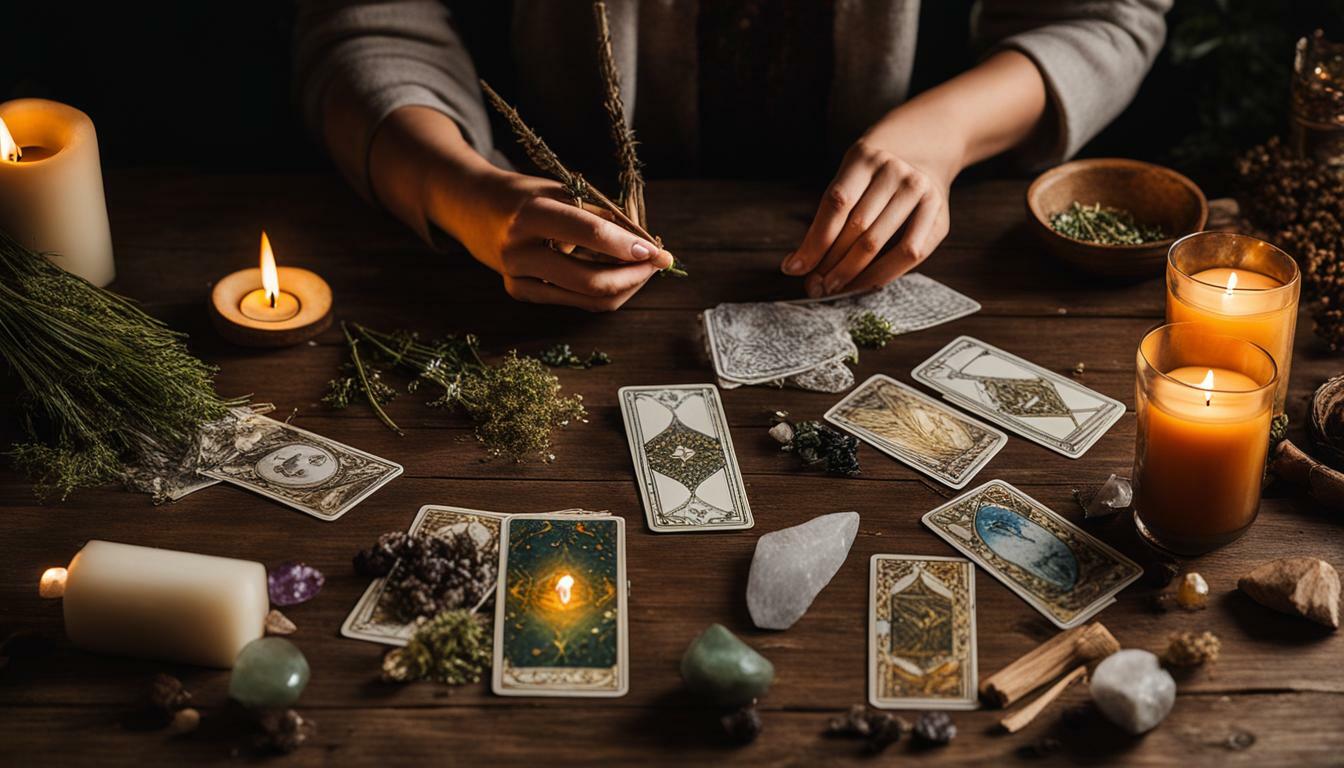
Making your own tarot cards can be a rewarding and spiritual journey that allows you to personalize your tarot readings. In this guide, we will show you how to make tarot cards through a DIY approach.
Key Takeaways:
- Set an intention for your tarot deck and decide on a concept or theme.
- Research and understand tarot to familiarize yourself with the cards and their meanings.
- Create the artwork for each tarot card and seek feedback from both tarot readers and non-tarot readers.
- Consider the overall visual cohesion and balance of the tarot deck.
- Test the artwork in tarot card form and make necessary adjustments based on feedback and observations.
Setting Intentions and Choosing a Concept
Before diving into the creative process of making tarot cards, it is important to set intentions for how you want the deck to energetically support your readings. Consider the purpose and theme of your deck, as this will guide your artistic choices throughout the creation process.
Start by asking yourself what you want to achieve with your tarot cards. Do you want them to be a tool for personal introspection, or do you envision them being used by others for professional readings? Clarifying your intentions will help you stay focused and aligned with your desired outcome.
Once you have set your intentions, it’s time to choose a concept or theme for your deck. You can draw inspiration from various sources, such as mythology, nature, or even your own personal experiences. Consider how the chosen theme relates to the meanings and symbolism of the tarot cards. This will help create a cohesive and meaningful deck.
Step-by-Step Tarot Card Creation
Next, let’s walk through a step-by-step guide to creating your homemade tarot cards:
- Research tarot symbolism and meanings to ensure that you have a solid understanding of the cards. This knowledge will be essential when designing your own deck.
- Gather the necessary materials, such as high-quality cardstock, art supplies, and any embellishments you may want to add.
- Sketch out your card designs, taking into account the chosen concept and your artistic capabilities. Don’t be afraid to experiment and let your creativity flow.
- Seek feedback from both tarot readers and non-tarot readers. This will help you gain different perspectives and refine your designs.
- Consider the big picture and how each card will fit together visually. Aim for a harmonious and balanced deck that is visually appealing.
- Do a test run by printing your designs on cardstock. This will give you a better sense of how the artwork translates onto actual tarot cards.
- Based on your observations and feedback, make any necessary adjustments to ensure that your designs are clear, visually captivating, and aligned with your intentions.
By following these steps, you will be well on your way to creating your own unique and personal tarot deck. Remember to stay true to your intentions and trust your creative instincts throughout the process.
| Key Takeaways |
|---|
|
Researching and Understanding Tarot
To create meaningful tarot cards, it is essential to have a solid foundation in tarot symbolism and meanings. Take the time to research the traditional interpretations of each card and familiarize yourself with different tarot decks to gain inspiration for your own unique design.
Tarot cards have been used for centuries as a tool for divination and self-reflection. Each card in the tarot deck holds its own significance and carries a specific message. By understanding the symbolism and meanings behind each card, you can create a deck that speaks to you and resonates with others.
Start your research by examining the traditional interpretations of the tarot cards. Look into books, online resources, and even workshops or classes that delve into the deeper meanings of the cards. This knowledge will serve as a solid foundation for your own tarot card creation and help you visualize how the symbols can be incorporated into your artwork.
In addition to studying the traditional interpretations, it’s also important to explore different tarot decks. Each deck has its own unique artistic style and interpretation of the cards. By immersing yourself in different decks, you can gain inspiration and ideas for your own design. Pay attention to the symbolic elements, color choices, and overall aesthetics of the decks. This exploration will help you develop your artistic vision and create a deck that reflects your personal style and intention.
| Researching and Understanding Tarot | Designing Tips |
|---|---|
| Study traditional interpretations of each card | Draw inspiration from different tarot decks |
| Familiarize yourself with the symbolism and meanings | Create a deck that resonates with you and others |
| Explore books, online resources, and workshops | Develop your artistic vision and style |
“The tarot is like a mirror that reflects back to you the hidden aspects of yourself and the situations you encounter. By diving deep into tarot symbolism and meanings, you can unlock the wisdom and guidance within the cards.” – Tarot Enthusiast
By researching and understanding tarot, you will be equipped with the knowledge and inspiration needed to create a unique and meaningful tarot card deck. Take the time to immerse yourself in the symbolism and meanings of each card, while also exploring different tarot decks for design inspiration. With this solid foundation, you can embark on your tarot card making journey with confidence and creativity.
Artwork Creation and Feedback
With your intentions set and a deep understanding of tarot, it’s time to bring your artistic vision to life. Use your chosen art style to create compelling and meaningful artwork for each tarot card, and don’t be afraid to seek feedback from others to ensure your designs resonate with a wider audience.
Creating a handmade tarot card deck allows you to infuse personal touches and symbolism into each card, making it a unique and personalized creation. Consider the theme or concept you’ve chosen for your deck and explore various artistic techniques that can best express the energy and symbolism associated with each card. Whether you prefer painting, drawing, collage, or digital art, let your creativity flow and allow your intuition to guide you in the creation process.
Throughout the artistic journey, it’s essential to seek feedback from both tarot readers and non-tarot readers. This feedback can offer valuable insights into how your artwork is perceived and interpreted. Engaging with a diverse audience can help you refine your designs and ensure that your tarot cards evoke the intended emotions and convey the desired messages. Remember, constructive criticism is a vital tool for growth and improvement. Embrace the input you receive and adapt your artwork accordingly.
Once you have gathered feedback and made necessary adjustments, step back and consider the big picture. Look at all the cards together and assess their visual cohesion and balance. Tarot decks are often used for spreads, where multiple cards are laid out in a specific arrangement. Ensure that your designs harmonize well when placed side by side or in different combinations. This will enhance the overall reading experience and allow the imagery to flow seamlessly from one card to another.
| Tip | Quote |
|---|---|
| Tip: Use symbolism and color psychology to enhance the meaning of each card. Research the traditional symbolism associated with the tarot and infuse it with your personal interpretation. | “Art enables us to find ourselves and lose ourselves at the same time.” – Thomas Merton |
Considering the Big Picture
As you work on each tarot card, keep in mind how they will fit together when used in spreads. Consider the color schemes, imagery, and symbolism to create a harmonious and visually appealing deck that enhances the tarot reading experience.
When designing the cards, think about the overall theme or concept you have chosen. Are there recurring elements or motifs that can be incorporated throughout the deck? This will help create a sense of cohesion and unity among the cards.
Take the time to research different tarot card layouts and spreads to understand how your individual cards will interact with each other in different readings. Consider how the artwork on each card will flow together, creating a narrative or story when multiple cards are drawn.
It can be helpful to create a visual representation of the entire deck by laying out the cards in a spread. This will allow you to see how the colors, images, and symbolism work together, and make any necessary adjustments to achieve the desired effect.
Testing and Adjustments
Before finalizing your tarot deck, it is crucial to do a test run to ensure that the artwork translates well into tarot card format. Pay attention to small details, readability, and overall aesthetics to make any needed adjustments and improvements.
Begin by printing your designs onto tarot-sized cards or mock-ups. This will give you a more accurate representation of how the final deck will look and feel. Examine each card closely, checking for readability of the symbols, clarity of the imagery, and consistency in color palette and style. Take note of any areas that need improvement or revision.
Involve others in the testing process to gain valuable feedback. Share your deck with trusted friends, fellow tarot enthusiasts, or even individuals who have no previous experience with tarot. Ask for their thoughts on the overall impression of the cards, their interpretations of the symbols, and any potential concerns or suggestions they may have. This external perspective can provide fresh insights and help identify areas that may have been overlooked.
Sample Table:
| Area of Improvement | Feedback | Action Taken |
|---|---|---|
| Card Title Font | “The font used for the card titles could be more legible.” | Changed the font to one with better readability. |
| Symbol Placement | “The placement of the symbol on the Strength card feels off.” | Adjusted the positioning of the symbol to improve balance. |
| Color Harmony | “The color palette of the Major Arcana cards doesn’t match the Minor Arcana.” | Revised the color scheme to create a more cohesive look across all cards. |
Based on the feedback and your own observations, make the necessary adjustments to your artwork. Remember to strike a balance between maintaining the integrity of your vision and ensuring the cards are accessible and visually appealing to a wide audience.
Once you’re satisfied with the revised designs, conduct another round of testing to validate the improvements and make any final tweaks. This iterative process allows you to refine your tarot deck until it meets your standards and resonates with your target audience.
Professional Printing and Finishing Touches
If there is enough interest in your homemade tarot deck, you may want to consider having it professionally printed. Research market trends, explore printing options, and choose specifications such as size, card stock, printing techniques, special finishes, and packaging that align with your vision for the deck.
When it comes to printing your tarot cards, there are various factors to consider. Think about the size of the cards and whether you want them to be standard tarot card size or if you prefer a different dimension. Consider the type of card stock you want to use, as different weights and finishes can impact the overall look and feel of the cards.
Additionally, think about the printing techniques available to you. Some options include digital printing, offset printing, or even letterpress for a more tactile and luxurious finish. Special finishes like foil stamping or embossing can add a touch of elegance to your cards and make them truly stand out.
Finally, don’t forget about packaging. Think about how you want to present your tarot card deck. Will it come in a box, a pouch, or perhaps a custom-designed case? The packaging should not only protect the cards but also enhance the overall experience for the users.
| Specification | Options |
|---|---|
| Size | Standard tarot card size (2.75″ x 4.75″) Custom size |
| Card Stock | Classic card stock Smooth card stock Textured card stock |
| Printing Techniques | Digital printing Offset printing Letterpress Foil stamping Embossing |
| Special Finishes | Matte finish Glossy finish Foil accents Embossed details |
| Packaging | Custom box Pouch Case |
Can I Use Homemade Tarot Cards in a Tarot Card Reading?
Using homemade tarot cards in a tarot card reading can add a unique touch to the experience. However, it’s crucial to consider the importance and energy associated with setting up tarot cards correctly. Whether using store-bought or homemade cards, ensuring that they are cleansed and charged before the reading is vital for accurate and meaningful insights. Trust your intuition and create a sacred space for the cards to maximize their effectiveness.
Conclusion
Making your own tarot cards is a fulfilling and personal endeavor that allows you to infuse your spiritual energy and intuition into each card. By following the steps outlined in this guide, you can create a unique and meaningful tarot deck that enhances your readings and deepens your connection with the cards. Start today and unlock the transformative power of your own handmade tarot cards.
Throughout the process, it is important to set intentions and choose a concept or theme that resonates with you. Consider your artistic capabilities and select an art style that feels comfortable and authentic. Remember to research and understand tarot, familiarizing yourself with the cards and their meanings, before diving into the creation of your own deck.
When creating the artwork for each card, be open to feedback from both tarot readers and non-tarot readers. Look at the big picture and consider how each card will fit together visually in spreads. Test the artwork in tarot card form and make any necessary adjustments based on feedback and your own observations. This attention to detail will ensure that your deck is cohesive and visually balanced.
If there is enough interest, you may even consider having your deck professionally printed. Study the market, explore printing options, and choose the specifications and finishes that best suit your vision for the tarot cards. Whether it’s the size, card stock, printing techniques, special finishes, or packaging, every detail contributes to the overall quality and presentation of your deck.
Finally, print your cards and indulge in the joy of using them for readings. Each card holds the energy and intention you poured into its creation, making your tarot readings even more personal and powerful. Trust your intuition, embrace your creativity, and embark on this magical journey of crafting your own tarot cards. May they guide you, inspire you, and deepen your connection with the tarot.