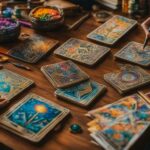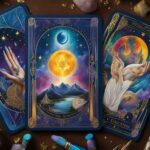

Are you interested in creating your own tarot cards? In this guide, we will explore the step-by-step process of making DIY tarot cards at home. Whether you’re drawn to the artistry of tarot or simply want to deepen your connection with the cards, making your own deck can be a rewarding and personal experience. Let’s dive in and discover how to unleash your creativity and craft your very own tarot cards.
Key Takeaways:
- Set an intention for creating your tarot deck
- Choose a concept or theme that resonates with you
- Select an art style that suits your skills and preferences
- Gain a good understanding of tarot and its meanings
- Take your time and be open to making revisions
Setting an Intention and Choosing a Concept
Before diving into the creative process, it’s essential to set an intention for your tarot deck and choose a concept or theme that aligns with your purpose. This will provide a foundation for your creative journey and give your deck a unique and meaningful identity.
To set an intention, consider why you want to create a tarot deck. Is it for personal exploration and growth? Are you looking to express your creativity and artistic skills? Or do you have a specific audience in mind? Understanding your intention will guide you throughout the creation process and help you stay focused on your goals.
Once you’ve set your intention, it’s time to choose a concept or theme for your deck. This can be anything that resonates with you, whether it’s animals, pop culture, mythology, or even a specific time period. Your concept will shape the overall aesthetic and symbolism of your tarot deck, so take some time to reflect on what inspires you and what you feel drawn to.
Aligning your intention and concept
It’s important to ensure that your chosen concept aligns with your intention. For example, if your intention is personal exploration, you might choose a concept that represents different aspects of your own journey or life experiences. If you’re creating a deck for a specific audience, consider their interests and needs when selecting a concept.
Remember, your tarot deck is a reflection of your unique perspective and creativity. Choose an intention and concept that resonate with you on a deep level, as this will bring authenticity and depth to your creation. The journey of making your own tarot cards should be a meaningful and enlightening experience, so embrace the process and enjoy the exploration of your inner world.
| Key Points: |
|---|
| Set an intention that aligns with your purpose for creating a tarot deck. |
| Choose a concept or theme that resonates with you and supports your intention. |
| Reflect on the connection between your intention and concept to ensure cohesiveness. |
| Embrace the creative process and enjoy the journey of self-expression and exploration. |
Deciding on an Art Style and Learning Tarot Basics
Once you have your concept in mind, it’s time to decide on an art style that complements your vision and delve into the fundamentals of tarot reading. Your art style will determine the overall look and feel of your tarot deck, so it’s essential to choose one that resonates with you and enhances the theme or concept you’ve selected.
There are various art styles you can explore, such as intricate illustrations, minimalist designs, or even mixed media approaches. Consider your own artistic capabilities and the time you have available for creating the deck. If you’re skilled in painting, you might opt for a traditional approach with vibrant colors and detailed brushwork. On the other hand, if digital art is your forte, you can create stunning visuals using digital tools and techniques.
While selecting an art style, it’s important to keep in mind that your tarot cards should not only be visually appealing but also easy to interpret and understand. Each card should convey its meaning clearly through the chosen art style. Take inspiration from existing tarot decks and explore the symbolism and imagery commonly associated with tarot cards. Incorporate these elements into your artwork to ensure that your cards effectively convey their intended messages.
Understanding Tarot Basics
Before embarking on the creation process, it’s crucial to have a solid grasp of tarot basics. Familiarize yourself with the meanings and interpretations associated with each card in a tarot deck. This understanding will inform your artistic choices and help you create cards that align with traditional interpretations or offer a fresh perspective.
Additionally, learning how to use tarot cards for readings will enhance your ability to design a deck that functions effectively. Practice reading tarot cards for yourself or others to gain insight into how the cards interact and guide interpretations. This hands-on experience will inform the design and structure of your deck, ensuring that it provides a meaningful and accurate tarot reading experience.
| Key Takeaways |
|---|
| 1. Choose an art style that complements your concept and personal artistic capabilities. |
| 2. Incorporate symbolism and imagery commonly associated with tarot cards to enhance their meaning and interpretation. |
| 3. Familiarize yourself with tarot basics to ensure your deck aligns with traditional interpretations and functions effectively for readings. |
The Creation Process
Now, it’s time to roll up your sleeves and start bringing your tarot deck to life! Whether you prefer collage, painting, or digital art, this section will guide you through the creation process.
1. Start by gathering your materials. If you’re going for a collage-style deck, collect magazines, printed images, and scissors. For painting, gather your preferred paints, brushes, and canvases. And if digital art is your medium of choice, make sure you have access to a design software and a graphics tablet, if desired.
2. Begin designing your cards. This is where your concept and art style come into play. Let your creativity flow as you create unique and visually captivating cards. Use your chosen medium to bring your theme to life, whether it’s cutting and pasting images for a collage deck or layering vibrant colors for a painted deck.
Expert Tip:
Don’t be afraid to experiment! Try different techniques, styles, and perspectives to find what resonates best with you and your vision for the deck.| # | Tips for the Creation Process |
|---|---|
| 1 | Take breaks when needed. Creating a tarot deck can be a time-consuming and mentally demanding process. Give yourself moments to refresh and recharge. |
| 2 | Stay organized. Keep track of your progress, sketches, and ideas to ensure a smooth creation process. |
| 3 | Seek feedback from trusted individuals. Share your work-in-progress with friends, family, or fellow tarot enthusiasts to gain valuable insights and perspectives. |
3. Once you have completed the designs for all the cards, review them as a whole. Look for any visual or thematic patterns that emerge and ensure the cohesiveness of your deck. Adjust colors, styles, or imagery to create a harmonious flow throughout the entire deck.
Creating your own tarot deck is a deeply personal and transformative journey. It allows you to infuse your unique energy, creativity, and intentions into each card. Let this process be a reflection of your inner world, guiding others on their own voyages of self-discovery and divination. And remember, enjoy the process and trust your intuition every step of the way.
Now that you have completed the creation process, it’s time to move on to the next steps – evaluating the cohesiveness of your deck, testing it in readings, and considering potential commercial opportunities. Stay tuned for the upcoming sections to further refine your tarot deck-making skills.
Evaluating the Cohesiveness of Your Deck
Once you’ve completed your deck, take a moment to step back and evaluate how your cards come together. Pay attention to visual and thematic patterns that emerge. Look at the big picture and consider the overall cohesiveness of your deck. This is an important step in ensuring that your tarot cards convey the intended message and create a harmonious experience for the user.
One way to evaluate the cohesiveness of your deck is by looking for visual patterns. Are there recurring colors, symbols, or motifs that tie the cards together? Do the images flow well from one card to another? Consider how the visual elements work together to create a cohesive aesthetic.
Additionally, consider the thematic patterns that arise from your deck. Does each card align with your chosen concept or theme? Do the cards tell a coherent story or convey a specific message? Evaluate whether the cards work together to create a unified narrative or if there are any inconsistencies that need to be addressed.
To assist you in this evaluation process, you may find it helpful to create a table or a spreadsheet to document your observations. List the visual and thematic patterns you notice, as well as any areas where you feel adjustments are necessary. This will not only help you keep track of your findings but also serve as a reference when making revisions to your deck.
| Visual Patterns | Thematic Patterns |
|---|---|
| Recurring colors | Alignment with chosen theme |
| Symbolic motifs | Coherent storytelling |
| Flow of images | Conveying a specific message |
Remember, evaluating the cohesiveness of your tarot deck is a subjective process. Trust your intuition and make adjustments as you see fit. The goal is to create a deck that not only looks visually appealing but also provides a rich and meaningful experience for those who use it. Enjoy this creative journey and embrace the opportunity to manifest your artistic vision through your own handcrafted tarot cards.
Testing and Making Adjustments
Before finalizing your deck, it’s crucial to do a test run by printing a sample and carefully examining your artwork for any cropping, border, or design issues. This step allows you to make necessary adjustments and ensure that your tarot cards meet your expectations.
When printing your sample deck, pay close attention to the quality of the print and the colors used. Ensure that the details of your artwork are clear and that there are no pixelation or blurring issues. Take the time to compare the printed cards with your original designs to ensure that they match as closely as possible.
While examining your printed sample deck, also consider how the cards feel in your hands. Are they the right size and weight? Is the cardstock sturdy enough? These physical aspects can greatly impact the overall user experience of your tarot deck.
Once you’ve identified any areas that require adjustments, be proactive in making the necessary revisions. This may include making changes to your artwork, adjusting the design layout, or even reconsidering your chosen art style. Take advantage of the opportunity to refine your tarot deck and make it the best it can be.
| Testing and Making Adjustments Checklist: |
|---|
| Print a sample deck |
| Check for any cropping, border, or design issues |
| Compare printed cards to original designs |
| Assess print quality and color accuracy |
| Evaluate the physical aspects of the cards (size, weight, cardstock) |
| Make necessary adjustments to artwork, design, or art style |
Using and Revising Your Deck
Now that your deck is complete, it’s time to start using it for readings. Pay attention to how the cards perform and be open to feedback, making any necessary revisions along the way.
When using your deck, take note of the emotions, thoughts, and insights that arise during your readings. As you gain more experience, you’ll begin to discover patterns and connections within the cards. This information can help guide your revisions and improvements.
Consider keeping a journal or notebook to record your readings and experiences. Document any observations or changes you want to make, noting which cards resonate strongly with you and which ones may need further refinement.
Remember that your tarot deck is a work in progress. It’s natural to make adjustments as you continue to explore and develop your skills. Regularly evaluate your deck’s imagery, symbolism, and overall message to ensure it accurately reflects your intentions and resonates with your audience.
| Using and Revising Your Deck Tips: |
|---|
| “Pay attention to how the cards perform and be open to feedback, making any necessary revisions along the way.” |
| Keep a journal or notebook to record your readings and experiences. |
| Evaluate your deck’s imagery, symbolism, and overall message on a regular basis. |
Considering Commercial Options
If you’re confident in your tarot deck and see potential interest, it may be worth considering having it professionally printed and exploring opportunities to sell it commercially. Study the market to gain insights into the demand for tarot decks and identify potential niches or target audiences.
Professional printing can elevate the quality of your deck and give it a polished, commercial look. Research different printing options to find a service that aligns with your budget and desired outcome. Compare the printing quality, pricing, and additional services offered by different printing companies.
When selling your deck, consider online platforms, local metaphysical shops, or attending trade shows or spiritual events. Use social media to showcase your deck and engage with potential customers. Build a website or online store to facilitate sales and provide a platform for customers to learn more about your deck.
Remember that creating and selling your tarot deck is a journey. Stay open to feedback, adapt to market trends, and make improvements based on customer experiences. Your deck is a unique expression of your creativity, and with careful planning and research, it has the potential to become a valued tool for tarot enthusiasts.
Table 1: Pros and Cons of Commercial Printing
| Pros | Cons |
|---|---|
| Enhances the professional look of your deck | Can be costly, especially for small print runs |
| Offers high-quality printing and finishes | Requires upfront investment |
| Provides access to advanced printing techniques | May have longer turnaround times |
| Allows for bulk printing, reducing per-unit costs | May have minimum order quantities |
What Materials Do I Need to Make Tarot Cards at Home?
If you’re interested in divination and spirituality, you may want to make your own tarot cards. To get started, you’ll need a few materials. Firstly, you’ll require blank tarot card stock, which can be found online or at specialty craft stores. Additionally, you’ll need markers or colored pencils for the illustrations and symbols. Consider using reference books or online resources to guide your artwork. Finally, don’t forget to have a clear protective cover or laminate to preserve your homemade tarot cards for long-term use.
Conclusion
Making your own tarot cards at home is a creative and personal journey that allows you to express your unique vision. Embrace the process, be patient, and enjoy the exploration of self-expression.
By setting an intention and choosing a concept that resonates with you, you lay the foundation for a meaningful deck. Consider your art style carefully, ensuring it complements your chosen theme. With a good understanding of tarot, you’ll be able to infuse deeper meaning into your creations.
As you embark on the creation process, take your time and be open to making revisions. Step back to evaluate the overall look and cohesiveness of your deck, ensuring a visually appealing and thematic masterpiece. A test run will help you identify any issues, allowing you to make necessary adjustments.
Once your deck is complete, begin using it for readings to gain insights and perspectives. Be open to feedback and make revisions based on your experiences. If you’re confident in your deck, consider studying the market for potential commercial opportunities.
Remember, this journey is an opportunity for self-expression and exploration. Enjoy the process, trust your intuition, and let your creativity flow as you bring your own tarot deck to life at home.