
Key Takeaways:
- Choose your branding colors and fonts to ensure consistency with your overall look and feel.
- Decide whether to sell a physical deck or printable versions.
- Consider outsourcing the design if needed, using platforms like Fiverr and Upwork.
- Provide a standard layout, cohesive back design, and alternate images or symbols for each card.
- Sell your Tarot cards on platforms like Etsy or your own website, or consider self-publishing.
- Explore printing options, such as small batch printing or print-on-demand services.
- Consider submitting your deck to a publishing company focused on spiritual books or oracle cards.
- Set your intentions, develop a concept, choose an art style, and thoroughly test and revise your deck before launching it for sale.
Choosing Your Branding and Design
Before you dive into the creative process, it’s important to establish the branding and design elements that will make your Tarot cards unique and visually appealing. These choices will help create a consistent and appealing look for your deck, attracting potential customers and setting your cards apart from others in the market.
Choosing your branding colors and fonts
When choosing your branding colors, consider the emotions and energies you want to evoke with your Tarot deck. Are you going for a mystical and enchanting feel, or a more modern and minimalist style? Take inspiration from the meanings and symbolism of the Tarot cards themselves, and select colors that align with these themes. For example, using blues and purples can convey a sense of intuition and spirituality, while vibrant reds and oranges can evoke passion and energy.
Similarly, think about the fonts you want to use. Fonts can contribute to the overall aesthetic of your deck and help to convey its personality. You may want to choose a clean and simple font for a modern feel, or a decorative and ornate font for a more traditional look. Experiment with different combinations and find the right balance between legibility and style.
Deciding on the overall design of your Tarot cards
The design of your Tarot cards should reflect the theme and intention of your deck. Consider the imagery and symbolism that is most meaningful to you and your target audience. Are you drawn to classic tarot archetypes, or do you want to create a deck that incorporates diverse cultures or modern themes?
Take the time to research and study different Tarot card designs to gain inspiration. Look for elements that resonate with you and consider how you can put your own unique spin on them. Experiment with different art styles, such as traditional illustrations, collage, or digital art, to find the style that best suits your vision.
| Branding Tips | Design Tips |
|---|---|
|
|
By taking the time to carefully choose your branding colors, fonts, and overall design, you can create Tarot cards that not only reflect your unique style and vision but also appeal to your target audience. Remember, your cards should not only be visually appealing but also convey the deeper meanings and messages of the Tarot.
Designing Your Tarot Cards
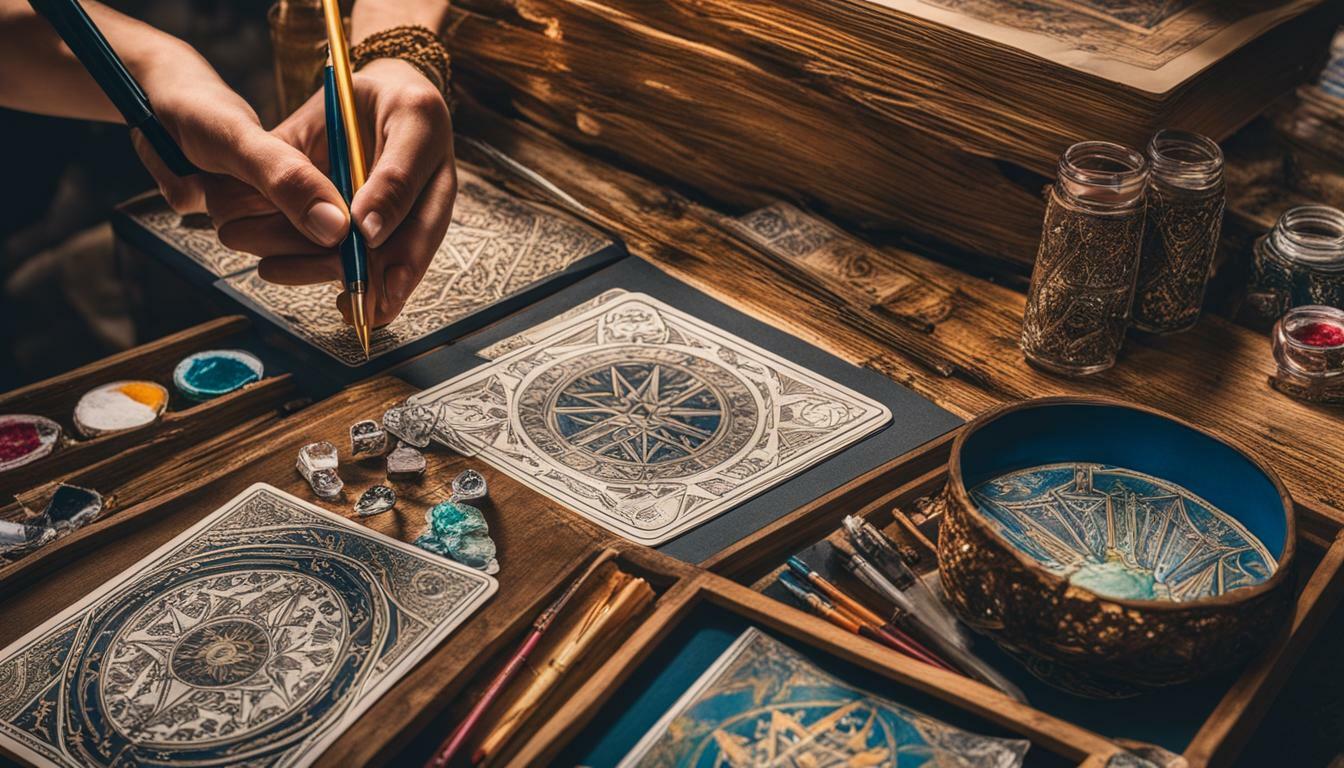
Now that you have your branding and design elements in place, let’s move on to the exciting task of designing your Tarot cards. This is where your creativity can truly shine as you bring your vision to life. Whether you choose to hand-draw your cards or use digital software, the key is to create a deck that is visually appealing, meaningful, and aligned with your chosen theme or symbolism.
Before diving into the actual design process, it’s helpful to create a standard layout for your Tarot cards. This will ensure consistency and make it easier for users to interpret the cards. You can refer to existing Tarot decks for inspiration or create your own unique layout. Consider elements like card titles, numbers, suits, and any additional symbols or imagery that you want to include.
In addition to the front of the cards, it’s important to design a cohesive back for your Tarot deck. This side of the card is usually the same for all cards in the deck and can feature a pattern, image, or symbol that represents your brand or theme. The back design helps create a sense of unity and professionalism for your deck.
As you design the individual cards, think about how each card’s imagery relates to its meaning and interpretation. You can choose to use traditional Tarot symbols or create your own unique imagery. Experiment with different art styles, colors, and patterns to achieve the desired effect. Keep in mind that the artwork should be clear, visually appealing, and easily understood.
| Tarot Card Design Tips |
|---|
| Consider the meaning of each Tarot card and how it can be visually represented. |
| Experiment with different art styles, colors, and patterns to create a unique and visually appealing deck. |
| Ensure clarity and ease of interpretation by using clear and concise imagery on each card. |
| Don’t be afraid to infuse your own personality and style into the design, while staying true to the essence of Tarot. |
Remember, the design process may involve multiple iterations and revisions. Seek feedback from trusted friends or members of the Tarot community to ensure that your deck resonates with your target audience. Once you’re satisfied with the design, you can proceed to the next steps of production and marketing. Stay true to your creative vision and trust in the power and beauty of your Tarot cards.
Selling Platforms and Marketing Strategies
Once your Tarot cards are ready, it’s time to think about how to sell them and reach your target audience. There are several selling platforms and marketing strategies to consider, depending on your preferences and goals. By choosing the right platforms and implementing effective marketing strategies, you can increase your chances of success and attract customers who are genuinely interested in your Tarot cards.
Selling Platforms
One popular platform for selling handmade items, including Tarot cards, is Etsy. Etsy has a large customer base of people looking for unique and one-of-a-kind products. By setting up a shop on Etsy, you can showcase your Tarot cards and directly connect with potential buyers. Remember to create compelling product listings with high-quality images and detailed descriptions to attract attention.
Another option is to sell your Tarot cards on your own website. This gives you more control over the branding, design, and pricing of your products. You can also use paid traffic strategies, such as online advertising or social media marketing, to drive targeted traffic to your website and increase sales. Consider implementing search engine optimization (SEO) techniques to improve your website’s visibility in search results.
Marketing Strategies
In addition to choosing the right selling platform, effective marketing strategies are essential for promoting your Tarot cards. Here are a few strategies to consider:
- Create an engaging and informative website or blog where you can share insights about Tarot card readings, provide tips for using Tarot cards, and showcase your own creations.
- Utilize social media platforms such as Instagram, Facebook, and Twitter to share images of your Tarot cards, connect with potential customers, and build a community around your brand.
- Collaborate with influencers or Tarot enthusiasts who have a strong following. They can help promote your Tarot cards to their audience and generate more sales.
- Participate in relevant events, such as local fairs or spiritual gatherings, to showcase and sell your Tarot cards in person.
- Consider offering special promotions or discounts to attract new customers and encourage repeat purchases.
Remember, selling Tarot cards is not just about the product itself, but also about the story and emotions behind it. Share the inspiration behind your Tarot cards and engage with your audience to create a meaningful connection. By implementing these selling platforms and marketing strategies, you can increase your visibility, reach your target audience, and ultimately sell more of your Tarot cards.
| Platform | Pros | Cons |
|---|---|---|
| Etsy | – Large customer base – Established platform for handmade products – Potential for high visibility |
– Competition from other sellers – Fees for listing and selling items – Limited control over branding |
| Own Website | – Full control over branding, design, and pricing – Opportunity to build a loyal customer base – Flexibility in marketing strategies |
– Requires investment in website development and maintenance – Need to drive traffic to your website – Additional responsibilities for order fulfillment and customer support |
Printing and Production Options
Now that you’ve finalized your designs, it’s time to consider the printing and production process for your Tarot cards. This step is crucial in bringing your creations to life and ensuring that they meet the highest standards of quality. Let’s explore some options that you can consider for printing and producing your Tarot cards.
Local Printing
If you prefer to have full control over the production process, you can choose to work with a local printing company. This option allows you to oversee every aspect of printing, from selecting the paper and finish to monitoring the color accuracy. It also gives you the opportunity to physically inspect each deck before packaging and shipping them to customers.
Print-on-Demand Services
An alternative option is to use print-on-demand services such as MPC (Make Playing Cards) and The Game Crafter. These services allow you to upload your designs and have them printed and produced on demand. This means that you don’t have to worry about ordering large quantities of decks upfront or managing inventory. Print-on-demand services are convenient and cost-effective, especially for those who are just starting their Tarot card selling journey.
Quality Assurance
Regardless of the printing and production option you choose, it’s essential to prioritize quality assurance. Perform thorough checks on the first few printed decks to ensure that the colors, textures, and overall print quality meet your expectations. Consider involving a trusted group of individuals, such as fellow Tarot enthusiasts or professional printers, to provide feedback and help identify any potential issues.
Summary
As you navigate the printing and production process, keep in mind that the choices you make will impact the final product and ultimately, your customers’ satisfaction. Whether you opt for local printing or leverage print-on-demand services, prioritize quality and attention to detail. Remember, your Tarot cards are not just artistic creations, but tools for divination and self-reflection.
| Printing Option | Advantages | Disadvantages |
|---|---|---|
| Local Printing | Full control over production process | Higher upfront costs and inventory management |
| Print-on-Demand Services | Convenient and cost-effective | Less control over production process |
Remember to carefully consider your printing and production options and choose the one that aligns with your goals, budget, and desired level of involvement. Whichever route you take, prioritize quality and attention to detail to ensure that your Tarot cards truly shine.
Self-Publishing vs. Submitting to a Publishing Company
Before you make a decision on how to bring your Tarot cards to the market, it’s important to weigh the advantages and disadvantages of self-publishing and submitting to a publishing company. Both options have their own set of pros and cons, so let’s delve into each one.
Self-Publishing
Self-publishing offers creative freedom and control over the entire process. You have the freedom to choose your own design, themes, and artwork, ensuring that your deck truly reflects your vision. It also allows you to maintain ownership and copyright of your work.
However, self-publishing comes with responsibilities and challenges. You’ll need to handle the entire production process, from sourcing a printer to managing inventory and shipping. This can be time-consuming and costly. Additionally, self-published decks may have a harder time gaining recognition and distribution compared to those backed by a publishing company.
Submitting to a Publishing Company
Submitting your deck to a publishing company can provide wider exposure and distribution opportunities. If accepted, your deck may benefit from the company’s established reputation and marketing efforts. They can handle the production, distribution, and marketing aspects, allowing you to focus on creating new designs and content.
However, the process of submitting to a publishing company can be competitive and time-consuming. You’ll need to research and target the right publishers that align with your deck’s theme and style. It’s important to carefully review any contracts or agreements to ensure you’re comfortable with the terms, including royalty rates and ownership rights.
In conclusion, whether you choose to self-publish or submit to a publishing company, there are pros and cons to consider. It ultimately depends on your goals, resources, and preferences as a Tarot card creator. Take the time to weigh the advantages and disadvantages of each option before making a decision. Good luck on your journey to bring your Tarot cards to the market!
Testing, Revising, and Perfecting Your Deck
Before you release your Tarot card deck to the public, it’s crucial to thoroughly test, revise, and perfect each card to ensure a high-quality product. Testing your deck involves examining its aesthetics, usability, and symbolism. Seek feedback from trusted friends, family, or fellow Tarot enthusiasts to gain different perspectives and identify any areas that may require improvement.
One effective way to test your Tarot card deck is to conduct sample readings. Use different spreads and interpret the cards to see how well they resonate with the intended meanings. Pay attention to the clarity of the images, the ease of interpretation, and the overall message the cards convey.
Revising your deck involves making any necessary adjustments based on feedback and testing results. This may include refining the design, reworking the symbolism, or making changes to the color palette. Remember to maintain a balance between creativity and functionality, ensuring that your cards are visually appealing while still serving their purpose as divination tools.
After revising your deck, it’s essential to take the time to perfect each card. Pay attention to details such as image resolution, color accuracy, and card stock quality. Consider using a professional printing service or a high-quality print-on-demand platform to ensure the best possible reproduction of your designs.
Summary:
- Thoroughly test your Tarot card deck before releasing it to the public.
- Seek feedback from trusted individuals to gain different perspectives.
- Conduct sample readings to evaluate the aesthetics, usability, and symbolism of your cards.
- Revise your deck based on feedback and testing results.
- Refine the design, symbolism, and color palette to create a visually appealing and functional deck.
- Perfect each card by paying attention to image resolution, color accuracy, and card stock quality.
- Consider using professional printing services or high-quality print-on-demand platforms for the best results.
| Tip: | When revising your deck, pay close attention to the feedback you receive and balance it with your artistic vision. Remember, you are creating a product that should resonate with both yourself and your potential customers. |
|---|
Can the Tarot Cards I Make at Home be Sold?
Making tarot cards at home can definitely be a creative passion! However, selling handmade tarot cards could be a bit tricky. While it’s legally possible, there are challenges like copyright issues, competition, and market demand. Taking these factors into consideration will help determine whether it’s feasible to sell make tarot cards at home or explore other options for your creative endeavors.
Conclusion
Congratulations! You’ve reached the end of our guide on how to make your own Tarot cards to sell. By following the step-by-step process outlined in this article, you now have the knowledge and tools to embark on your tarot card creation journey.
Remember, the first step is to choose your branding colors and fonts to create a consistent and appealing look for your deck. Whether you decide to sell physical decks or offer printable versions, ensure that your design reflects the essence of your tarot cards.
When it comes to selling your tarot cards, there are various platforms and strategies to consider. Etsy is a popular choice, as it attracts customers who appreciate unique and stunning decks. Additionally, listing your cards on your own website and utilizing paid traffic can help attract potential buyers.
As for printing and production options, you can choose between local printing services and print-on-demand providers. Both options offer their own advantages, so weigh them carefully based on your needs and budget.
Lastly, you have the option of self-publishing your deck or submitting it to a publishing company. While self-publishing provides more control, submitting to a publishing company can give you access to their distribution channels. Consider your goals and resources before making a decision.
Remember to set your intentions, develop a concept, choose an art style, and thoroughly test and revise your deck before taking it to market. Embrace your creativity and trust the process, and soon enough, you’ll have a unique and captivating tarot card deck ready to share with the world.