
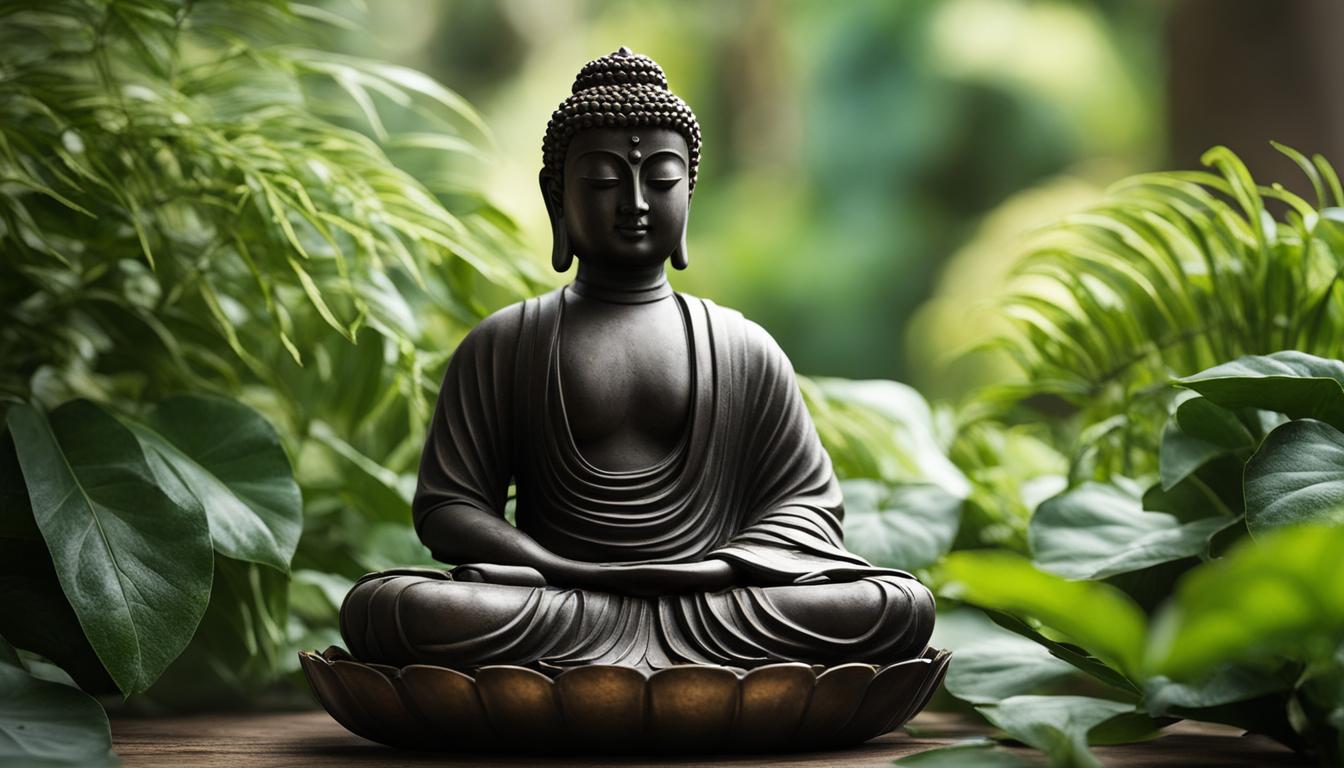
Discover the profound wisdom of the Buddha’s teachings on meditation and the importance of this practice in Buddhism. With a focus on mindfulness and inner peace, the Buddha’s guidance offers invaluable insights for achieving tranquility in our modern lives.
Key Takeaways:
- Mindfulness is a key aspect of Buddhist meditation.
- The Buddha’s teachings emphasize the purification of beings, overcoming sorrow and distress, and attaining enlightenment through meditation.
- Meditation helps in subduing negative emotions and promoting true happiness and tranquility.
- The Four Establishings of Mindfulness provide a framework for cultivating mindfulness in the body, feelings, mind, and mental qualities.
- The Buddha taught various meditation techniques, including breath meditation, meditation on the body, reflection on repulsiveness, meditation on dhammas, and deity yoga.
The Four Establishings of Mindfulness
According to the Satipatthana Sutta, there are four frames of reference for mindfulness practice: mindfulness of the body, mindfulness of feelings, mindfulness of mind, and mindfulness of mental qualities. These establishings of mindfulness provide a comprehensive framework for cultivating awareness and understanding of the mind-body connection.
In mindfulness of the body, you focus on the breath and physical sensations, remaining alert and mindful of the present moment. This practice allows you to develop a deep connection with your bodily experiences and promotes grounding and presence.
Mindfulness of feelings involves discerning whether a feeling is pleasant, unpleasant, or neutral. By observing and acknowledging your emotions without judgment, you can develop emotional intelligence and cultivate a greater sense of self-awareness.
Mindfulness of mind involves observing the mind and its mental states. You become aware of the thoughts, attitudes, and patterns of thinking that arise in your mind, allowing you to develop insight into the nature of your mind and its conditioning.
Mindfulness of mental qualities refers to recognizing skillful and unskillful qualities that arise in the mind and developing concentration and wise discernment. This practice helps you to cultivate positive mental qualities such as compassion and wisdom while letting go of unskillful habits and tendencies.
The Four Establishings of Mindfulness provide a comprehensive approach to meditation, guiding you to develop a holistic understanding of yourself and the nature of your experiences. By cultivating mindfulness in these four domains, you can deepen your practice and experience greater clarity, peace, and liberation.
Techniques of Meditation According to Buddha
The Buddha taught various techniques of meditation that can be practiced to cultivate mindfulness, concentration, and insight. These techniques are designed to help individuals develop a deep understanding of themselves and the nature of reality. Some of the commonly taught techniques of meditation according to the Buddha include:
- Breath meditation (Anapanasati): In this technique, practitioners focus their attention on the breath, observing its natural rhythm and flow. By anchoring the mind to the breath, one cultivates concentration and mindfulness, bringing the mind into the present moment.
- Meditation on the body: This technique involves directing attention to the sensations and physical aspects of the body. Practitioners observe bodily sensations, such as the feeling of the breath or the touch of the body against a surface. This practice cultivates awareness of the impermanence and interconnectedness of the body.
- Reflection on repulsiveness: This technique involves contemplating the unattractive aspects of the body, such as decomposition and decay. By reflecting on the transient nature of the physical form, practitioners develop detachment and let go of attachment to the body.
- Meditation on dhammas: This technique involves observing mental states, hindrances, and the factors of enlightenment. Practitioners develop insight into the functioning of the mind and gain a deeper understanding of the mental qualities that lead to suffering and liberation.
These techniques, among others taught by the Buddha, provide individuals with a framework for exploring the depths of their mind and cultivating inner peace and wisdom. By regularly practicing these meditation techniques, one can develop a greater sense of clarity, calmness, and insight.
“The practice of meditation is a journey of self-discovery, leading to the realization of our true nature and the transcendent wisdom beyond concepts. It is through the cultivation of mindfulness and deep inner awareness that we can uncover the path to liberation.” – Buddha
The Benefits of Deity Yoga
Deity yoga is a unique technique practiced in Tibetan Buddhism that involves visualizations of enlightened beings or deities. Through this practice, practitioners seek to cultivate specific qualities and attain a direct experience of emptiness and interconnectedness. Deity yoga serves as a powerful method for purifying the mind, developing compassion, and realizing the true nature of reality.
| Benefits of Deity Yoga | Explanation |
|---|---|
| Deepening Concentration | Visualizing the deity with precise detail requires focused attention, enhancing concentration abilities. |
| Cultivating Compassion | By visualizing the enlightened qualities of the deity, practitioners develop empathy, love, and compassion towards all beings. |
| Realizing Emptiness | Through the practice of deity yoga, practitioners aim to transcend dualistic perception and experience the emptiness of inherent existence. |
| Purifying Negative Karma | The power of visualization combined with mantra recitation helps purify negative karma and create positive conditions for spiritual growth. |
Deity yoga is considered an advanced meditation practice and is typically undertaken with the guidance of a qualified teacher. It offers practitioners a profound opportunity to connect with the qualities of wisdom and compassion that are inherent within their own mind.
Benefits of Meditation According to Buddha
Meditation, as taught by the Buddha, offers numerous benefits for the practitioner. By engaging in regular meditation practice, one can overcome greed and distress, leading to a more balanced and harmonious state of mind. Through meditation, individuals can attain nirvana, the ultimate goal of Buddhist practice, which is characterized by liberation from defilements and the cultivation of equanimity.
One of the key benefits of meditation is its ability to develop insight into the nature of reality. By observing the mind and its mental qualities, practitioners can gain a deeper understanding of the transient nature of phenomena. This insight allows for a greater sense of acceptance and peace, as one recognizes the impermanence and interconnection of all things.
Meditation also promotes the purification of the mind. By cultivating mindfulness and concentration, practitioners can gradually let go of unskillful qualities and cultivate wholesome qualities such as compassion, loving-kindness, and wisdom. This purification process leads to a calmer and more luminous mind, free from the burdens of negative emotions.
The Benefits of Meditation According to Buddha:
- Overcoming greed and distress
- Attainment of nirvana
- Liberation from defilements
- Cultivating equanimity
- Developing insight
Overall, the practice of meditation, as outlined by the Buddha, offers profound benefits for individuals seeking tranquility, liberation, and spiritual growth. By incorporating meditation into daily life, one can experience the transformative power of mindfulness and gain a deeper understanding of oneself and the world.
| Benefits of Meditation | Description |
|---|---|
| Overcoming greed and distress | Meditation helps in subduing negative emotions such as greed and distress, leading to a more balanced and peaceful state of mind. |
| Attainment of nirvana | Through meditation, one can reach the state of nirvana, which is the ultimate goal of Buddhist practice and is characterized by liberation from suffering. |
| Liberation from defilements | By cultivating mindfulness and concentration, meditation allows individuals to let go of defilements and cultivate wholesome qualities, leading to a purified mind. |
| Cultivating equanimity | Meditation promotes the development of equanimity, a state of mental balance and tranquility, which allows individuals to face life’s challenges with calmness and clarity. |
| Developing insight | By observing the mind and its mental states, meditation cultivates insight into the impermanence and interconnectedness of all things, leading to a deeper understanding of reality. |
Buddha’s Guidance on Meditation Practice
The guidance of the Buddha on meditation practice provides valuable insights into the importance of mindfulness and the cultivation of skillful qualities. In the practice of meditation, the Buddha emphasized the need to stay alert and mindful in the present moment. By being fully aware of our thoughts, emotions, and bodily sensations, we can deepen our understanding of ourselves and the world around us.
Mindfulness allows us to recognize the skillful qualities that arise in our minds, such as compassion, loving-kindness, and wisdom. By cultivating these positive qualities, we can bring about transformation and growth in our lives. Additionally, the Buddha encouraged letting go of unskillful qualities like greed, hatred, and delusion. By releasing these negative aspects, we create space for positive change and genuine happiness.
Through meditation, we can develop a deep sense of self-awareness and understanding. The practice helps us to observe our thoughts and emotions without judgment, allowing us to respond to them with wisdom and compassion. By letting go of attachment to outcomes and embracing the present moment, we can find peace and tranquility within ourselves.
By following the guidance provided by the Buddha, we can integrate meditation into our daily lives and experience its profound benefits. The practice of mindfulness and the cultivation of skillful qualities not only lead to personal growth but also contribute to the well-being of society as a whole. Through meditation, we can develop a greater sense of empathy and compassion, fostering a more harmonious and peaceful world.
Table: Comparing Skillful and Unskillful Qualities
| Skillful Qualities | Unskillful Qualities |
|---|---|
| Compassion | Greed |
| Loving-kindness | Hatred |
| Wisdom | Delusion |
By cultivating skillful qualities like compassion, loving-kindness, and wisdom, we nurture positive attributes within ourselves and contribute to the betterment of society. Letting go of unskillful qualities such as greed, hatred, and delusion frees us from their negative influence and allows us to live more authentic and fulfilling lives.
Buddha’s Wisdom on Meditation
The practice of meditation according to the teachings of Buddha encompasses profound wisdom that can guide us towards inner peace and liberation. One of the fundamental aspects emphasized by Buddha is turning inward. By redirecting our attention inward, we can explore the depths of our mind and gain insight into our true nature. This inward journey allows us to connect with our inner wisdom and cultivate a deeper understanding of ourselves and the world around us.
Another key aspect highlighted by Buddha is the importance of letting go of attachments. Buddha recognized that attachment to desires and worldly possessions can lead to suffering and dissatisfaction. By letting go of these attachments, we can free ourselves from the shackles of craving and find true contentment within. Through meditation, we can develop the ability to observe our attachments without judgment and gradually release them, allowing us to experience a greater sense of freedom and peace.
Buddha also emphasized the significance of embracing impermanence. He taught that everything in this world is transient and subject to change. By acknowledging and accepting the impermanence of all phenomena, we can cultivate a more balanced and equanimous perspective on life. Meditation provides the space for us to observe the impermanence of our thoughts, emotions, and sensations, nurturing a deep understanding that everything arises and passes away. This understanding can lead to a profound sense of liberation and a reduction in suffering.
In addition, Buddha’s teachings encourage the cultivation of non-dualistic perception. By transcending the concepts of self and other, we can realize the interconnectedness of all things. Through meditation, we can develop a direct experience of unity and oneness, breaking down the barriers that separate us from others and the world. This non-dualistic perception fosters compassion, empathy, and a deep sense of interconnectedness, allowing us to navigate life with greater wisdom and understanding.
The Wisdom of Buddha on Meditation
“The practice of meditation reveals the profound wisdom within each of us. By turning inward, letting go of attachments, embracing impermanence, and cultivating non-dualistic perception, we can experience true peace and liberation.” – Buddha
Conclusion
Buddhist meditation offers ancient wisdom for modern tranquility. By practicing mindfulness and following the teachings of the Buddha, you can overcome negative emotions and cultivate inner peace. The techniques of breath meditation, meditation on the body, reflection on repulsiveness, and mindfulness of mental qualities can help you develop concentration, mindfulness, and wise discernment.
Through meditation, you can experience the purification of the mind and liberation from defilements. It offers a path to attaining enlightenment and realizing true happiness. Incorporating meditation into your daily life brings about a deeper sense of awareness and tranquility.
Remember, the teachings of the Buddha provide invaluable guidance for navigating the challenges of the modern world. Embrace the ancient wisdom of Buddhist meditation to find peace, cultivate compassion, and discover the interconnectedness of all things. Start your journey toward tranquility today!
How Can I Enhance My Meditation Practice with Words and Affirmations Based on Buddha’s Teachings?
To enhance meditation practice with affirmations, incorporate Buddha’s teachings into your daily practice. Use words like “peace,” “mindfulness,” and “compassion” to center your mind. Repeat positive affirmations such as “I am fully present” or “I radiate love and kindness” to deepen your meditation experience.
FAQ
What did Buddha say about meditation?
Buddha emphasized the importance of mindfulness in meditation practice. He advised practitioners to stay alert and mindful in the present moment, recognizing skillful and unskillful qualities that arise in the mind. He encouraged letting go of unskillful qualities and developing skillful qualities to purify the mind and attain enlightenment.
What are the Four Establishings of Mindfulness?
The Four Establishings of Mindfulness, according to the Satipatthana Sutta, are mindfulness of the body, mindfulness of feelings, mindfulness of mind, and mindfulness of mental qualities. They involve focusing on the breath, observing bodily sensations, discerning pleasant and unpleasant feelings, observing the mind and mental states, and recognizing skillful and unskillful qualities that arise in the mind.
What are the techniques of meditation according to Buddha?
Buddha taught various techniques of meditation, including breath meditation (anapanasati), meditation on the body, reflection on repulsiveness, meditation on dhammas, mindfulness of breathing, and deity yoga. These techniques involve focusing on the breath, observing bodily sensations, contemplating the impermanence and unattractiveness of the body, observing mental states, and visualizing specific qualities.
What are the benefits of meditation according to Buddha?
Buddha taught that meditation helps in subduing negative emotions, overcoming greed and distress, developing a calm and luminous mind, cultivating equanimity, and gaining insight into the nature of reality. It leads to liberation from defilements and the attainment of nirvana, true happiness, and tranquility.
What is Buddha’s guidance on meditation practice?
Buddha’s guidance on meditation practice emphasizes the importance of mindfulness, recognizing skillful and unskillful qualities, and developing skillful qualities such as compassion, loving-kindness, and wisdom. He encourages practitioners to let go of unskillful qualities and cultivate a calm and focused mind.
What is Buddha’s wisdom on meditation?
Buddha’s wisdom on meditation emphasizes turning inward, letting go of attachments, embracing the impermanence of all phenomena, and cultivating non-dualistic perception. He teaches practitioners to transcend concepts of self and other, gain insight into the interconnectedness of all things, and cultivate inner peace and liberation.