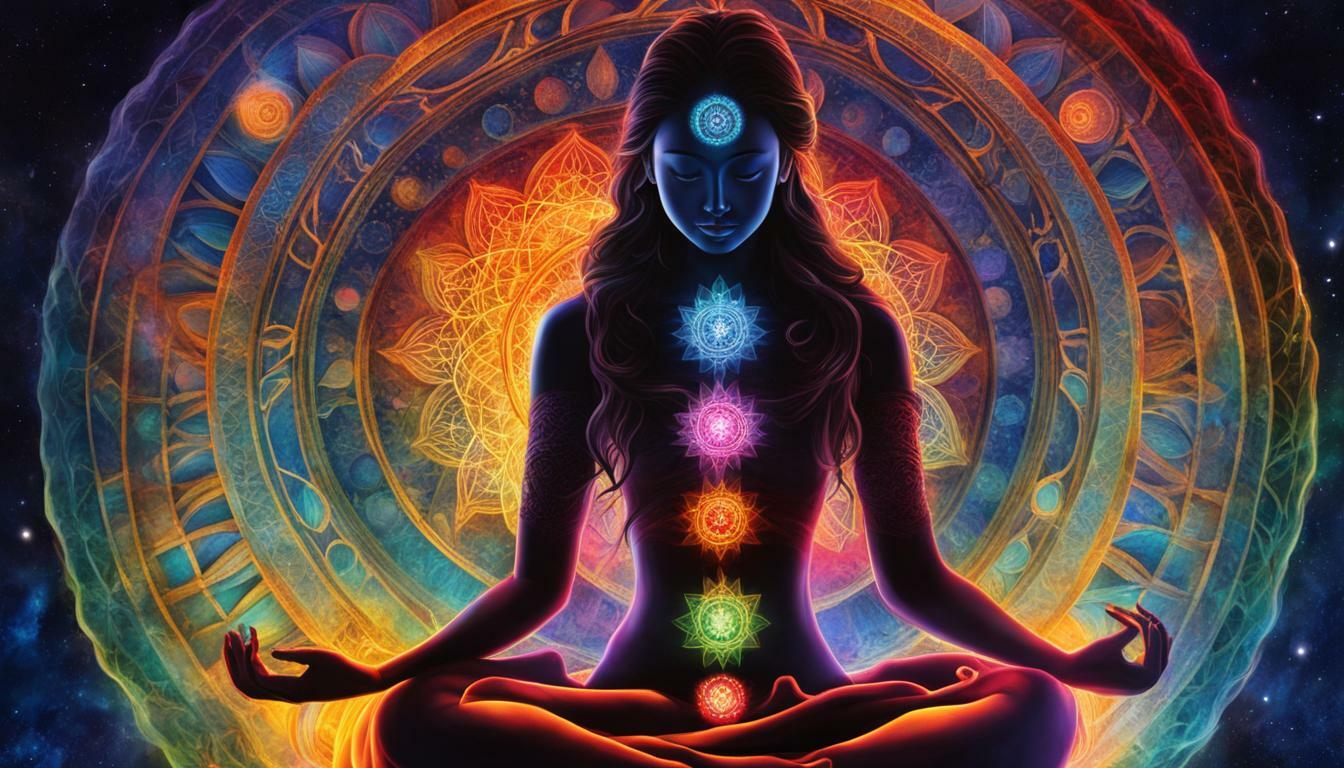
Chakras are energy points in the body that are often referred to as spinning disks of energy. Derived from the Sanskrit word meaning “wheel,” chakras are believed to be vital centers that regulate the flow of energy throughout our being. Understanding the concept of chakras is key to exploring the mind-body connection and achieving holistic well-being.
Key Takeaways:
- Chakras are spinning disks of energy that exist within our bodies.
- There are seven main chakras that run along the spine.
- Each chakra has its own color, name, and specific health focus.
- The root chakra is associated with feelings of security and grounding.
- The sacral chakra is connected to sexuality, creativity, and self-worth.
The Seven Main Chakras
The chakra system consists of seven main energy centers that run along the spine, each with its own unique characteristics. These chakras are believed to be spinning disks of energy, representing different aspects of our physical, emotional, and spiritual well-being. Exploring the meaning of chakra and understanding their energy explanation can help us achieve balance and harmony in our lives.
Let’s begin with the root chakra, located at the base of the spine. This chakra, symbolized by the color red, is associated with our sense of security and grounding. It is the foundation from which we build our lives, and a balanced root chakra helps us feel stable and connected to the world around us.
Moving up the spine, we encounter the sacral chakra, situated just below the navel. Represented by the color orange, this chakra is linked to our sexuality, creativity, and self-worth. A balanced sacral chakra allows us to embrace our passions, express our emotions, and tap into our creative potential.
The solar plexus chakra, located between the ribcage and navel, is associated with our self-esteem and personal power. Symbolized by the color yellow, this chakra empowers us to take charge of our lives, cultivate self-confidence, and assert our boundaries.
Continuing our journey, we reach the heart chakra in the middle of the chest. Represented by the color green, this chakra is all about love, compassion, and emotional well-being. A balanced heart chakra enables us to give and receive love, foster meaningful relationships, and cultivate empathy for ourselves and others.
The throat chakra, symbolized by the color blue, corresponds to communication. Located in the throat area, this chakra empowers us to express our truth, speak our minds, and actively listen to others. It encourages clear and authentic communication, fostering healthier relationships and self-expression.
Next, we have the third eye chakra, positioned in the middle of the forehead. Represented by the color indigo, this chakra is associated with intuition and spiritual power. It allows us to tap into our inner wisdom, trust our instincts, and connect with our higher selves, opening the doors to deeper insights and spiritual growth.
Finally, we reach the crown chakra, situated at the top of the head. Symbolized by the color violet or white, this chakra represents enlightenment and our connection to higher consciousness. When balanced, the crown chakra allows us to experience unity, transcendence, and a profound sense of spiritual awareness.
| Chakra | Location | Color | Focused Area |
|---|---|---|---|
| Root | Base of the spine | Red | Security and grounding |
| Sacral | Below the navel | Orange | Sexuality, creativity, self-worth |
| Solar Plexus | Between ribcage and navel | Yellow | Self-esteem, personal power |
| Heart | Middle of the chest | Green | Love, compassion, emotional well-being |
| Throat | Throat area | Blue | Communication |
| Third Eye | Middle of the forehead | Indigo | Intuition, spiritual power |
| Crown | Top of the head | Violet or white | Enlightenment, connection to higher consciousness |
Understanding the characteristics and significance of each of these chakras allows us to work towards balancing and aligning them. When all our chakras are in harmony, it is believed to promote physical and emotional well-being, enabling us to lead more fulfilling lives. The chakra system, originating from ancient Indian texts, is utilized in various healing modalities such as yoga, meditation, and Ayurveda, offering us tools to balance and enhance our overall well-being.
The Root Chakra
The root chakra, also known as the Muladhara chakra, is the foundation of the chakra system and is associated with the sense of security and stability. Located at the base of the spine, this chakra is represented by the color red and is linked to our primal instincts and survival needs.
When the root chakra is balanced, you feel grounded, safe, and supported. It provides a solid foundation for the other chakras to function optimally. However, when imbalanced, you may experience feelings of fear, insecurity, and a lack of stability in your life.
To bring balance to the root chakra, there are various techniques you can try. Grounding exercises, such as walking barefoot on the earth or practicing yoga poses like “Mountain Pose,” can help you connect with the energy of the earth and feel more rooted. Using red crystals, such as garnet or red jasper, can also aid in balancing the root chakra.
| Root Chakra | Color | Location | Health Focus |
|---|---|---|---|
| Muladhara | Red | Base of the spine | Security, stability |
To enhance the healing process of the root chakra, it can be helpful to affirm positive statements such as:
“I am grounded, safe, and secure in all areas of my life.”
- Use grounding techniques like walking barefoot on the earth.
- Practice yoga poses that focus on stability, such as “Mountain Pose.”
- Carry or wear red crystals like garnet or red jasper.
- Affirm positive statements to reinforce feelings of security and stability.
By working with the root chakra, you can create a strong foundation for your overall well-being, allowing the energy to flow harmoniously throughout your body and promoting a sense of security and stability in your life.
Additional Notes
It’s important to remember that chakra healing is a holistic practice that works on balancing the mind, body, and spirit. While focusing on specific chakras like the root chakra can be beneficial, it’s essential to consider the entire chakra system and strive for balance in all areas.
As you explore the chakra system and work with different techniques, it’s important to listen to your body and trust your intuition. Everyone’s journey with chakra healing is unique, and what works for one person may not work for another. Be open to experimenting with different practices and pay attention to how they make you feel.
The Sacral Chakra: Embracing Your Emotional and Creative Essence
The sacral chakra, also known as the Svadhishthana chakra, is associated with the realm of emotions, sexuality, and creativity. Located below the navel, it is a powerful source of energy that influences our ability to experience pleasure, express ourselves creatively, and form intimate connections with others.
“The sacral chakra is like a vibrant orange sun, radiating warmth and passion throughout your being,” says renowned energy healer, Lisa Brown. When this chakra is in balance, you may feel a deep sense of joy, abundance, and emotional well-being.
To nourish and harmonize your sacral chakra, consider incorporating practices such as dance, art therapy, and journaling into your daily routine. These activities can help you explore and release pent-up emotions, enhance your self-expression, and tap into your innate creativity.
| Sacral Chakra at a Glance | |
|---|---|
| Location: | Below the navel |
| Color: | Orange |
| Element: | Water |
| Associated Emotions: | Pleasure, passion, sensuality |
| Health Focus: | Reproductive system, sexual organs |
As you explore the depths of your sacral chakra, remember that the journey towards balance and healing is unique to each individual. Take the time to listen to your body, nurture your passions, and embrace the full spectrum of your emotions. By embracing the energy of the sacral chakra, you can unlock your inner wellspring of creativity and live a life filled with joy, vitality, and deep connection.
The Solar Plexus Chakra
The solar plexus chakra, also known as the Manipura chakra, is associated with personal power, self-esteem, and confidence. Located between the ribcage and navel, this chakra is represented by the color yellow and is believed to be the center of our inner fire and willpower. When balanced, it radiates a sense of empowerment and strength.
Just as the sun is the source of warmth and vitality, the solar plexus chakra fuels our sense of self and identity. It governs our ability to set goals, make decisions, and take action. When this chakra is out of balance, we may experience a lack of confidence, low self-esteem, or difficulty asserting ourselves.
To balance the solar plexus chakra, various healing practices can be used. These include affirmations such as “I am strong and confident,” practicing yoga poses like Warrior II to ignite inner power, and using crystals such as citrine or yellow calcite to amplify its energy. Additionally, incorporating foods that are yellow in color, such as bananas or yellow peppers, can support the nourishment of this chakra.
Remember, each chakra is interconnected, and balancing one can have a positive impact on the others. Working with the solar plexus chakra is an opportunity to harness your personal power, cultivate self-love, and embrace your authentic self. By nurturing this energy center, you can unlock your full potential and achieve a greater sense of self-confidence and purpose.
| Solar Plexus Chakra | Associated Aspects |
|---|---|
| Location | Between the ribcage and navel |
| Color | Yellow |
| Element | Fire |
| Associated Traits | Personal power, self-esteem, confidence |
| Healing Practices | Affirmations, yoga poses, crystals, yellow-colored foods |
The Heart Chakra
The heart chakra, also known as the Anahata chakra, represents love, compassion, and emotional balance. Located in the middle of the chest, this chakra is associated with our ability to give and receive love, to feel deep connections with others, and to have a sense of empathy and forgiveness. When the heart chakra is balanced and open, we experience feelings of harmony, joy, and inner peace.
Symbolized by the color green, the heart chakra is connected to the element of air, which represents freedom and expansion. It governs our relationships, not only with others but also with ourselves. When this chakra is out of balance, we may experience difficulties in forming and maintaining healthy relationships, feeling disconnected from others, or struggling with self-love and acceptance.
To balance and activate the heart chakra, there are various practices you can incorporate into your daily life. Cultivating self-love and self-care is essential, as is practicing gratitude and forgiveness. Engaging in heart-opening exercises, such as yoga poses like camel or bridge pose, can help release any blockages in this energy center.
| Heart Chakra | Color | Element | Associations |
|---|---|---|---|
| Anahata | Green | Air | Love, compassion, emotional well-being |
Remember, the heart chakra is not just about loving others, but also about loving yourself. Nurturing your heart chakra can have a profound impact on your overall well-being, allowing you to experience deeper connections, cultivate compassion, and find inner peace.
The Throat and Third Eye Chakras
The throat chakra, known as the Vishuddha chakra, governs communication and self-expression, while the third eye chakra, called the Ajna chakra, is associated with intuition and spiritual awareness.
Located at the throat, the Vishuddha chakra is symbolized by a bright blue spinning wheel of energy. It is the center of effective communication and self-expression. When this chakra is balanced, you have the ability to express yourself clearly and honestly, both verbally and non-verbally. You feel confident in sharing your thoughts, ideas, and emotions with others, fostering healthy and authentic relationships. Nurturing and balancing the throat chakra can bring harmony to your communication skills, helping you effectively communicate your needs, desires, and boundaries.
The Ajna chakra, situated between the eyebrows, is represented by an indigo spinning wheel of energy. It is often referred to as the “third eye” because it is associated with inner wisdom, intuition, and spiritual insight. When this chakra is in balance, you have a deep sense of awareness and can tap into your intuitive abilities. You trust your inner guidance and have a clear vision of your life’s purpose. Nurturing and balancing the third eye chakra can enhance your spiritual journey, leading to a greater understanding of your higher self and the world around you.
| Chakra | Location | Color | Focus |
|---|---|---|---|
| Vishuddha (Throat Chakra) | Throat | Bright Blue | Communication and self-expression |
| Ajna (Third Eye Chakra) | Between the eyebrows | Indigo | Intuition and spiritual awareness |
To balance and activate these chakras, you can incorporate practices such as sound therapy, meditation, affirmations, and visualization. Surrounding yourself with the color associated with each chakra, such as blue for the throat chakra and indigo for the third eye chakra, can also be beneficial. Remember that each chakra is interconnected, so maintaining balance in all the chakras is essential for overall well-being.
The Crown Chakra and Chakra Balancing
The crown chakra, known as the Sahasrara chakra, is associated with spiritual awakening and the connection to higher realms. It is considered to be the gateway to universal consciousness and our divine nature. When this chakra is balanced and aligned, we experience a sense of deep inner peace, clarity, and connection to something greater than ourselves.
Chakra balancing is an important practice when it comes to maintaining physical and emotional well-being. It involves harmonizing and aligning all of the chakras to ensure the smooth flow of energy throughout the body. When our chakras are balanced, we feel a sense of vitality, harmony, and wholeness.
To balance the crown chakra, meditation and visualization techniques can be particularly beneficial. Setting aside a few minutes each day to sit in a quiet space, close your eyes, and focus on the top of your head can help activate and energize this chakra. Envision a bright white light radiating from the crown of your head, expanding and connecting you to the higher realms of consciousness.
| Chakra | Location | Color | Health Focus |
|---|---|---|---|
| Root Chakra | Base of the spine | Red | Feelings of security and grounding |
| Sacral Chakra | Below the navel | Orange | Sexuality, creativity, and self-worth |
| Solar Plexus Chakra | Between the ribcage and navel | Yellow | Self-esteem and personal power |
| Heart Chakra | Middle of the chest | Green | Love, compassion, and emotional well-being |
| Throat Chakra | Throat region | Blue | Communication and self-expression |
| Third Eye Chakra | Between the eyebrows | Indigo | Intuition and spiritual power |
| Crown Chakra | Top of the head | Violet or white | Spiritual awakening and connection to higher consciousness |
Understanding the significance of each chakra and incorporating practices to balance and align them can lead to a more fulfilling and harmonious life. Whether through yoga, meditation, or energy healing techniques, exploring the chakra system can deepen your self-awareness and promote holistic health.
Conclusion
Understanding the meaning and significance of chakras can empower you to tap into your energy field and embark on a journey towards balance and well-being. Chakras, which are spinning disks of energy located along the spine, play a vital role in promoting physical and emotional health. They are represented by different colors and each have specific focuses for optimum well-being.
The root chakra, situated at the base of the spine, is associated with feelings of security and grounding. Below the navel, the sacral chakra is linked to sexuality, creativity, and self-worth. The solar plexus chakra, located between the ribcage and navel, relates to self-esteem and personal power. The heart chakra, found in the middle of the chest, is connected to love, compassion, and emotional well-being.
The throat chakra corresponds to communication, while the third eye chakra is tied to intuition and spiritual power. The crown chakra, at the top of the head, represents enlightenment and connection to higher consciousness. Balancing and aligning these chakras is essential for overall physical and emotional well-being, as ancient Indian texts and healing modalities such as yoga, meditation, and Ayurveda suggest.
By exploring and working with the chakra system, you can unlock your inner potential, enhance your self-awareness, and improve your overall quality of life. So take the time to learn about these energy centers, and embrace the transformative power they hold. Start your journey towards balance and well-being today.
Is Peridot Associated with a Specific Chakra?
Peridot is associated with the heart chakra, making it a powerful stone for attracting abundance and prosperity. Its vibrant green color aligns with the energy of the heart chakra, and its meaning is deeply connected to healing, renewal, and growth. Wearing peridot can help balance and activate the heart chakra.
FAQ
What does the term “chakra” mean?
The term “chakra” is derived from Sanskrit and translates to “wheel.” It refers to energy points in the body that are believed to be spinning disks of energy.
How many main chakras are there?
There are seven main chakras that run along the spine, each with its own color, name, and specific health focus.
Where is the root chakra located and what is its significance?
The root chakra is located at the base of the spine and is associated with feelings of security and grounding.
What is the sacral chakra and what does it represent?
The sacral chakra is located below the navel and is connected to sexuality, creativity, and self-worth.
What is the solar plexus chakra and what is its role?
The solar plexus chakra is situated between the ribcage and navel and relates to self-esteem and personal power.
What does the heart chakra represent?
The heart chakra, located in the middle of the chest, is linked to love, compassion, and emotional well-being.
What do the throat and third eye chakras correspond to?
The throat chakra corresponds to communication, while the third eye chakra relates to intuition and spiritual power.
What does the crown chakra represent and why is balancing important?
The crown chakra, at the top of the head, is associated with enlightenment and connection to higher consciousness. Balancing and aligning all the chakras is believed to promote physical and emotional well-being.