
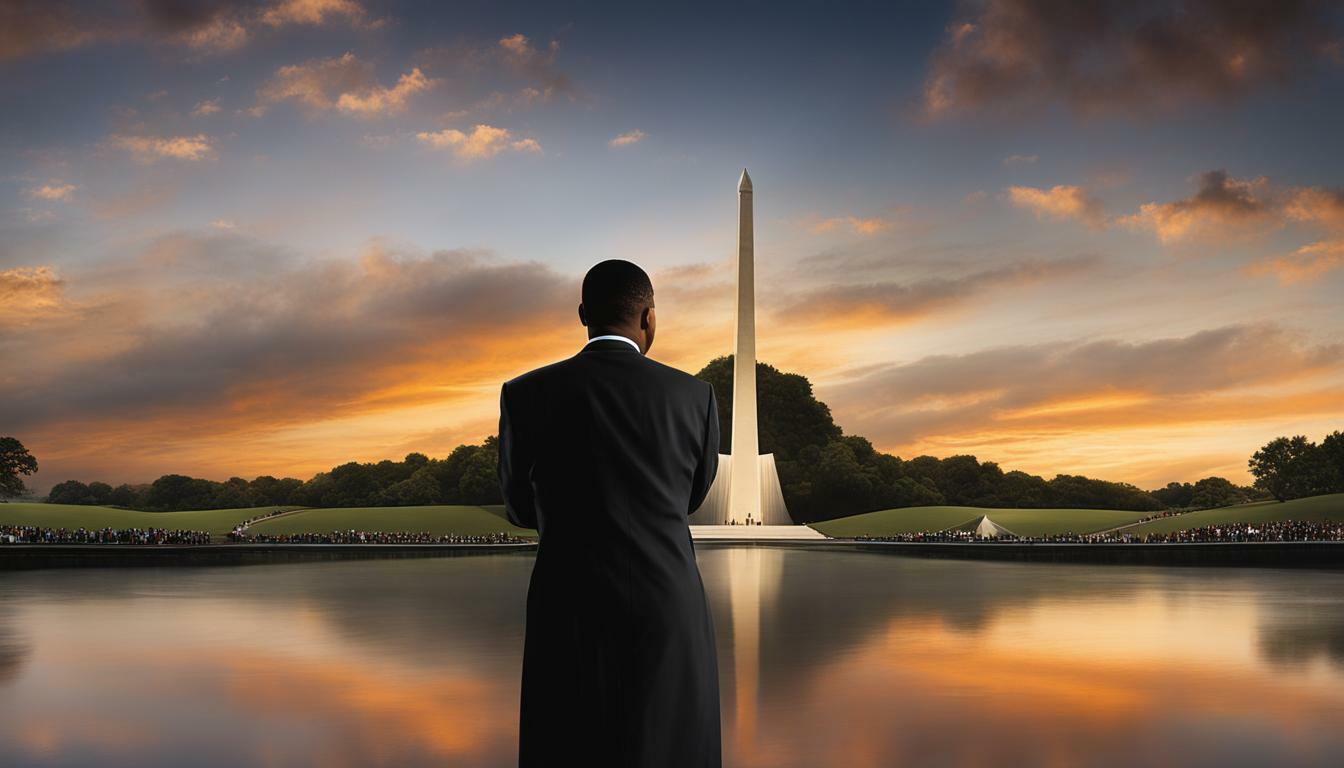
The “I Have a Dream” speech delivered by Martin Luther King Jr. holds deep meaning and has been interpreted in various ways. This iconic speech, delivered during the March on Washington for Jobs and Freedom in 1963, was originally intended to address economic inequality and employment disparities in America. King believed that the American economy perpetuated discrimination and injustice, and he called for an end to racial discrimination and the importance of equality and fair treatment for all.
King’s dream was for a society where individuals were judged by their character, not their skin color. He advocated for the government to create jobs and address poverty, as a means to enhance the social good and provide opportunities for everyone to reach their full potential. The “I Have a Dream” speech aimed to bring awareness to the problem of inequality and inspire hope for a better and more equal America.
Key Takeaways:
- The “I Have a Dream” speech was delivered by Martin Luther King Jr. during the March on Washington for Jobs and Freedom in 1963.
- King’s speech addressed economic inequality and employment disparities in America.
- He called for an end to racial discrimination and emphasized the importance of equality and fair treatment for all.
- King’s dream was for a society where individuals were judged by their character, not their skin color.
- He advocated for the government to create jobs and address poverty, as a means to enhance the social good and provide opportunities for everyone.
Historical Context of the Speech
The “I Have a Dream” speech was delivered by Martin Luther King Jr. during the March on Washington for Jobs and Freedom in 1963. This historic event brought together thousands of civil rights activists who were advocating for racial equality and economic justice. King’s speech became one of the most iconic moments in American history, as he called for an end to racial discrimination and emphasized the importance of equality and fair treatment for all.
In his speech, King highlighted the significance of the American economy in perpetuating discrimination and injustice. He recognized that economic inequality and employment disparities were major obstacles in achieving social justice. With his powerful words, King urged the government to address these issues by creating jobs and addressing poverty. He believed that by doing so, the country could enhance the social good and provide equal opportunities for everyone to reach their full potential.
“Now is the time to make real the promises of democracy. Now is the time to rise from the dark and desolate valley of segregation to the sunlit path of racial justice. Now is the time to lift our nation from the quicksands of racial injustice to the solid rock of brotherhood.”
King’s dream was for a society where individuals were judged not by the color of their skin, but by the content of their character. He envisioned a future where equality and social justice would prevail, and where people of all races could live together harmoniously. His speech aimed to bring awareness to the problem of inequality and inspire hope for a better and more just America.
| Significance of the Speech | Understanding the Speech | Martin Luther King Jr.’s Explanation |
|---|---|---|
| The speech became a powerful symbol of the civil rights movement and inspired millions of people to take action. | By analyzing the context and content of the speech, we can gain a deeper understanding of its impact and message. | King explained that the speech was a call to end racial discrimination and economic injustice, and to create a more inclusive and equal society. |
Addressing Economic Inequality
In his speech, Martin Luther King Jr. called for an end to racial discrimination and emphasized the importance of equality and fair treatment for all. He believed that the American economy perpetuated discrimination and injustice, and he sought to bring awareness to the problem of economic inequality and employment disparities. King’s dream was for a society where individuals were judged by their character, not their skin color, and where everyone had equal opportunities to succeed.
To address economic inequality, King advocated for the government to create jobs and address poverty. He understood that economic empowerment was essential in breaking the cycle of discrimination and providing opportunities for all individuals to reach their full potential. This message resonated with the audience at the March on Washington for Jobs and Freedom in 1963 and continues to inspire people today.
The implications of King’s “I Have a Dream” speech go beyond just economic equality. By highlighting the injustices faced by African Americans, he shed light on the larger issue of social injustice and called for a more inclusive society. His message was not just about equality in the workplace, but about the need for equal access to education, housing, and other fundamental rights.
The analysis of King’s speech reveals a powerful message of hope and unity. It was a call to action for individuals to come together and work towards a better and more equal America. King’s words continue to resonate with people around the world, reminding us of the importance of equality, justice, and the fight against discrimination.
| Key Points | Implications |
|---|---|
| Racial discrimination and inequality | King emphasized the need to end racial discrimination and promote equality for all individuals. |
| Government action | King called on the government to create jobs and address poverty as a means to bring about positive change. |
| Social justice | King’s speech highlighted the larger issue of social injustice and the need for equal access to basic rights. |
| Hope and unity | King’s message inspired hope for a better and more equal America, calling for individuals to work together. |
Equality and Social Justice
Central to Martin Luther King Jr.’s dream was a society where individuals were judged by their character, not their skin color. In his iconic “I Have a Dream” speech, King passionately advocated for equality and social justice, calling for an end to racial discrimination and a fair treatment for all.
King believed that the American economy perpetuated discrimination and injustice, creating a system that marginalized and oppressed certain groups of people. He saw economic inequality as a fundamental issue that needed to be addressed in order to achieve true equality.
“I have a dream that one day this nation will rise up and live out the true meaning of its creed: ‘We hold these truths to be self-evident, that all men are created equal.’”
Through his speech, King challenged the existing social order and galvanized a movement for change. He called for an end to racial segregation, emphasizing that a person’s worth should be based on their character and abilities, rather than their racial background.
Creating Opportunities for All
In his vision of equality and social justice, King also emphasized the importance of providing equal opportunities for all individuals. He advocated for the government to play a role in creating jobs and addressing poverty, as a means to uplift marginalized communities and ensure that everyone had a chance to reach their full potential.
King’s dream was not just about the absence of discrimination and oppression, but also about actively creating a society where every individual had access to education, employment, and a decent standard of living. He believed that by addressing economic disparities, society as a whole would benefit and thrive.
| Key Points | Implications |
|---|---|
| Equality and fair treatment for all individuals | Challenging the existing social order and seeking to dismantle systemic discrimination |
| Economic inequality as a barrier to achieving true equality | Advocating for the government’s role in creating jobs and addressing poverty |
| Emphasis on character and abilities over racial background | Promoting a society where individuals are judged on their merits rather than their race |
Government’s Role in Creating Change
Martin Luther King Jr. believed that the American economy perpetuated discrimination and injustice, and he called on the government to take action. In his iconic “I Have a Dream” speech, King highlighted the implications of this systemic inequality and emphasized the need for the government to actively address these issues. He argued that the government had a crucial role in creating change and bringing about a more equitable society.
One of the key points King made was the importance of job creation and poverty alleviation. He recognized that economic disparities disproportionately affected minority communities, perpetuating the cycle of discrimination and limiting opportunities for social mobility. By urging the government to prioritize the creation of jobs and the eradication of poverty, King sought to address these underlying issues and provide equal opportunities for all Americans.
Furthermore, King believed that government intervention was essential in dismantling racial segregation and discrimination. He called for the enforcement of civil rights legislation and the protection of voting rights, highlighting the need for systemic changes to ensure equality and fair treatment for all citizens. King’s speech emphasized that true progress could only be achieved by challenging and changing the policies and laws that allowed discrimination to persist.
| Key Points: | Implications of the Speech: |
|---|---|
| Government’s role in creating change | Recognizing the government’s responsibility to address inequality and injustice |
| Job creation and poverty alleviation | Prioritizing economic opportunities and social mobility for all |
| Enforcement of civil rights legislation | Challenging systemic discrimination and protecting the rights of marginalized communities |
Through his powerful words, Martin Luther King Jr. highlighted the government’s role in creating change and addressing the deep-rooted issues of discrimination and injustice. His vision for a better America called for collective action and systemic reforms, with the ultimate goal of achieving equality and social justice for all.
Inspiring Hope for a Better America
Through his powerful words, Martin Luther King Jr. aimed to bring awareness to the problem of inequality and ignite hope for a brighter future. His iconic “I Have a Dream” speech, delivered during the March on Washington for Jobs and Freedom in 1963, outlined his vision for a more equal society where individuals are judged by their character, not their skin color.
In his speech, King emphasized the importance of understanding and addressing the root causes of economic disparities. He called for an end to racial discrimination and highlighted the need for equality and fair treatment for all. King believed that true social justice could only be achieved by eradicating the barriers that limited opportunities for certain groups of people.
King’s message resonated with millions of Americans, inspiring them to envision a future where everyone has equal access to education, employment, and economic opportunities. His call for the government to create jobs and address poverty was aimed at enhancing the social good and providing pathways for individuals to reach their full potential regardless of their background or circumstances.
| Key Points | Analysis |
|---|---|
| King’s vision of a more equal society | King’s speech highlighted the need for equality and fair treatment for all, challenging the prevalent racial discrimination of the time. |
| The role of government in creating change | King emphasized the government’s responsibility to address economic inequality and create opportunities for all individuals. |
| Inspiring hope for a brighter future | King’s powerful words inspired millions, giving them hope for a better America where people are judged by their character and not their race. |
The “I Have a Dream” speech remains a powerful symbol of hope and a catalyst for change. Its message of equality and social justice continues to resonate today, reminding us of the work that still needs to be done to create a truly equal society. As we reflect on King’s words, we are reminded of the importance of understanding the enduring legacy of the civil rights movement and the ongoing fight against inequality.
Impact and Legacy
Martin Luther King Jr.’s “I Have a Dream” speech remains one of the most influential and enduring speeches in American history. Delivered during the March on Washington for Jobs and Freedom in 1963, the speech holds great significance in the fight against racial discrimination and injustice. King’s powerful words resonated with millions, sparking a movement for equality and social justice that still reverberates today.
The speech addressed not only the deep-seated racial inequality of the time but also the economic disparities faced by African Americans. King recognized that the American economy perpetuated discrimination, and he called for an end to the racial divide that hindered progress and opportunities for minority communities. King’s dream was for a society where individuals were judged not by the color of their skin, but by the content of their character.
In his speech, King emphasized the importance of equality and fair treatment for all. He urged the government to take action by creating jobs and addressing poverty, as a means to uplift communities and provide equal opportunities for everyone. By highlighting the flaws in the existing system and advocating for change, King’s words ignited hope and inspired a collective vision for a better and more equal America.
The impact of Martin Luther King Jr.’s “I Have a Dream” speech cannot be overstated. It not only galvanized the civil rights movement but also served as a catalyst for change in the broader social and political landscape of the United States. King’s unwavering belief in the power of peaceful protest and his unwavering commitment to justice continue to inspire generations to stand up against inequality and fight for a more inclusive society.
Legacy
The legacy of Martin Luther King Jr.’s speech is profound. It has become a symbol of hope, resilience, and the ongoing struggle for equality. The “I Have a Dream” speech continues to inspire individuals and organizations around the world to challenge injustice, promote civil rights, and work towards a society where every person is treated with dignity and respect.
| Impact | Legacy |
|---|---|
| Galvanized the civil rights movement | Inspires individuals and organizations to challenge injustice |
| Catalyst for change in the social and political landscape of the United States | Promotes civil rights and equality |
| Symbol of hope, resilience, and the ongoing struggle for equality | Encourages individuals to work towards a more inclusive society |
Conclusion
Martin Luther King Jr.’s “I Have a Dream” speech continues to serve as a powerful reminder of the importance of equality, justice, and the pursuit of a more inclusive society. Delivered during the March on Washington for Jobs and Freedom in 1963, the speech was originally intended to address economic inequality and employment disparities. King believed that the American economy perpetuated discrimination and injustice, and through his speech, he called for an end to racial discrimination and emphasized the importance of equality and fair treatment for all.
In his dream, King envisioned a society where individuals were judged by their character, not their skin color. He advocated for the government to create jobs and address poverty, recognizing that economic disparities were obstacles to achieving true equality. By highlighting the need to address these issues, King’s speech aimed to bring awareness to the problem of inequality and inspire hope for a better and more equal America.
The impact and lasting legacy of King’s “I Have a Dream” speech cannot be overstated. It galvanized the Civil Rights Movement and brought the struggle for equality to the forefront of national consciousness. The speech continues to resonate with people today, reminding us of the progress made and the work that still needs to be done to ensure a more just and inclusive society.
As we reflect on the significance of the “I Have a Dream” speech, we are reminded of the power of words to inspire change and promote social justice. King’s dream for a better America lives on, and his speech remains a timeless call to action for all those who believe in equality and the power of unity.
What is the Meaning of “Dream Feed” in the Context of Babies’ Sleep?
Dream feed is a term used in the context of babies’ sleep. It refers to waking a sleeping baby before the parent goes to bed to feed them. The purpose is to help the baby sleep for a longer stretch. Many parents find that dream feeding can help their babies sleep through the night, as it tops up their tummy and reduces hunger waking. That’s what dream feed means for baby sleep.
FAQ
Q: What does the “I Have a Dream” speech mean?
A: The “I Have a Dream” speech by Martin Luther King Jr. expresses his vision of a society where individuals are judged by their character, not their skin color. It calls for an end to racial discrimination and emphasizes the importance of equality and fair treatment for all.
Q: What is the historical context of the speech?
A: The “I Have a Dream” speech was delivered during the March on Washington for Jobs and Freedom in 1963. Martin Luther King Jr. believed that the American economy perpetuated discrimination and injustice, and he used this speech to address economic inequality and employment disparities.
Q: How did Martin Luther King Jr. address economic inequality?
A: In his speech, Martin Luther King Jr. called for the government to create jobs and address poverty in order to enhance the social good and provide opportunities for everyone to reach their potential. He believed that economic equality was essential in achieving his vision of a more equal America.
Q: What was Martin Luther King Jr.’s vision of equality and social justice?
A: Martin Luther King Jr. envisioned a society where everyone, regardless of their race, would be treated equally and have access to the same opportunities. He emphasized the importance of judging individuals based on their character rather than their skin color, and he called for an end to racial discrimination and injustice.
Q: What was Martin Luther King Jr.’s message regarding the government’s role in creating change?
A: Martin Luther King Jr. advocated for the government to play a role in creating change by addressing economic inequality and providing opportunities for all. He believed that the government had a responsibility to create jobs and combat poverty in order to bring about positive social change.
Q: How did the “I Have a Dream” speech inspire hope for a better America?
A: Martin Luther King Jr.’s “I Have a Dream” speech inspired hope by expressing his vision of a more equal and just society. His words resonated with people across the nation and inspired them to believe in the possibility of a better America, where everyone would have equal rights and opportunities.
Q: What was the impact and lasting legacy of the “I Have a Dream” speech?
A: The “I Have a Dream” speech is considered one of the most iconic speeches in American history. It played a significant role in advancing the Civil Rights Movement and raising awareness about the need for racial equality. Martin Luther King Jr.’s words continue to inspire people today and his legacy as a champion of civil rights is enduring.
Q: Is there a conclusion to the article?
A: No, the article does not include a conclusion section. However, it provides a summary of the key points discussed throughout the article.