
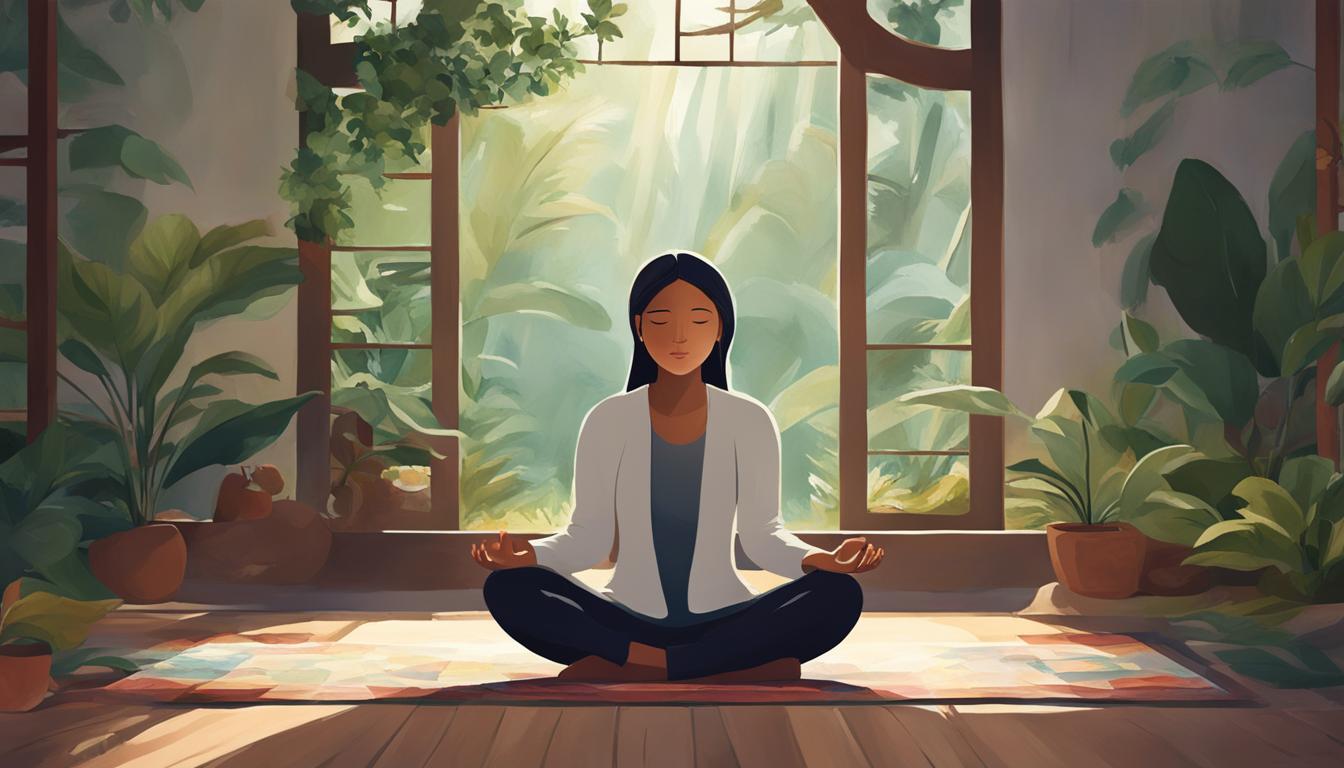
When it comes to meditation, the duration of a session can vary greatly from person to person. It all depends on your individual preferences and needs. While some people find that a short meditation session of 10 minutes is sufficient for their practice, others may prefer longer sessions that last up to 60 minutes. It’s important to listen to your body and find a duration that feels comfortable and sustainable for you.
Key Takeaways:
- The minimum duration of a meditation session varies from person to person.
- Some individuals find that 10 minutes is sufficient for their practice.
- Others may prefer longer sessions of up to 60 minutes.
- It’s important to find a duration that feels comfortable and sustainable for you.
- Listen to your body and adjust the duration as needed.
How to Approach Meditation: Start Small and Build Up
When starting a meditation practice, it is advisable to approach it with the mindset of starting small and building up gradually. Just like any other skill or habit, meditation takes time and practice to develop.
Begin with a short duration, such as 5-10 minutes, and gradually increase the time as you become more comfortable and familiar with the practice. This approach allows you to find your own personal sweet spot and avoid overwhelming yourself with longer sessions right from the start.
“The journey of a thousand miles begins with a single step.” – Lao Tzu
By starting small and gradually increasing the duration of your meditation sessions, you give yourself the opportunity to develop a solid foundation and establish a sustainable practice. You can use this time to focus on your breath, observe your thoughts, and cultivate a sense of calm and presence.
- Start with 5-10 minutes of meditation per session.
- As you become more comfortable, increase the duration by a few minutes every week.
- Listen to your body and adjust the time as needed. Remember, meditation is a personal practice, and what works for one person may not work for another.
With patience and consistency, you will gradually build a meditation practice that fits seamlessly into your daily life and provides you with the benefits of increased mindfulness, reduced stress, and enhanced overall well-being.
Meditation Duration Progression Example:
| Week | Duration (Minutes) |
|---|---|
| 1 | 5-10 |
| 2 | 10-15 |
| 3 | 15-20 |
| 4 | 20-25 |
| 5 | 25-30 |
The Balance Between Challenging and Sustainable Sessions
Finding the right balance between challenging and sustainable meditation sessions is essential for a fulfilling and effective practice. It’s important to push yourself to a certain extent during your sessions, as it is often in those more challenging moments that we make new discoveries about ourselves and experience personal growth. However, it’s equally important to ensure that your sessions do not become overwhelming or demotivating.
One way to strike this balance is to choose a duration that feels slightly challenging but still sustainable for you. For example, setting a duration of 15 minutes can provide enough time for you to delve into your practice and explore deeper levels of awareness, while also ensuring that you don’t feel too overwhelmed or discouraged.
It’s important to listen to your own body and intuition when determining the duration of your meditation sessions. Pay attention to how you feel during and after each session. If you find that a specific duration consistently feels too difficult or leaves you feeling drained, it may be a sign that you need to adjust and find a duration that better suits your current needs and abilities.
| Benefits of Balancing Meditation Duration | Consequences of Imbalanced Duration |
|---|---|
|
|
Remember, meditation is a journey of self-discovery and self-care. The duration of your sessions should be a reflection of your own unique needs and abilities. By finding the delicate balance between challenging and sustainable sessions, you can ensure that your meditation practice remains fulfilling, enjoyable, and beneficial in the long run.
Research-Based Recommendations for Meditation Duration
When it comes to the optimal duration for a meditation session, research provides some evidence-based recommendations to guide your practice. Various mindfulness-based clinical interventions suggest practicing meditation for around 40-45 minutes per day. The Transcendental Meditation (TM) tradition, on the other hand, often recommends two 20-minute meditation sessions daily.
One example of a mindfulness-based intervention is Mindfulness-Based Stress Reduction (MBSR), which is known for its effectiveness in managing stress and promoting overall well-being. Studies have shown that a minimum of 40 minutes of daily meditation practice can yield significant benefits in terms of stress reduction, emotional regulation, and overall psychological well-being.
Another approach, the Relaxation Response, commonly suggests 20-minute meditations. This technique emphasizes the physiological relaxation response as a way to counter the effects of stress and promote relaxation and well-being. Research has found that regular practice of 20-minute meditations can lead to improvements in blood pressure, heart rate, and overall stress levels.
It’s important to note that these recommended durations are not set in stone, and individual preferences and needs may vary. The key is to find a meditation duration that works for you and is sustainable in your daily life. This may involve experimenting with different time frames, listening to your body, and finding that sweet spot where you can experience the benefits of meditation without feeling overwhelmed or pressured to adhere to a specific duration.
| Research-Based Recommendations | Meditation Intervention | Recommended Meditation Duration |
|---|---|---|
| 1 | Mindfulness-Based Stress Reduction (MBSR) | 40-45 minutes per day |
| 2 | Transcendental Meditation (TM) | Two 20-minute sessions daily |
| 3 | Relaxation Response | 20 minutes per session |
The Minimum Threshold for Meditation Benefits
While there is no magical number when it comes to meditation duration, several studies suggest that some of the benefits of meditation can be experienced even with shorter time intervals. For example, a study conducted with U.S. Marines found that cognitive improvements were observed after just 12-minute meditation sessions. Another study focused on Kirtan Kriya meditation, and it revealed that significant positive changes in predictors of dementia were seen with just 12 minutes of daily practice. Additionally, undergraduate students who engaged in 10 minutes of daily meditation experienced improved performance on GRE tests.
These studies indicate that some of the effects of meditation begin to kick in around the 10-minute mark, showing that even a short duration can have a positive impact. However, it’s important to remember that individual results may vary. What works for one person may not work for another. Each individual’s experience with meditation is unique, and finding the right duration that is sustainable and provides benefits for you personally is key.
To summarize, while the minimum threshold for meditation benefits may vary, research suggests that positive effects can be experienced even at shorter durations. Starting with 10-12 minutes of meditation per day could be a good starting point for beginners, but it’s important to listen to your body and find what works best for you. Explore different time intervals and durations to find your personal “sweet spot” and create a sustainable meditation practice that aligns with your individual needs and preferences.
| Study | Duration | Findings |
|---|---|---|
| Study with U.S. Marines | 12 minutes | Cognitive improvements observed |
| Kirtan Kriya meditation study | 12 minutes daily | Significant positive changes in predictors of dementia |
| Study with undergraduate students | 10 minutes daily | Improved performance on GRE tests |
Conclusion
In conclusion, the duration of a meditation session is a personal choice that varies from individual to individual. It is recommended to start with a smaller amount of time, such as 5-10 minutes, and gradually increase it as you become more comfortable with the practice. Each person has their own unique needs and preferences when it comes to meditation.
It is important to find your own meditation duration that works best for you. Some people may find that shorter sessions provide them with the desired benefits, while others may prefer longer sessions for a deeper practice. Remember, there is no one-size-fits-all approach to determining the ideal meditation session length.
Ultimately, finding your own meditation duration involves listening to your body and being mindful of your individual needs. Experiment with different timeframes and pay attention to how you feel during and after each session. Your meditation practice should be sustainable, enjoyable, and provide you with the desired benefits. So, take your time, explore different durations, and find what works best for you.
– Can Meditation sessions be aligned with religious teachings, like those of Jesus?
Yes, meditation sessions can be aligned with religious teachings, including those of Jesus. Many Christians believe that meditation can help them connect with God and gain a deeper understanding of Jesus’s thoughts on meditation. By incorporating prayer and reflection into their meditation practice, believers can integrate their faith with the benefits of mindfulness.
FAQ
What is the typical minimum duration of a meditation session?
The typical minimum duration of a meditation session can vary depending on individual preferences and needs. It is recommended to start with a small amount of time and gradually increase it to find your own personal “sweet spot.”
How should I approach meditation?
It is advisable to approach meditation with the mindset of starting small and building up gradually. Begin with a short duration, such as 5-10 minutes, and gradually increase the time as you become more comfortable and familiar with the practice.
What is the balance between challenging and sustainable meditation sessions?
It’s important to challenge yourself to a certain extent during meditation sessions, but also find a duration that feels slightly challenging but not overwhelming or demotivating. A duration of 15 minutes is a good starting point.
Are there any research-based recommendations for meditation duration?
Mindfulness-based clinical interventions typically suggest practicing meditation for 40-45 minutes per day. The Transcendental Meditation (TM) tradition often recommends 20 minutes of meditation, twice daily. However, it’s important to find a duration that works for you personally.
What is the minimum threshold for meditation benefits?
Some studies suggest that benefits of meditation can be experienced even at shorter time intervals, such as 10-12 minutes. However, everyone is different and finding a duration that is sustainable and provides benefits for you personally is key.
How do I find my own meditation duration?
It’s best to start with a smaller amount of time, such as 5-10 minutes, and gradually increase it as you become more comfortable. Listen to your body and find a duration that works for you personally, taking into account your individual needs and preferences.