
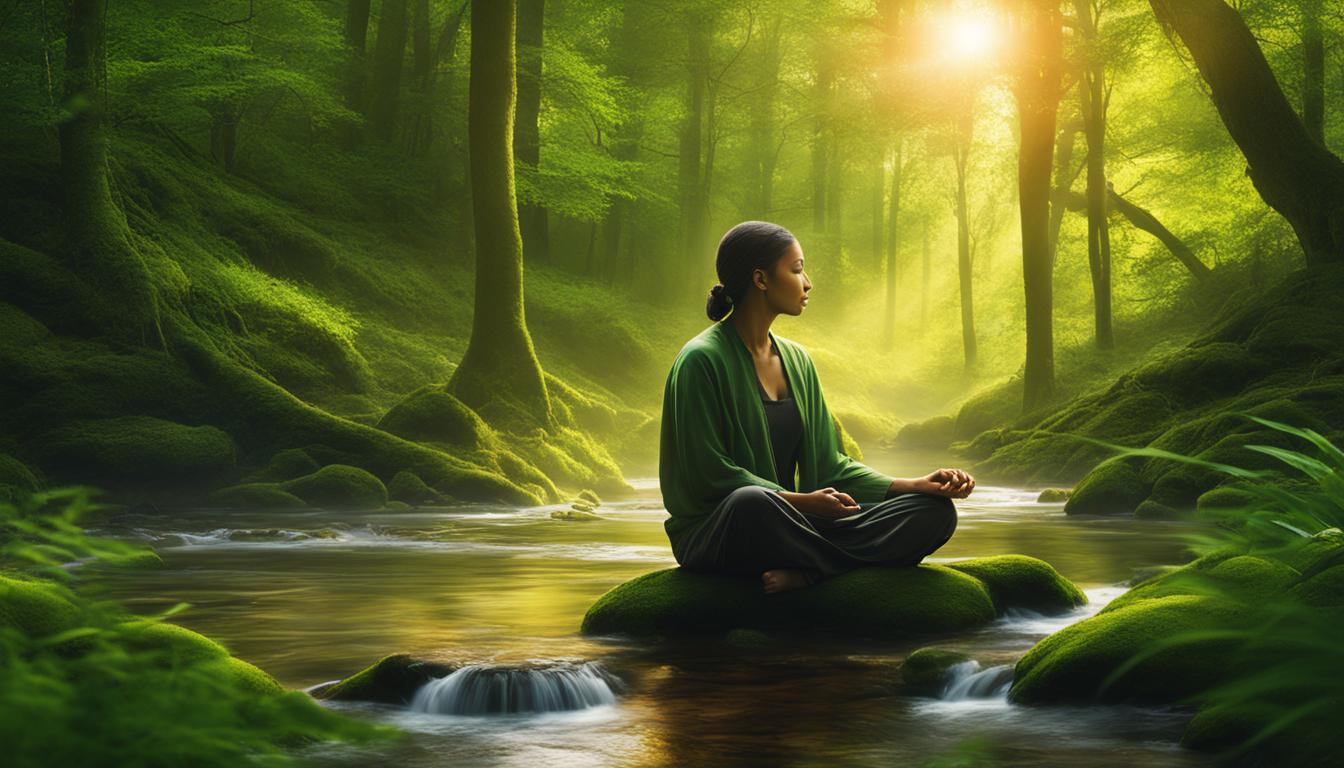
When it comes to meditation, the common belief is that it requires closing your eyes. However, there are certain traditions, such as Zen Buddhism, that practice open-eye meditation. In fact, many Buddhist traditions in Tibet and Japan never close their eyes during meditation. They teach to half-close the eyes, relax, and look downward. This form of meditation, known as open-eye meditation, has several benefits. It helps individuals stay awake and focused, eliminates the need for perfect conditions to close the eyes, and allows for the development of strong concentration skills.
Key Takeaways:
- Open-eye meditation is a practice that involves keeping the eyes partially open during meditation.
- Many Buddhist traditions in Tibet and Japan practice open-eye meditation.
- Open-eye meditation helps individuals stay awake and focused.
- It eliminates the need for ideal conditions to close the eyes.
- Open-eye meditation develops strong concentration skills.
Why People Believe Meditation Requires Closed Eyes
The belief that meditation requires closed eyes is widely held, and there are several reasons why this misconception persists. One of the key reasons is that closing the eyes helps limit external distractions and allows practitioners to turn their attention inward. By shutting out visual stimuli, individuals can focus solely on their inner experiences and cultivate a sense of relaxation and tranquility.
In addition to creating a conducive environment for introspection, closing the eyes during meditation can also serve as a signal to the mind that it is time to shift focus from the external world to the internal realm. This deliberate act helps create a mental boundary and prepares the mind for a state of deep relaxation.
Moreover, closing the eyes can enhance the efficacy of certain visualization exercises, enabling individuals to more easily imagine and immerse themselves in their meditation practice. By closing off the visual sense, individuals can create a vivid inner landscape that supports their relaxation and stress relief efforts.
“Closing the eyes during meditation allows me to let go of the external world and fully immerse myself in the present moment. It helps me find a sense of peace and calm that is often elusive in our hectic daily lives.”
The Benefits of Open-Eye Meditation
Open-eye meditation, on the other hand, offers a refreshing alternative to the commonly prescribed closed-eye approach. While closing the eyes can foster deep relaxation, open-eye meditation allows individuals to remain present and engaged with their surroundings. This practice can be particularly beneficial for those who struggle with keeping their eyes closed or find it challenging to meditate in traditional ways.
One of the notable benefits of open-eye meditation is that it promotes a heightened sense of alertness and focus. By keeping the eyes open, practitioners are less likely to fall into a drowsy state, enabling them to maintain clarity and concentration throughout the meditation session.
Furthermore, open-eye meditation can be seamlessly integrated into daily life. Unlike closed-eye meditation, which often requires a quiet and controlled environment, open-eye meditation can be practiced anywhere and at any time. This flexibility allows individuals to incorporate mindfulness and stress relief techniques into their daily routines, making it a practical and accessible practice for busy individuals.
“Open-eye meditation has been a game-changer for me. It allows me to cultivate mindfulness and presence even in the midst of a hectic day. I no longer have to wait for the perfect conditions to meditate; I can simply open my eyes and find peace wherever I am.”
Benefits of Open-Eye Meditation
Open-eye meditation offers several significant benefits that make it a valuable practice for enhancing focus and concentration. By keeping your eyes open during meditation, you can cultivate a state of wakefulness, making it easier to stay alert and engaged. This is particularly beneficial for individuals who tend to feel drowsy or fall asleep during meditation with closed eyes.
In addition to promoting wakefulness, open-eye meditation allows for the integration of mindfulness into your daily life. Unlike closed-eye meditation, which often requires a quiet and secluded environment, open-eye meditation can be practiced anywhere and at any time. Whether you’re sitting at your desk, walking in nature, or doing household chores, you can engage in open-eye meditation and experience its calming effects.
The Power of Concentration
One of the key benefits of open-eye meditation is its ability to develop strong concentration skills. By focusing on a single point of focus – such as a candle flame or an object – you can train your mind to stay present and attentive. This heightened concentration not only enhances your meditation practice but also carries over into other areas of your life, such as work, study, and creative endeavors. Strengthening your ability to concentrate can lead to improved productivity, increased efficiency, and a greater sense of clarity.
Moreover, open-eye meditation promotes self-awareness, a fundamental aspect of mindfulness. By observing your thoughts and emotions while keeping your eyes open, you can develop a deeper understanding of yourself and your inner world. This self-awareness can enhance your social interactions, helping you become more present and attentive in your relationships. Additionally, it can foster creativity by allowing you to connect more deeply with your thoughts and ideas.
| Benefits of Open-Eye Meditation | |
|---|---|
| Fosters wakefulness and alertness | Keeps you engaged and focused |
| Can be practiced anywhere, anytime | Integrates mindfulness into daily life |
| Strengthens concentration skills | Enhances focus and productivity |
| Promotes self-awareness | Deepens understanding of oneself |
| Fosters creativity and self-expression |
How to Practice Open-Eye Meditation
Practicing open-eye meditation is a simple process that can be easily incorporated into your daily routine. To begin, find a quiet space where you can sit comfortably and minimize distractions. It may be helpful to darken the room slightly, allowing your eyes to relax and reducing potential visual disturbances.
Next, choose a single point of focus for your gaze. This could be a candle flame, a small object, or even a specific spot on the wall. The key is to select something that is visually engaging but not overly stimulating. This point of focus will help anchor your attention and prevent your mind from wandering.
As you settle into your meditation practice, remember to maintain a relaxed gaze. Let your eyes rest naturally on the chosen object without straining or forcing your focus. Allow your breath to deepen, taking slow and deliberate inhalations and exhalations. This deep breathing technique will help calm the mind and promote relaxation throughout your meditation session.
You can practice open-eye meditation for any length of time that feels comfortable to you. It can be a brief practice during a busy day or a more extended session when you have more time to dedicate to mindfulness. You can even incorporate open-eye meditation into other activities, such as walking or doing household chores, allowing you to stay present and centered throughout the day.
Visualization Exercises
Incorporating visualization exercises into your open-eye meditation practice can further enhance your experience. You can imagine yourself surrounded by a peaceful and serene environment, such as a beautiful garden or a calming beach. Visualize yourself immersed in this scene, noticing the sights, sounds, and sensations that accompany it. This visualization can deepen your sense of relaxation and help you connect with a state of inner calmness.
Remember, open-eye meditation is a personal practice, and it may take some time to find the techniques and focus points that work best for you. Experiment with different visualizations, breathing techniques, and durations to discover what brings you the most tranquility and mindfulness. With regular practice, open-eye meditation can become a valuable tool for cultivating focus, self-awareness, and a sense of peace in your daily life.
| Benefits of Open-Eye Meditation | How to Practice Open-Eye Meditation |
|---|---|
| Enhances focus and concentration skills | Find a quiet and comfortable space |
| Allows integration into daily life | Choose a single point of focus for your gaze |
| Promotes self-awareness and observation of thoughts | Maintain a relaxed gaze and deepen your breath |
| Can be practiced in any environment or situation | Practice visualization exercises for deeper relaxation |
| Experiment with durations and techniques to find what works for you |
Conclusion
Open-eye meditation is a valuable mindfulness practice that offers a refreshing alternative to traditional closed-eye meditation. While closing your eyes can induce deep relaxation, open-eye meditation allows you to cultivate mindfulness and peace while keeping your eyes open. This practice has numerous benefits, including enhanced concentration, integration of meditation into daily life, and the development of self-awareness.
By practicing open-eye meditation, you can experience the power of mindfulness in your everyday activities. Whether you’re walking, exercising, or doing household chores, you can bring a sense of calm and awareness into your actions. The practice of deep breathing, combined with open eyes, helps to anchor you in the present moment and relieve stress.
Remember, whether you choose to meditate with closed eyes or open eyes, the key is to find a practice that works best for you. Explore both options and discover which one helps you connect with your inner self. Ultimately, the goal is to cultivate mindfulness, enjoy the benefits of deep breathing, and find relief from stress while remaining present in the world around you.
Is Opening My Eyes During Meditation Related to Activating the Third Eye?
Opening your eyes during meditation may not necessarily be related to activating the third eye. It’s a common misconception that understanding third eye meditation requires keeping the eyes closed. In reality, the third eye is more about inner vision and spiritual insight rather than literal sight.
FAQ
Does open-eye meditation require closing the eyes?
No, open-eye meditation is a form of meditation where individuals keep their eyes open. They can choose to half-close their eyes, relax, and look downward.
Why do some people prefer closed-eye meditation?
Closing the eyes during meditation helps to limit distractions and allows individuals to focus on their inner experiences without interference from the external world. It can also induce a state of relaxation and reduce stress.
What are the benefits of open-eye meditation?
Open-eye meditation helps individuals stay awake and focused, can be practiced in any environment, and allows for the development of strong concentration skills.
How do I practice open-eye meditation?
To practice open-eye meditation, you can choose to keep your eyes half-open, rest them about 4ft in front of you, and face a blank wall or minimize distractions. Choosing a single point of focus, such as a candle flame or a spinning fan, can be helpful. Maintain a relaxed gaze and avoid straining your eyes.